
Impact investing in water should begin with a commercial question: does a company solve an expensive, persistent customer problem well enough to earn durable revenue? The environmental result matters, but it cannot rescue weak demand, poor margins or a business that needs bespoke engineering for every sale.
This distinction makes water unusually interesting for family offices and sophisticated private-market investors. Treatment, reuse and monitoring are not discretionary themes. Industrial customers buy them to protect production, comply with discharge rules, reduce operating costs and secure future supply. The same activity can produce measurable environmental value and a defensible reason for customers to pay.
Water Investment Network focuses on selected direct opportunities in revenue-generating water-technology companies. Its current water-technology portfolio illustrates three different commercial patterns: industrial treatment and reuse, membrane-based separation, and data-led monitoring. Those examples show why “water” is not one market and why an investor must test each company on its own economics.
This guide explains how to connect impact intent with customer demand, revenue quality, scalability, measurement and exit logic. It is designed for eligible family offices, high-net-worth individuals and sophisticated investors considering direct private-company exposure—not public water funds, personal financial advice or philanthropy.
Define impact investing without weakening financial discipline
The Global Impact Investing Network defines impact investments as investments made with the intention to generate positive, measurable social or environmental impact alongside a financial return. Its four core characteristics add practical discipline: intentionality, use of evidence, active management of impact performance and contribution to industry learning. [1]
That definition separates impact investing from three adjacent ideas. Environmental, social and governance analysis asks how sustainability factors affect an investment. Thematic investing selects exposure to a structural trend. Philanthropy gives capital primarily for public benefit. Impact investing requires an intended outcome and a return expectation, with evidence for both.
For a direct water investment, the environmental objective might be more water recovered for reuse, less pollution discharged, lower energy use per treated unit or earlier detection of loss. The financial objective might be recurring monitoring revenue, profitable equipment sales, contracted treatment services or a performance-linked fee. Neither side should be assumed.
A disciplined mandate states the relationship between them before reviewing opportunities. It should identify:
- the water outcome the investor wants to support;
- the minimum commercial maturity required;
- acceptable investment stage, cheque size and holding period;
- the evidence needed before capital is committed;
- how impact and financial performance will be monitored; and
- which trade-offs require explicit investment-committee approval.
This prevents a compelling environmental story from quietly changing the risk standard. It also prevents the reverse error: treating impact data as public-relations material that is examined only after the commercial decision.
Direct private investments are illiquid, concentrated and operationally demanding. Investors should expect legal, tax, financial, technical and commercial diligence alongside impact work. Water Investment Network does not provide regulated financial advice, and no environmental outcome guarantees an investment return.
Understand why water creates investable customer problems
Water scarcity attracts attention, but scarcity alone does not create a company. Investability appears when a defined customer has authority, budget and a reason to act within a credible timeframe.
Industrial customers can face several types of pressure at once. They may need reliable process water, tighter discharge quality, lower effluent charges, more production from a constrained site or protection against interruptions. A pharmaceutical plant, food producer, semiconductor facility and mine have very different water profiles, yet each can attach financial value to quality, continuity and compliance.
The OECD describes water-related investment as a heterogeneous landscape covering services, resource management and risks from too much, too little or too polluted water. It also notes persistent barriers: fragmented projects, weak revenue streams, under-valued benefits and risk-return profiles that do not always attract commercial finance. [2]
For private water-technology companies, those barriers become diligence questions rather than reasons to avoid the sector. An investor should locate the economic buyer and ask what creates urgency:
- Cost: discharge, chemicals, energy, freshwater purchases, downtime or labour.
- Capacity: a site cannot expand because water supply or discharge consent is constrained.
- Compliance: permit conditions or customer standards require better treatment and monitoring.
- Continuity: supply disruption threatens production, product quality or asset life.
- Reputation and procurement: customers or lenders require credible water performance.
The strongest opportunities usually have several drivers, but the company must know which one closes the sale. “Saving the planet” is rarely a sufficient procurement case. “Avoiding a production stoppage while cutting water purchases and meeting a permit limit” is much closer to a budgetable proposition.
This is why the water-technology market should be analysed from the paying customer backwards. Market forecasts are useful context, but contracts, usage, renewal and site economics reveal whether demand reaches the company under review.
Build an investment thesis at a glance

A short thesis table forces the investment team to connect technology, customer economics and impact. It should be completed with verified company evidence, not generic sector assumptions.
| Question | Evidence to seek | Why it matters |
|---|---|---|
| Demand driver | Customer costs, permit limits, supply constraints and approved budgets | Shows why a buyer acts now rather than after another pilot |
| Paying customer | Named decision role, procurement path, contract owner and end user | Prevents confusion between technical interest and purchase authority |
| Revenue model | Equipment, service, subscription, consumables or performance fees | Determines margin, working capital and revenue visibility |
| Scalability | Standard design, installation time, partner capacity and support burden | Tests whether growth multiplies value or complexity |
| Defensibility | Field data, intellectual property, approvals, integration and switching cost | Explains why competitors cannot easily copy the outcome |
| Principal risks | Reliability, adoption, regulation, concentration, cash and future funding | Makes downside ownership explicit |
| Potential exits | Strategic buyers, comparable transactions and acquisition rationale | Connects company value to plausible future demand, not a promised event |
| Measurable impact | Baseline, treated or reused volume, quality, energy and verification method | Separates real outcomes from attractive activity metrics |
The table is a starting point, not an investment memorandum. Each cell should lead to source documents, management questions and a named owner for unresolved evidence.
A thesis should also state what would disprove it. For example, an industrial reuse company may depend on customers valuing resilient supply more highly than the capital and operating cost of treatment. If payback is acceptable only under a temporary subsidy, or if every deployment requires a new engineering design, the scale thesis may fail even when the technology performs.
Investors should distinguish corporate-level opportunities from infrastructure projects. A technology company may sell repeatable systems or software across many sites. A project vehicle may own one facility with contracted cash flows. The capital structure, risk allocation, duration and exit routes differ significantly.
Test the revenue model and the quality of growth
Water companies often describe themselves through technology. Investors need to translate that description into cash movement.
An equipment business may recognise substantial revenue when a system is delivered. That can support strong gross profit, but orders may be lumpy and require inventory, engineering and installation cash before payment arrives. A service model can smooth revenue, yet it adds operating responsibility and performance exposure. Software can create recurring subscriptions, but only when customers use the data and renew. Consumables may strengthen lifetime value while creating supply-chain and quality obligations.
Ask for revenue by product, customer, geography and contract type. Reconcile management reporting with accounts, invoices, bank receipts and contract terms. Separate:
- paid deployments from unpaid demonstrations;
- recognised revenue from contracted backlog;
- renewals from extensions of an initial pilot;
- gross margin before and after installation and field support;
- standard product revenue from one-off engineering; and
- customer-funded assets from assets financed by the company.
Customer concentration is common in early growth. The question is whether the first customers are a repeatable beachhead or an accidental portfolio. A strong case shows why similar buyers face the same problem, how long procurement takes, who approves the purchase and which evidence shortens the next sale.
Growth quality also depends on cash conversion. Long manufacturing lead times, retention payments and site acceptance tests can consume cash even when reported revenue rises. Water-as-a-service models may create attractive contracted income, but the provider or its financing partner must fund equipment before years of fees arrive.
Model a base case and a downside case. Reduce conversion from pipeline, extend the sales cycle, delay site acceptance, lower gross margin and add a funding round. Then ask whether the company still has time and capital to reach the next value milestone.
A credible management team should know the operational bottleneck behind its forecast. It may be qualified leads, engineering sign-off, manufacturing capacity, working capital, channel partners or customer reference sites. A forecast without a constrained resource plan is a target, not evidence.
Measure impact from baseline to verified outcome
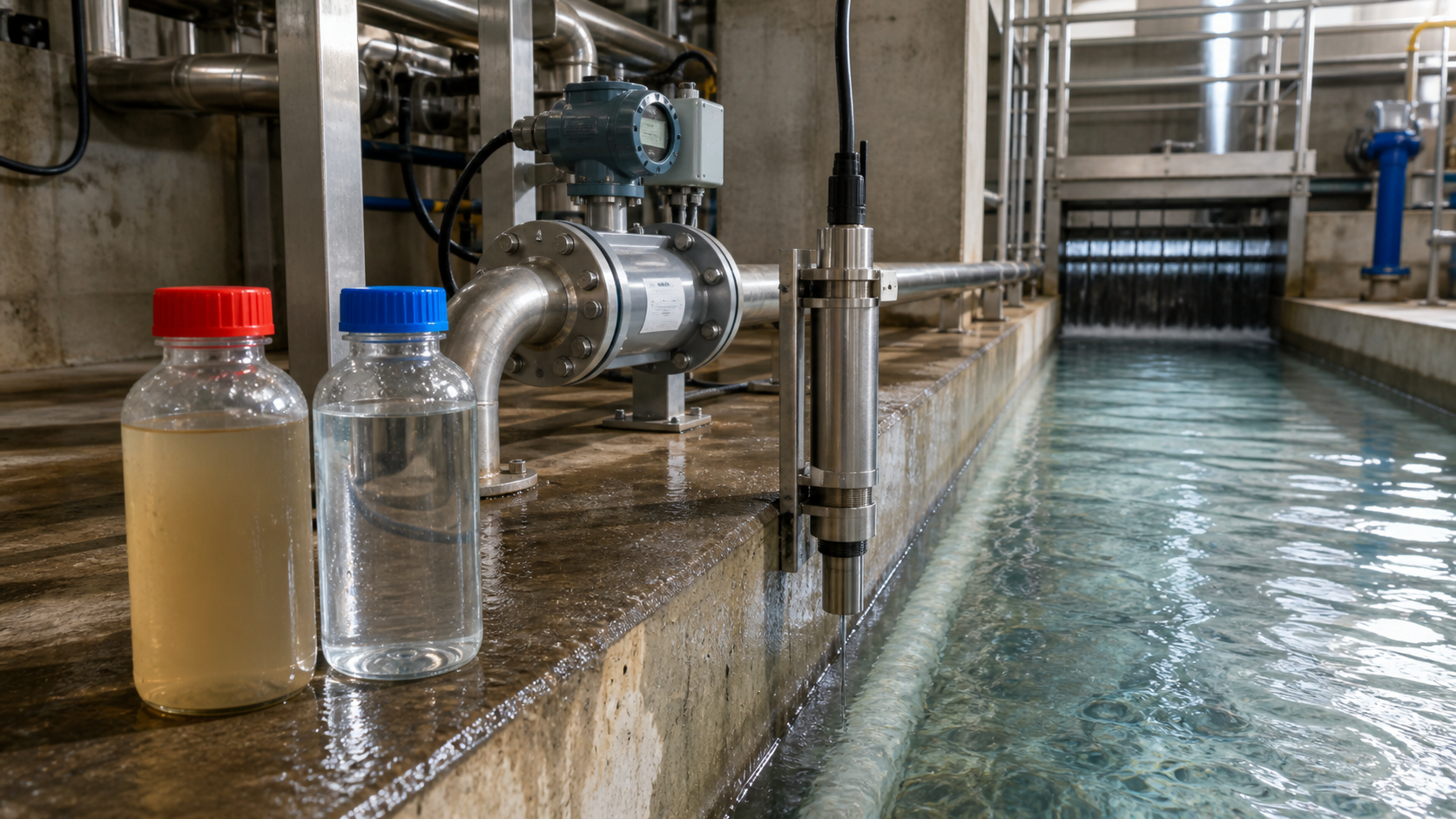
Impact measurement should follow the operating model. If the company earns revenue by treating wastewater, its impact evidence should connect treated volume, incoming quality, outgoing quality, destination and system availability. If it sells monitoring, evidence should show what action the data caused and what loss, waste or risk changed.
IRIS+ describes impact measurement and management as an iterative process that balances impact with risk, return and liquidity. Its framework considers what outcome occurs, who experiences it, how much occurs, the company’s contribution and the risk that results differ from expectation. [3]
For a water company, a useful measurement chain contains five parts:
- Baseline: the customer’s water use, discharge, energy or loss before the solution.
- Activity: the system installed, service delivered or monitoring coverage provided.
- Output: water treated, alerts generated, contaminants removed or hours operated.
- Outcome: verified reuse, reduced abstraction, better discharge, avoided downtime or lower resource intensity.
- Contribution: the portion of change reasonably linked to the company rather than weather, production changes or another intervention.
Define the unit, boundary, period, data source and owner. “Litres saved” is incomplete if production fell, leakage moved outside the measured boundary or treated water was discharged rather than reused. An impact claim should survive comparison with operating logs, laboratory results, customer records and the relevant baseline.
Additionality also needs care. Capital may be additional because it enables a deployment, accelerates entry into a market or funds capacity that would otherwise remain unavailable. That is different from claiming the entire customer outcome would never have occurred without one investor.
Impact risk belongs in the same register as commercial risk. A system may use more energy than expected, create a concentrated waste stream, depend on chemicals or move pollution from water to another medium. Measure adverse effects as well as intended benefits.
Assurance should be proportionate. Early companies may not need an expensive certification framework, but they do need transparent definitions, traceable source data, change controls and management accountability. Consistency is more valuable than a glossy annual number that cannot be reconstructed.
Use regulation as evidence of demand, not as a sales shortcut
Regulation can create durable treatment and monitoring demand. It can also lengthen sales, impose validation costs and change the economics of a customer project. The investor must examine the exact jurisdiction, obligation, implementation date and affected buyer.
The revised EU Urban Wastewater Treatment Directive entered into force on 1 January 2025. It expands collection and treatment requirements, requires more nutrient removal, introduces quaternary treatment for micropollutants in relevant plants, strengthens the polluter-pays principle and sets an energy-neutrality direction for treatment plants by 2045. [4]
Those rules can support demand for monitoring, advanced treatment, energy efficiency and resource recovery. They do not guarantee revenue for any particular company. Member-state implementation, procurement cycles, plant size, risk classification and approved technical routes all affect timing.
For each regulatory claim, ask:
- which legal text and version applies;
- who carries the obligation and who controls the budget;
- when compliance becomes enforceable;
- whether the company’s product is necessary, optional or one of several routes;
- what testing, approval and tender conditions apply; and
- how the customer behaves before enforcement.
Do not present EU rules as UK law after Brexit, and do not treat Gulf Cooperation Council markets as one regulatory system. Regional opportunity should be supported by local evidence and an executable route to market.
The same discipline applies to corporate water targets. A public target can open a conversation, but a purchase depends on site economics, internal ownership and capital allocation. Investors should look for the budget line behind the commitment.
Water Investment Network’s regulation resources provide useful context, but every transaction still requires current professional advice on the relevant company and jurisdiction.
Conduct commercial, technical and impact due diligence together

Separate diligence teams can miss the relationships that determine value. A membrane may achieve impressive removal in a controlled test while fouling makes field economics unattractive. A monitoring platform may detect anomalies while customer workflows fail to act on them. A reuse system may produce high-quality water while the site has no permitted or economic use for it.
Run the workstreams against shared questions:
- Problem: Is the customer’s cost, constraint or regulatory exposure material and evidenced?
- Performance: Does the solution work across representative feed conditions and operating periods?
- Economics: What are full capital, energy, chemical, consumable, labour and disposal costs?
- Adoption: Who integrates the system, carries performance risk and supports the site?
- Repeatability: How much design changes between deployments?
- Impact: Is the claimed outcome material, attributable and measured without double counting?
- Organisation: Can the team sell, manufacture, install, service and finance the growth plan?
Visit operating customer sites where possible. Review downtime, maintenance records, replacement history, operator feedback and actual performance against the contractual specification. Speak with economic buyers as well as technical champions. The person who likes the product may not be the person who approved the budget.
Check intellectual property in context. A patent can protect a defined claim, but field data, engineering know-how, supplier access, integration and customer trust may be equally important. Confirm ownership, licences, freedom-to-operate work and any dependence on founders or universities.
Reference calls should test weak points, not invite testimonials. Ask what failed, what changed after installation, how quickly the supplier responded, whether expected savings appeared and whether the customer would buy again without grant support.
Finally, reconcile the cap table, shareholder rights and future funding plan with the commercial case. A good company can still be a poor investment at the wrong valuation or with insufficient capital to reach the next milestone.
Plan for portfolio fit, governance and realistic exits
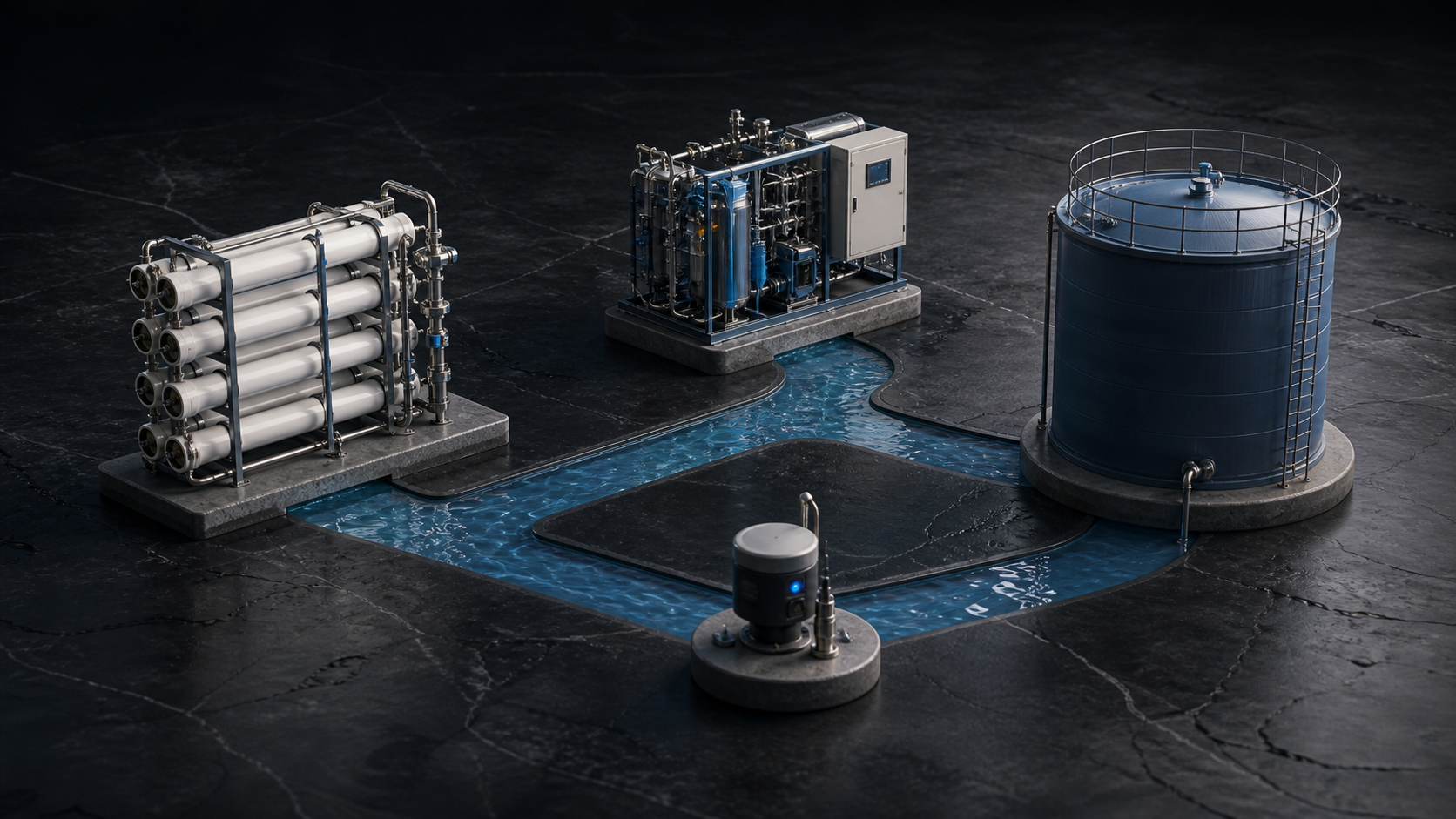
Direct water investment should fit the portfolio before it enters the pipeline. A family office may value long-duration exposure, measurable environmental outcomes and direct management access. It must also manage illiquidity, concentration, technical complexity and follow-on capital.
Define the role of the holding. Is it an early growth position, a later-stage commercialisation investment or a strategic co-investment? Decide how much capital can be reserved for follow-ons and what evidence must be achieved before more is committed.
Governance rights should match the risks the investor expects to manage. Useful information rights may cover monthly cash, contracted and recognised revenue, gross margin, pipeline stages, site performance, safety, impact KPIs and material claims. Reserved matters should be proportionate rather than so broad that the company cannot operate.
Board reporting should bring financial and impact evidence together. A rising treated-water figure can conceal falling margin. Strong bookings can conceal customer concentration. Rapid installations can conceal a growing service backlog. The board needs one account of the operating system, not parallel stories.
Potential exits include a strategic acquisition, secondary sale, private-equity transaction or recapitalisation. None should be presented as assured. Build a buyer map around capabilities: treatment platforms, equipment groups, industrial service providers, software companies and infrastructure operators may value different assets.
Evidence that can strengthen optionality includes repeatable deployments, credible unit economics, protected know-how, retained customers, an auditable impact dataset and a management team that does not depend on one founder for every sale.
Patient capital does not mean passive capital. It means matching the holding period and funding structure to the real time needed for validation, procurement and deployment while maintaining clear milestones and governance.
Assess the team behind commercial proof and impact integrity
Water technology companies rarely scale through invention alone. The management team must translate field performance into customer trust, repeatable delivery, honest reporting and disciplined use of capital.
Map responsibilities across technical development, project delivery, sales, manufacturing or supply, service, finance and impact data. Early companies often depend on one founder across several functions. That can be efficient during discovery and dangerous during growth.
Ask for evidence of how the team learns:
- which customer or field result changed the product;
- how failed trials are reviewed and classified;
- when the company refuses an unsuitable application;
- how sales claims are checked against operating data;
- who approves public impact statements; and
- which capability must be hired before the next scale milestone.
A credible team understands the boundary of its proof. It distinguishes laboratory data, customer-reported outcomes, independently tested performance and management forecasts. It does not treat a letter of intent as revenue or a potential environmental benefit as a verified result.
Review incentives. Sales commissions should not reward unsuitable deployments. Project teams should be measured on acceptance and customer outcome, not merely installation. Impact staff need authority to challenge claims that exceed the data.
Board composition should reflect the real risks. A company commercialising complex treatment may benefit from industrial procurement, scale-up and finance experience alongside technical depth. A digital-water business may need enterprise software, cyber-security and field-hardware knowledge.
Key-person risk belongs in the valuation and use-of-funds plan. Document technical know-how, customer relationships and decision processes. Confirm employment, intellectual-property assignment, confidentiality and succession arrangements.
Water Investment Network can add value by curating opportunities and connecting relevant expertise, but investors should still meet management, test references and form their own view. Proprietary access is useful only when it produces better evidence and governance.
Control source quality, forecasts and investment claims
Impact and water markets attract large numbers. Forecasts can be useful, but they are often repeated without their definition, geography, base year or uncertainty. Investors should create a claim ledger before relying on them.
For each material claim, record:
- the exact statement and source URL;
- whether it is historical fact, estimate, forecast or management opinion;
- the measurement boundary and date;
- how it relates to the company’s reachable market; and
- the decision it is meant to support.
Prefer primary law, regulator guidance, public datasets, customer records and original research. A market-research headline may combine technologies and revenue categories that have little connection to the investee. A forecast’s compound growth rate does not prove customer willingness to buy the company’s offer.
Company evidence requires the same care. Management may present pipeline, contracted backlog, recognised revenue and cash receipts on one slide. Reconcile the definitions and remove double counting. Separate forecast gross margin from achieved project margin. Mark any unaudited figures clearly.
Impact claims should identify who calculated them and whether the customer agrees. Avoid counterfactual language that cannot be supported, such as claiming that all treated water would otherwise have been polluted or that every litre reused permanently reduces regional scarcity.
Investment communication must not promise returns or imply that eligibility removes risk. Direct private-company investments can lose value, require further capital or remain illiquid for longer than expected. Potential exits and market forecasts should be presented as scenarios.
Review source health before the investment committee and again before external publication. Laws, guidance and reports change. A broken or redirected source can leave a claim unsupported even when it once appeared credible.
Good claim discipline is not conservative marketing for its own sake. It protects trust, improves the quality of the decision and helps management recognise which evidence must be built next.
Prepare the impact investment committee decision
The final recommendation should make uncertainty visible. A polished narrative can hide the difference between verified evidence, management expectation and an investor’s judgement.
Use an investment-committee summary with separate findings:
- Commercial proof: paying customers, contract quality, achieved margin, cash and repeat behaviour.
- Technical proof: representative field performance, reliability, service and product boundaries.
- Impact proof: intentionality, baseline, measured outcome, contribution and adverse effects.
- Scale plan: the constrained resource, use of funds and milestone that removes it.
- Governance: information rights, board capability, reserved matters and impact oversight.
- Transaction: valuation, ownership, dilution, preference terms, follow-on needs and liquidity.
List red flags with owners and deadlines. Some can be conditions before investment, such as intellectual-property assignment or a customer reference. Others remain risks to price and monitor, such as concentration or uncertain timing. Do not convert every concern into a condition that nobody can enforce.
State the downside in operational terms. What happens if sales take six months longer, an installation fails acceptance, impact data is incomplete or another round is required? Calculate cash runway and ownership under those cases.
Agree the first year of governance before completion. Define reporting frequency, financial and impact KPIs, site evidence, budget variances and escalation. The board should know which assumption would trigger a revised plan.
Record the decision trail as carefully as the recommendation. The final paper should link every decisive claim to a source document, name the person who tested it and date the evidence. Any item that relies on management representation should be labelled as such. This makes the first board review more useful: the investor can compare actual performance with the assumptions approved at entry rather than reconstructing an optimistic narrative after the fact.
Set a small number of post-investment proof points that connect capital to execution. Examples include converting a paid trial, completing a standard installation within budget, reaching an agreed availability period, validating a water-impact baseline or hiring a service leader. Each milestone needs a definition, evidence owner and expected cash requirement. Progress should inform governance and follow-on decisions without being presented as a promised return.
Document conflicts and eligibility. Direct opportunities may be limited to particular investor categories and jurisdictions. Each investor should obtain independent advice and confirm suitability.
A defensible approval explains why the opportunity fits the mandate at the proposed terms despite named risks. A defensible rejection explains which missing proof or structure prevents the decision now. Both outcomes improve the next review.
Frequently asked questions about water impact investing
What makes a water investment an impact investment?
The investment should intentionally pursue a positive, measurable water outcome alongside a financial return. The company needs a credible causal link between its activity and the result, with a baseline, defined metric and evidence that can be checked.
Is investing in a water-themed public fund the same as direct impact investing?
No. A public fund can provide thematic exposure, but its holdings, liquidity and investor influence differ from a direct private-company investment. This guide concerns direct opportunities and does not recommend public securities.
Which water impact metrics are most useful?
The right metric follows the business model. Examples include verified water reused, pollutant load removed, freshwater abstraction avoided, system availability and energy per treated unit. Pair every impact measure with revenue, margin, retention and cash evidence.
How should investors treat pilot projects?
A pilot is evidence only for the conditions it tested. Confirm who paid, what success meant, how long the equipment ran, whether results were independently checked and what must happen before a full commercial order.
What are the main risks in direct water-technology investing?
Risks include technical performance, slow procurement, customer concentration, bespoke deployment, working capital, regulation, future funding, impact overstatement, illiquidity and uncertain exit timing. Legal, financial, commercial, technical and impact diligence all remain necessary.
Explore selected private water opportunities
A strong water impact investment combines three kinds of evidence: a customer pays for a material outcome, the company can deliver that outcome repeatedly at attractive economics, and the environmental result can be measured without exaggeration.
Eligible family offices, high-net-worth individuals and sophisticated impact investors can request access to Water Investment Network to learn about selected direct private-equity and growth-capital opportunities. Participation is subject to eligibility, availability and each investor’s independent diligence.
For a sector-specific starting point, review the guide to industrial wastewater treatment as an investment theme. Investors seeking a broader process can also read the existing guide to direct water-technology investment for family offices.
Water Investment Network is an invitation-only network. It does not manufacture treatment equipment, provide engineering services, give regulated financial advice or guarantee investment outcomes.