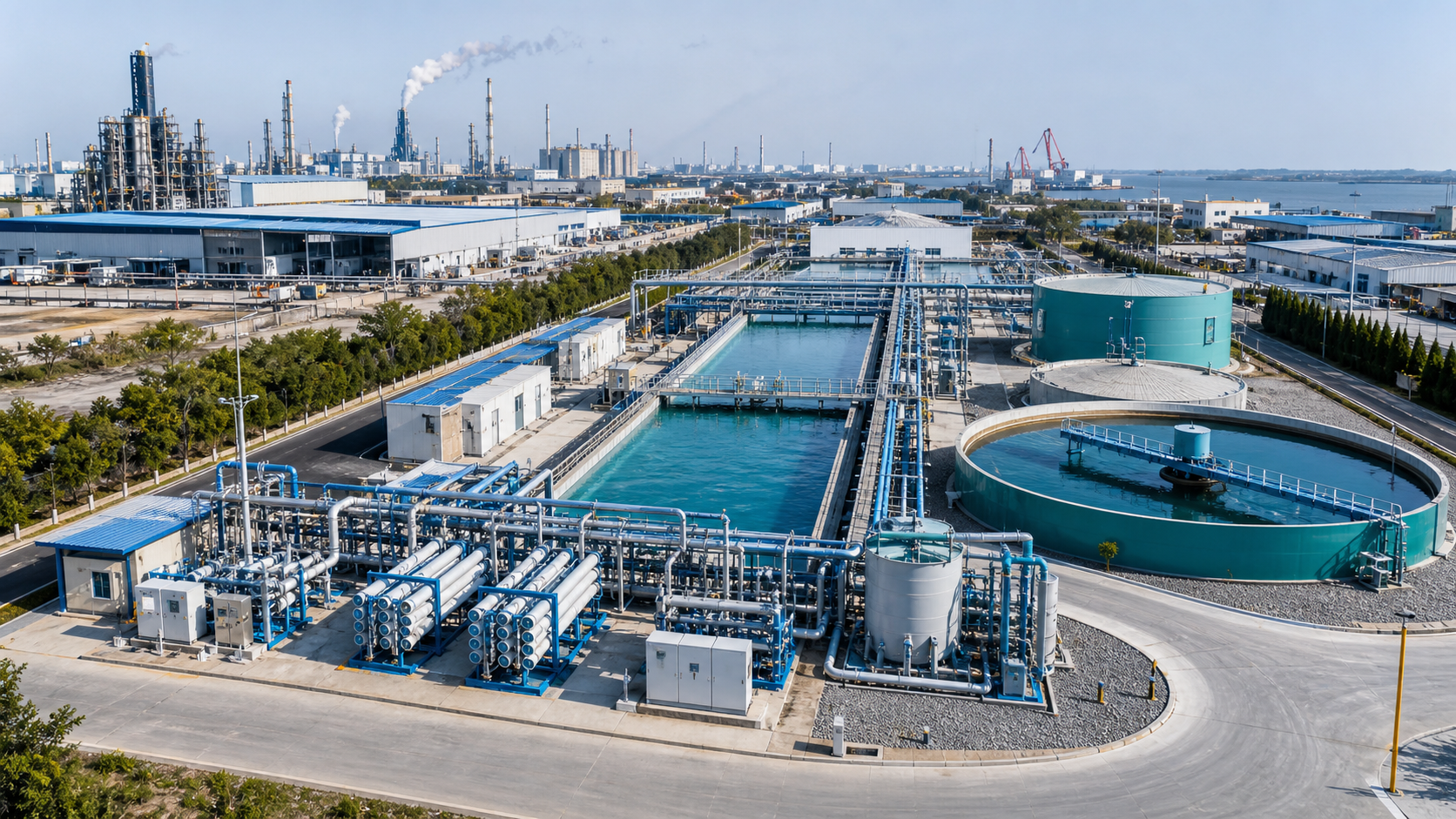
The water market is often described as one enormous defensive sector. That description is directionally attractive and operationally unhelpful. A municipal network, an industrial reuse system, a membrane manufacturer and a monitoring platform sell to different buyers, carry different risks and convert growth into cash in different ways.
Private investors therefore need a market map built around customer problems rather than a single global forecast. The relevant questions are who pays, why they act now, how procurement works, what the supplier must finance and whether the commercial model repeats across sites.
Water Investment Network connects eligible investors with selected private water-technology opportunities. Its portfolio examples span industrial treatment and recovery, membrane separation and water monitoring. That range is a useful reminder: exposure to water can mean equipment, services, recurring software, contracted assets or combinations of all four.
This guide explains the market structure, why capital remains difficult to mobilise, which demand drivers can support technology companies, and how family offices can distinguish structural need from an investable business.
It is written for eligible family offices, high-net-worth individuals and sophisticated investors considering direct private companies. These investments are concentrated, illiquid and can lose value or require further capital. Water Investment Network does not provide regulated financial advice, recommend public securities or guarantee an exit; every opportunity requires independent legal, tax, financial, commercial and technical diligence.
Start with the market structure, not the headline number
“Water” contains several overlapping markets. Public water and wastewater services collect, treat and distribute essential resources. Industrial users buy process water, treatment, reuse and compliance solutions. Agriculture manages irrigation and nutrient runoff. Property owners monitor consumption and leakage. Technology companies provide equipment, components, software and specialised processes to all of them.
The OECD uses a broad definition of water-related investment covering services, water-resource management and risks from too much, too little or too polluted water. It also highlights structural bottlenecks: local and fragmented projects, benefits that are difficult to monetise, weak or unringfenced revenue streams and risk-return profiles that do not always suit private finance. [1]
Those characteristics mean the largest social need is not automatically the best private-company opportunity. A technology supplier may be investable because it sells a repeatable product into an established budget. A major infrastructure need may remain difficult because tariffs, procurement, political risk or project preparation do not support a bankable cash flow.
Separate the landscape into four commercial layers:
- Regulated service providers: utilities and public bodies responsible for supply and wastewater services.
- Infrastructure owners: facilities financed through public budgets, project structures, concessions or corporate balance sheets.
- Technology and equipment suppliers: companies selling treatment processes, membranes, sensors, controls and components.
- Service and data providers: operators, maintenance firms, software platforms and performance-based solution providers.
A single company may cross several layers. That can strengthen customer value while increasing capital needs and execution responsibility. Investors should identify which layer creates margin, which absorbs working capital and which carries performance liability.
Market-size reports can help prioritise research. They should not substitute for contract-level evidence. Definitions vary, forecasts bundle public infrastructure with supplier revenue, and currency growth can be confused with real unit demand. Build the investment case from the company’s reachable customer set.
Identify the demand drivers that create real budgets
Water demand becomes commercially meaningful when a customer can quantify the cost of doing nothing. The most investable drivers are specific enough to trace to a budget and durable enough to support more than one sales cycle.
Production continuity is often the strongest industrial driver. Water quality affects product yield, cooling, cleaning, boilers and process stability. A treatment or monitoring solution can be justified when failure causes downtime, rejected product or damage to expensive equipment.
Discharge and compliance create another budget. Industrial sites and utilities may need better monitoring or treatment to meet permit conditions and reduce pollution exposure. Regulation can strengthen urgency, but the buyer still chooses among operational changes, treatment routes and capital priorities.
Resource efficiency converts water, energy, chemicals and waste into a combined economic case. A reuse system may reduce freshwater purchases and discharge volumes. A higher-recovery membrane can change concentrate disposal and energy cost. Sensors may detect continuous loss or maintenance needs earlier.
Capacity and resilience matter when water availability or discharge constraints limit site expansion. Reuse can create an additional fit-for-purpose supply close to demand. The World Bank’s 2025 water-reuse report argues that the business case is particularly strong where used water is near urban or industrial demand; it also stresses that policy, regulation and bankable delivery models determine whether investment scales. [2]
For each driver, investors should ask:
- which customer role owns the problem and the budget;
- how the cost is measured today;
- what alternatives the customer can choose;
- what event moves the project from interest to approval;
- how long procurement, permitting and installation take; and
- whether the reason to buy repeats across a defined market.
Need, willingness to pay and supplier capture are different. A sector can need billions of investment while one company struggles to convert a pilot. Diligence must bridge all three.
Map the most relevant private water-technology segments

A useful market map is built from distinct customer jobs. The following segments are not exhaustive, but they capture several areas where private technology companies can create measurable commercial value.
| Segment | Typical customer problem | Investor test |
|---|---|---|
| Industrial wastewater treatment | Variable effluent, discharge cost, production limits and compliance | Field performance across feed variation and full treatment cost |
| Reuse and resource recovery | Water constraints, waste disposal and demand for recovered materials | Offtake, avoided cost, treatment boundary and repeatability |
| Membranes and separation | Water quality, recovery, energy, footprint and concentrate management | Fouling, replacement, pre-treatment, lifetime cost and defensibility |
| Digital monitoring and control | Limited visibility, leakage, quality events and inefficient maintenance | Actionable data, integration, renewal, hardware burden and cyber risk |
| Advanced contaminant removal | Micropollutants, PFAS, nutrients and changing quality requirements | Validated removal, residuals, energy, regulation and customer budget |
| Decentralised and modular treatment | Remote sites, slow infrastructure delivery and changing capacity | Standardisation, service network, financing and local approvals |
Some attractive companies sit between segments. A monitoring business may improve membrane operation. A treatment platform may recover a valuable concentrate. A modular system may combine equipment with a service contract.
Integration can deepen value, but it should not obscure the economic engine. Identify the gross profit by component and the responsibility carried by the supplier. A company that promises a complete outcome may win larger contracts while inheriting installation, financing and performance risks that a component seller avoids.
Segment choice should reflect the client’s evidenced strength. Water Investment Network currently presents opportunities related to industrial wastewater and purification, reverse osmosis and nanofiltration, and connected water monitoring. Those categories support deeper guides to industrial wastewater treatment, membrane investment diligence and smart water monitoring.
Compare revenue models before comparing growth rates
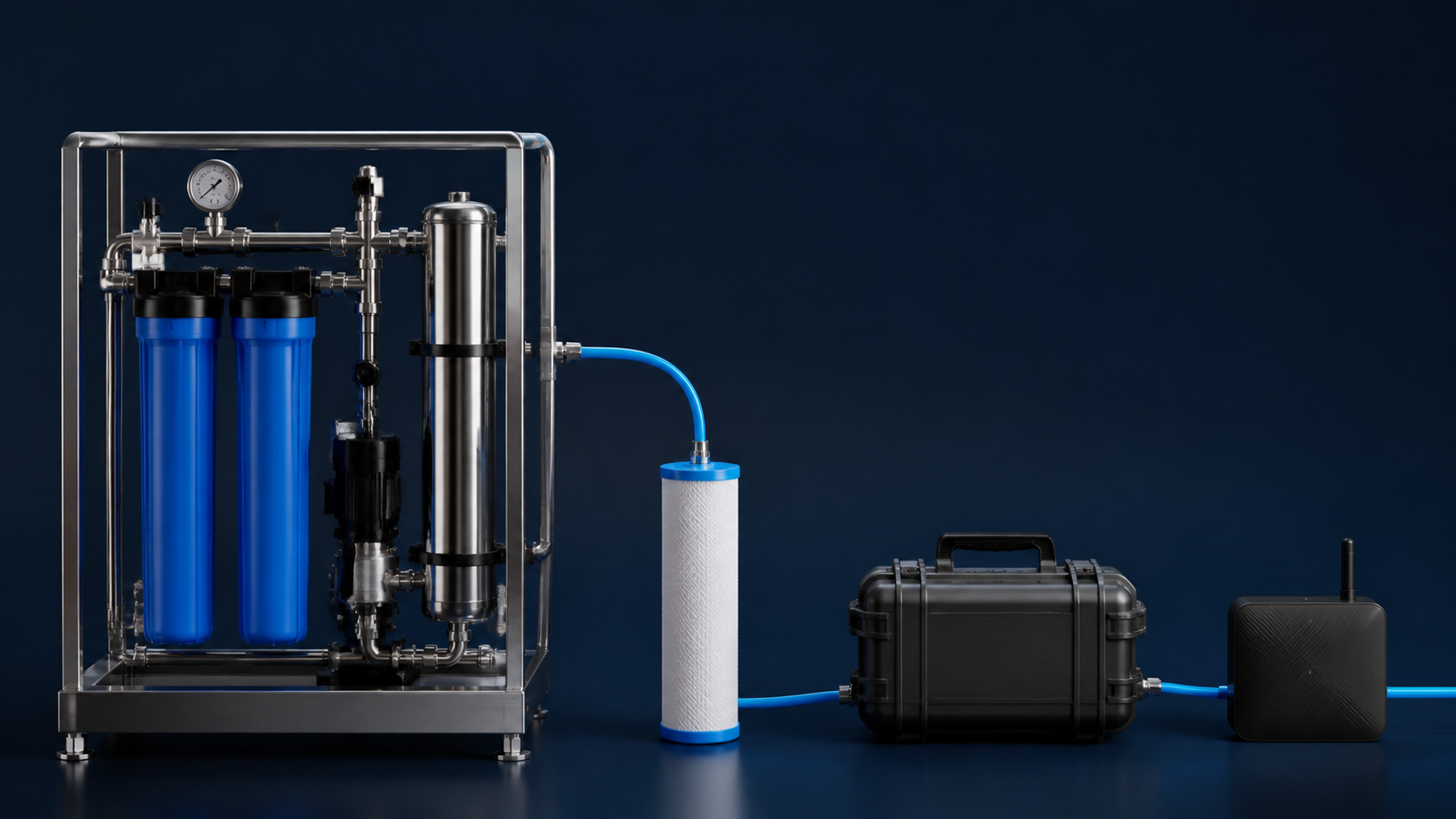
Two water companies can report the same revenue growth and create very different investor outcomes. The revenue model determines visibility, cash conversion, service burden and how much capital is needed to scale.
Equipment sales can deliver clear customer ownership and attractive order values. Revenue may be lumpy, and the supplier often funds design, materials and manufacturing before acceptance. Margin analysis must include commissioning, warranty and field support.
Consumables and replacement components can create recurring value when equipment is installed. Investors should test useful life, customer lock-in, quality control, supplier dependence and whether customers can substitute alternatives.
Software subscriptions can provide recurring revenue and high incremental margin. In water, software frequently depends on sensors, gateways and site integration. Gross margin should reflect hardware, connectivity, support and data-quality costs rather than presenting the platform as pure software.
Service contracts may cover monitoring, maintenance, operation or treatment. They can strengthen retention and operating insight while exposing the provider to labour, consumables and performance risk.
Water-as-a-service or performance models can align payment with treated volume, availability or savings. They may improve customer adoption by shifting capital expenditure, but somebody must own and finance the asset. Contract duration, customer credit, termination rights and residual value become central.
Use a revenue-quality bridge:
- reported revenue by contract type;
- gross margin after installation and support;
- cash received and working-capital movement;
- renewal or reorder evidence;
- customer and sector concentration;
- contracted backlog versus non-binding pipeline; and
- capital required to deliver the next year of growth.
Recurring revenue is useful only when the contract renews, the service remains valuable and the company can deliver it profitably. One-off equipment revenue can be attractive when a standard product earns strong margin and creates a valuable installed base. Avoid labels; follow the cash and obligations.
Assess regulation and public investment as market infrastructure
Public policy shapes the market even when the investee is a private supplier. Permit standards, utility investment programmes, water-quality rules and procurement frameworks influence which problems receive budgets and how quickly technologies can enter service.
The European Investment Bank’s water-sector orientation describes an urgent need for increased public and private investment and sets out its role in addressing market failures and climate resilience. [3]
For technology investors, the relevant question is how public investment reaches supplier revenue. A government commitment can fund utilities, infrastructure owners, research consortia or customer incentives. Each route has different procurement rules, project timing and margin implications.
England and Wales offer a visible example of sector-led innovation support. Ofwat states that its Water Innovation Fund is designed to encourage transformation in water and wastewater services, supporting work that ranges from monitoring to resource recovery. [4]
Innovation funding can validate a technology, create partnerships and help build references. It does not by itself prove a scalable commercial market. Investors should check whether the project led to a standard procurement route, follow-on orders, customer-funded deployment and repeatable economics.
Regulatory analysis should be jurisdiction-specific. The UK, EU and individual GCC states have separate authorities, legal texts and implementation schedules. A company’s route to market may depend on approvals, certifications, tender eligibility, local partners or data requirements.
Create a regulation-to-revenue map:
- name the obligation or funded programme;
- identify the entity required or encouraged to act;
- locate the controlled budget;
- list acceptable technical and procurement routes;
- estimate the realistic sales and implementation timing; and
- record what remains uncertain.
This converts a policy tailwind into testable commercial assumptions. It also protects investors from vague claims that every new water rule creates immediate demand for the company.
Evaluate scalability across engineering, sales and capital
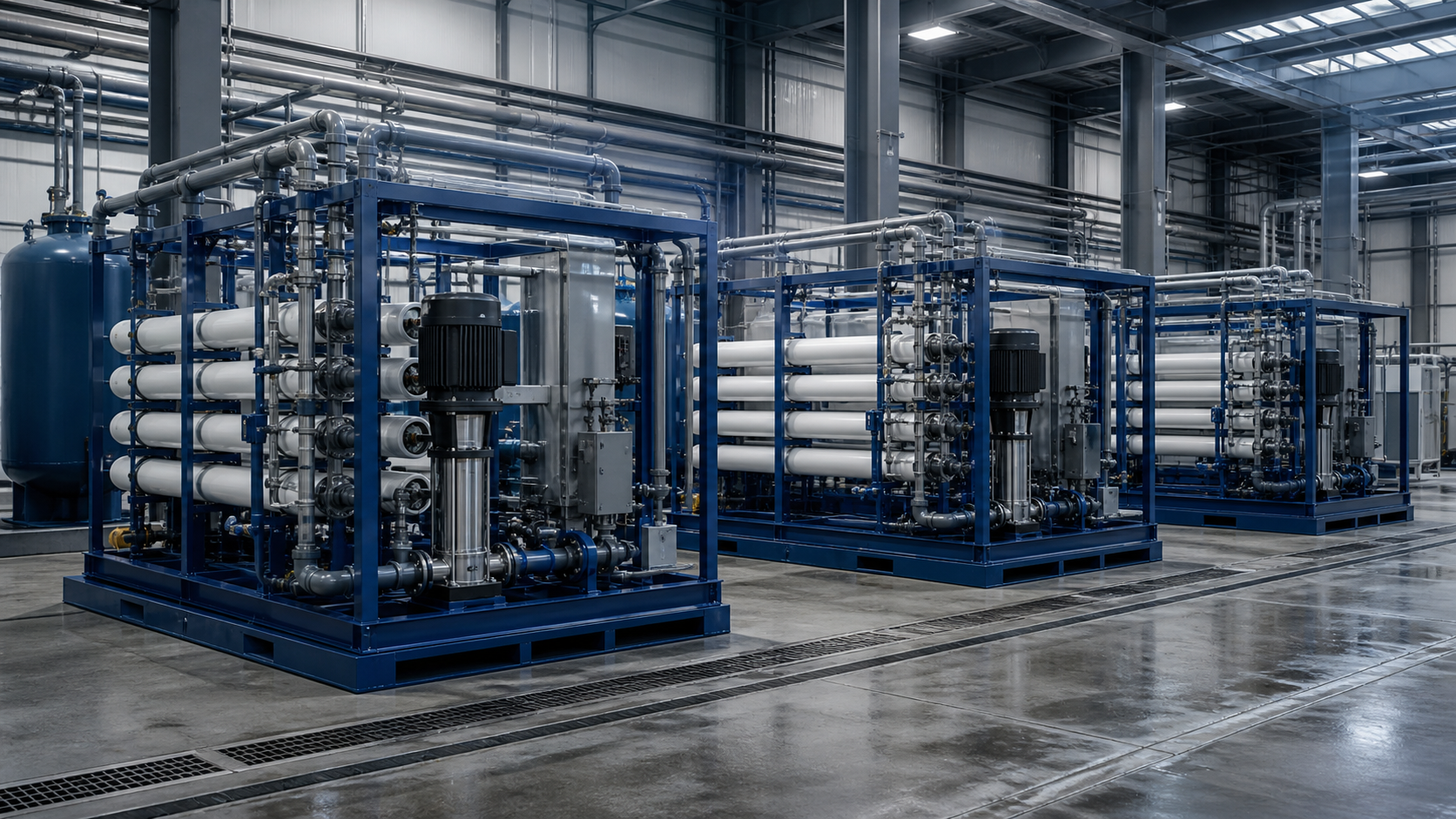
Scalability in water is not simply manufacturing more units. A company must repeat product performance, installation, customer acquisition, service and financing without equal growth in complexity.
Begin with technical standardisation. How much of the system is fixed, configurable or designed from scratch? Feedwater and site conditions vary, so some adaptation is normal. The question is whether variation is handled through a bounded design envelope or through open-ended engineering.
Then examine delivery. A scalable company has clear site requirements, predictable installation steps, trained partners or internal capacity, documented commissioning and remote diagnostics. It knows the lead time and cash requirement for each deployment type.
Sales repeatability requires more than a large addressable market. Identify the customer profile, buying committee, trigger event, proof required, procurement path and average cycle. Compare those assumptions with every won, lost and delayed opportunity.
Service can become the hidden constraint. More sites create maintenance, calibration, spare-parts, software support and customer-success work. Forecast headcount, inventory and travel alongside sales. A company that grows installations faster than service capability can destroy the references needed for the next sale.
Capital scalability matters when the provider owns equipment or extends customer payment terms. Model how many deployments the balance sheet can support, whether project finance or asset partners are available and how risk is allocated when performance falls short.
Useful milestones include:
- a defined product envelope covering most target sites;
- repeat orders from independent customers;
- shorter commissioning with stable performance;
- gross margin that improves without cutting service quality;
- a channel or partner model with verified capability; and
- cash conversion that remains manageable as order value grows.
Scale should be demonstrated one operating constraint at a time. A forecast that multiplies units without multiplying the resources needed to sell, install and support them is incomplete.
Build a market-level investment thesis at a glance
A market thesis should show where structural need becomes private-company value.
| Element | Market evidence | Company-level proof |
|---|---|---|
| Demand | Water constraints, compliance, operating cost and resilience needs | Budgeted customer problem and signed contracts |
| Customer | Utilities, industrial sites, infrastructure owners and property operators | Named buyer, procurement path and referenceable users |
| Revenue | Equipment, service, software, consumables and performance models | Margin, cash conversion, renewal and support cost |
| Scale | Large installed asset base and repeated operational problems | Standardised delivery across several customers and conditions |
| Risk | Regulation, long procurement, fragmented projects and capital intensity | Runway, concentration, reliability and execution controls |
| Exit | Strategic demand for treatment, data and installed customer access | Buyer map, defensible assets and credible transaction rationale |
| Impact | Need for security, reuse, quality and lower resource intensity | Verified outcome per deployment without double counting |
The thesis fails if the company cannot capture value. A growing market can support intense competition, weak pricing or long customer adoption. Investors should state the company-specific advantage: proprietary performance, lower lifetime cost, an installed data set, better integration, regulatory approval, channel access or a model that reduces customer friction.
Defensibility must survive scale. Bespoke founder knowledge can win early projects but may not transfer. A patent can protect a component while competitors solve the customer problem differently. Customer trust, service data and workflow integration can be powerful, but they need evidence.
Exit logic should describe plausible acquirers and why ownership would create more value than partnership. Potential strategic buyers may seek technology, customer access, recurring revenue, geographic entry, data or engineering capability. An exit is a scenario, never a promise.
Use a disciplined market and company diligence process

A market review should narrow, not enlarge, the opportunity set. Start with customer problems the company can credibly solve, then move from top-down context to bottom-up evidence.
- Define the boundary. State the technology, customer, geography and commercial model included.
- Validate the buyer. Interview budget owners, users and procurement stakeholders.
- Reconstruct demand. Use installed assets, compliance needs, production constraints and replacement cycles.
- Map alternatives. Include incumbent processes, operational changes and doing nothing.
- Test company capture. Review wins, losses, pricing, margin, cycle time and implementation.
- Model cash. Connect orders to manufacturing, installation, acceptance and collection.
- Verify impact. Reconcile customer operating evidence with stated water outcomes.
Avoid relying on management’s total addressable market slide. Build a serviceable market from customers the company can reach with its current product and route to market. Then apply realistic annual conversion, delivery capacity and customer concentration limits.
Use sensitivity analysis. Extend sales cycles, reduce win rates, increase installation cost and delay collection. Add a scenario in which a regulation moves later or a large customer pauses capital expenditure. The purpose is not to predict one number but to see which assumptions control survival and value.
Independent technical review should examine representative water conditions, not only the best demonstration. Customer calls should include a site that encountered a problem. Financial diligence should trace deposits, work in progress, acceptance and warranty provisions.
Build an evidence room around the customer journey rather than the company’s presentation structure. Start with the first documented problem, then follow the opportunity through qualification, trial, proposal, contracting, delivery, acceptance, invoice, payment and support. Select several wins, losses and stalled opportunities. The sequence reveals whether the commercial system is repeatable and whether reported pipeline stages correspond to observable customer actions.
For each sampled opportunity, reconcile the customer name or anonymised identifier across the customer-relationship system, contract, project plan, invoice ledger and bank receipt. Check when probability changed, who authorised the change and whether a delayed opportunity was quietly moved into a later forecast. A well-managed pipeline can still be uncertain; the important feature is that uncertainty is represented consistently.
Customer references should test both value and friction. Ask the economic buyer what problem released budget, the operator what changed at the site, procurement what delayed approval and finance whether the expected saving appeared. Confirm installation effort, unplanned support, data ownership, performance remedies and the likelihood of another purchase. A reference selected only because the deployment was easy will not show how the company behaves under stress.
Translate the market thesis into a bottom-up operating model. Separate the number of reachable accounts from the number the current sales team can qualify. Apply observed cycle times and conversion by stage, then constrain delivery by engineering, manufacturing, working capital and service capacity. If channel partners drive the forecast, use their active qualified opportunities and trained resources rather than the partner’s total customer base.
The diligence team should challenge market adjacency. A company may claim that one platform serves utilities, industrial plants, buildings and agriculture. Test how feed conditions, buyer authority, certification, integration, price, sales cycle and service change between those segments. Shared technology does not automatically create shared commercial execution. Value new segments only when the company has evidence or a funded, time-bound validation plan.
Maintain a claim register for market numbers and regulatory statements. Record the original source, publication date, definition, geography, base year and whether the figure is historical or forecast. Then state the narrow decision it supports. Broad forecasts can show strategic context, but company revenue should be modelled from reachable customers and delivery capacity. This prevents a large thematic market from becoming an unsupported valuation input.
Bring technical, commercial and financial reviewers together before the investment recommendation. A lower-energy process may require more pre-treatment; a recurring service contract may place equipment on the company’s balance sheet; rapid demand may increase warranty exposure and cash needs. Integrated review exposes those relationships before they are separated into optimistic workstreams.
Finish with a falsifiable thesis. List the evidence that would show the market is slower, narrower or less profitable than expected: repeat orders fail to appear, payback exceeds the customer threshold, delivery remains bespoke, a route-to-market partner does not originate demand or gross margin falls after service costs. Assign an owner and review date to each signal so that market conviction can be updated rather than defended.
Record the evidence date and review cadence. Water regulation, capital programmes, customer budgets and technical alternatives move at different speeds. An investment committee should know which assumptions are durable, which need quarterly validation and which depend on a single near-term decision. That discipline turns market research into an operating tool for the holding period.
Keep rejected segments in the record as well. A clear reason for excluding a geography, application or customer type demonstrates focus and lets the team revisit the choice when evidence changes. It also reduces the risk that an attractive new forecast quietly expands the thesis after investment.
Finally, compare valuation with the capital still required. A company may have strong technology and demand while needing several rounds to build manufacturing, references and service capability. Ownership, dilution and follow-on reserves belong in the original decision.
Compare competition through customer alternatives and strategic value
Water-technology competition is often wider than a list of start-ups using similar language. The customer can buy an incumbent process, add capacity to existing equipment, outsource treatment, change production, accept a charge, postpone investment or choose a large integrated supplier.
Build the competitor map around the purchasing decision:
- the incumbent technology and its full operating cost;
- established vendors already approved by the customer;
- adjacent technologies that reach the same outcome differently;
- internal operational changes that reduce the problem;
- off-site disposal or service alternatives; and
- the cost and acceptability of doing nothing.
Review lost deals as carefully as wins. Price is rarely the only reason. A customer may choose lower perceived integration risk, a stronger balance sheet, existing service coverage or a route that fits the capital budget. The investee must explain which objections it can change and which define its market boundary.
Competitive advantage should be evidenced in a customer outcome. Technical novelty matters when it improves lifetime cost, quality, recovery, footprint, reliability, approval or implementation. Patents, software and data can protect that advantage, but the company also needs an economical route to sell and deliver it.
Strategic value can differ from stand-alone cash flow. A larger water, industrial or infrastructure company may value a technology because it fills a portfolio gap, creates recurring service, opens customer access or strengthens an installed base. Investors should identify specific integration logic rather than assume consolidation.
Build a potential-buyer map early, then test it without treating an exit as certain. What capability would the buyer gain? Could it partner instead? Would acquisition require a revenue threshold, approved product, geographic footprint or management depth? What assets survive if the expected buyer never appears?
Valuation should reflect evidence achieved and capital still required. A large market can support a premium only when the company has a credible mechanism to capture it. Avoid paying today for every region, segment and revenue model on a presentation.
Distinguish UK, European and GCC routes to market
Water needs are global, but markets are local in ownership, regulation, pricing, procurement and operating conditions. A credible regional strategy explains how those differences change the customer case.
In the UK, regulated utilities, industrial permits, water-resource planning and established engineering supply chains shape demand. Industrial opportunities may move through corporate capital budgets, while utility adoption can depend on price reviews, frameworks, trials and assurance.
Continental Europe is not one procurement market. EU directives can set common direction, but member states implement rules through national authorities, funding and timelines. The company must identify the country, affected customer set, approved technical route and local partner or sales capability.
Gulf Cooperation Council markets include strong needs around desalination, reuse, industrial expansion and water security. They also differ across the UAE, Saudi Arabia, Qatar, Kuwait, Bahrain and Oman. Water tariffs, public ownership, localisation, energy economics, project structures and tender access can materially change an opportunity.
For each target region, require a route-to-market brief:
- customer segment and named economic buyer;
- water problem and quantified cost or policy trigger;
- product adaptation and required approvals;
- sales, procurement and implementation timeline;
- local partner role and commercial terms;
- service, spares and performance responsibility;
- payment, currency and working-capital exposure; and
- the reference needed before wider rollout.
A distributor with a broad territory is not a market entry plan. Check qualified opportunities, technical training, customer access and investment in demonstrations. Preserve direct access to end-customer evidence.
Regional expansion should follow product readiness. Entering several countries before the first market is repeatable can multiply certification, service and management burden. Patient capital is most valuable when it funds a sequenced proof plan rather than a list of flags.
Frequently asked questions about the water technology market
Is the water market one investable sector?
No. It includes regulated services, infrastructure, industrial treatment, components, software and specialised services. Each has different customers, margins, capital needs and risks.
Which water technology segments are relevant to private investors?
Relevant segments can include industrial wastewater, reuse, membranes, monitoring, advanced contaminant removal and modular treatment. The investability of any company depends on its customer demand, economics and execution.
Does regulation guarantee growth for a water company?
No. Regulation can strengthen customer need, but procurement, implementation timing, approved alternatives and budgets determine whether the company earns revenue.
What is the most important market diligence question?
Identify the paying customer and the cost of doing nothing. That answer connects structural need to purchase authority, timing and commercial value.
How should family offices approach direct water investments?
Define the mandate, stage, holding period, liquidity and impact requirements first. Then conduct legal, financial, commercial, technical and impact diligence on each private-company opportunity.
Explore the private-company opportunity set
The water technology market is attractive because essential operating problems recur across industries and regions. It is difficult because customers, regulation, water conditions and capital structures vary. The opportunity lies in companies that turn that complexity into a repeatable commercial system.
Eligible family offices, high-net-worth individuals and sophisticated investors can join Water Investment Network to learn about selected direct opportunities. Investors should make their own assessment of eligibility, valuation, liquidity, risk and suitability.
For the impact framework behind this market view, read Impact Investing in Water. For general questions about the network, use the contact page.
Water Investment Network does not manufacture equipment, provide engineering services, give regulated financial advice or guarantee returns.
Sources
- https://www.oecd.org/en/publications/financing-a-water-secure-future_a2ecb261-en.html
- https://www.worldbank.org/en/topic/water/publication/scaling-water-reuse
- https://www.eib.org/en/publications/20230016-eib-water-sector-orientation
- https://www.ofwat.gov.uk/regulated-companies/innovation-in-the-water-sector/