Industrial wastewater treatment is investable when it removes a constraint that a customer can price. The constraint may be a discharge limit, high disposal cost, unreliable water supply, insufficient capacity for expansion or a waste stream that contains recoverable value.
The technology still matters. Industrial effluent can vary by hour, product run and site. A process that works in a laboratory must survive real feed conditions, operator behaviour, maintenance and economic pressure. Investors therefore need to connect removal performance with the full cost of ownership and the customer’s reason to buy.
Water Investment Network’s portfolio includes a British company using low-temperature, ambient-pressure treatment for challenging industrial effluents and water recovery. The description also points to modular deployment and water-as-a-service. Those characteristics illustrate the central investment questions: can performance repeat, can the model scale, and who funds the installed asset?
This guide explains the industrial customer case, treatment economics, revenue models, field validation, regulation, impact measurement and downside risks for eligible private-market investors.
It is intended for eligible family offices, high-net-worth individuals and sophisticated investors evaluating direct private companies. Such investments are concentrated and illiquid, may need further capital and can lose value. Water Investment Network does not provide regulated financial advice or guarantee investment outcomes. Investors should obtain independent legal, tax, financial, commercial and technical advice.
Begin with the industrial customer’s water balance
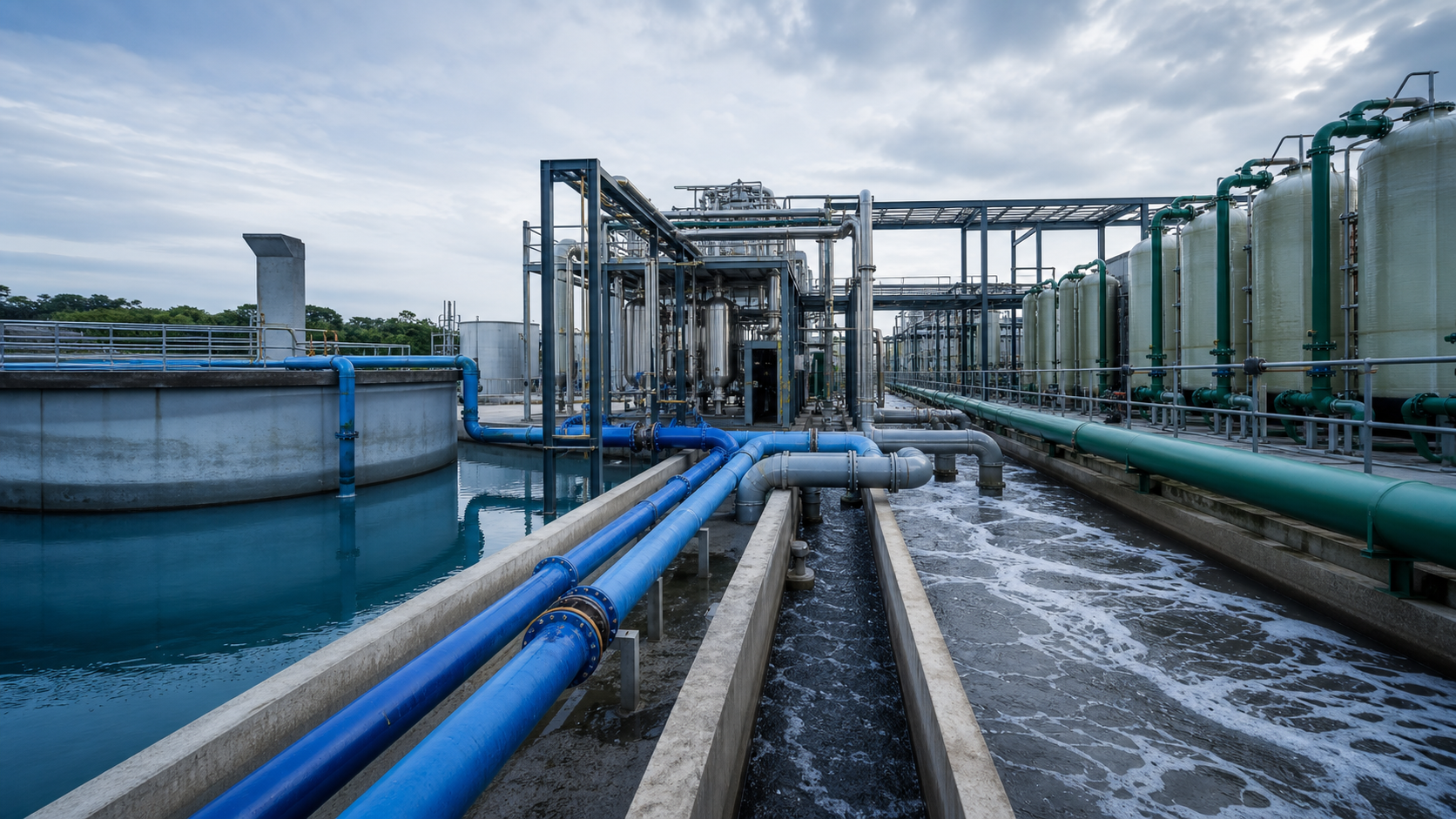
Every industrial site has a water balance: water enters, is used in processes, changes quality, leaves in products, evaporates, is discharged or returns for another use. Investment diligence should start by mapping that balance rather than selecting a treatment technology in isolation.
Ask the customer to quantify:
- source, volume, quality and price of incoming water;
- processes that require particular purity or temperature;
- effluent streams, variability and current treatment;
- discharge destination, permit limits and charges;
- production losses linked to water quality or availability;
- energy, chemicals, labour and residual disposal; and
- water that could be reused at a fit-for-purpose quality.
This map identifies the economic boundary. A solution may reduce freshwater purchases but increase energy or concentrate disposal. It may create reusable water that the site cannot store or connect to a process. It may improve discharge quality without solving the customer’s main cost.
Industrial reuse is not one standard. The US Environmental Protection Agency notes that recycled water can serve manufacturing, cooling and other on-site needs, while treatment intensity depends on the end use and source water. Some industrial applications can use fit-for-purpose water without the cost and energy needed for drinking-water quality. [1]
For investors, the practical lesson is to avoid measuring value only in volume. One cubic metre can carry different economic value depending on purity, location, reliability and avoided treatment or discharge cost.
A robust company should be able to explain the customer’s baseline in plain language. It should know which cost or constraint changes, how the result is verified and why that result is worth more than the delivered price.
Understand why industrial wastewater is technically difficult
Municipal wastewater is variable, but industrial streams can be exceptionally concentrated or specific. Food production may carry organic load, fats and cleaning chemicals. Pharmaceuticals can produce complex active substances. Mining and metals can create salinity, acidity and dissolved metals. Semiconductor production demands very high process-water purity and generates distinct rinse streams.
The technology selection depends on the feed, target and destination. Common process families include physical separation, biological treatment, chemical precipitation, membranes, evaporation, adsorption, oxidation and combinations arranged as a treatment train.
Investors do not need to design the plant. They do need to understand six technical-commercial relationships:
- Feed variation: Can the process tolerate realistic peaks and contaminants?
- Pre-treatment: What must happen before the core technology works?
- Recovery: How much usable water or material leaves the process?
- Residuals: What concentrate, sludge or off-gas remains and what does disposal cost?
- Reliability: What maintenance, cleaning and operator skill are required?
- Guarantee: Which performance conditions are contractual and which are assumptions?
A proprietary core step may be valuable while the balance of plant determines project success. Pumps, controls, heat integration, cleaning, storage and upstream equalisation can dominate cost and commissioning risk.
Review the complete mass and energy balance. Confirm that contaminants do not disappear from the model. If a technology concentrates a waste stream, the investor should see its destination, classification, handling cost and liability.
Field data must reflect the target market. Performance on one customer’s consistent stream may not transfer to a site with batch cleaning, seasonal production or different chemistry. Define the product envelope and the conditions that trigger additional engineering.
Translate treatment performance into customer economics
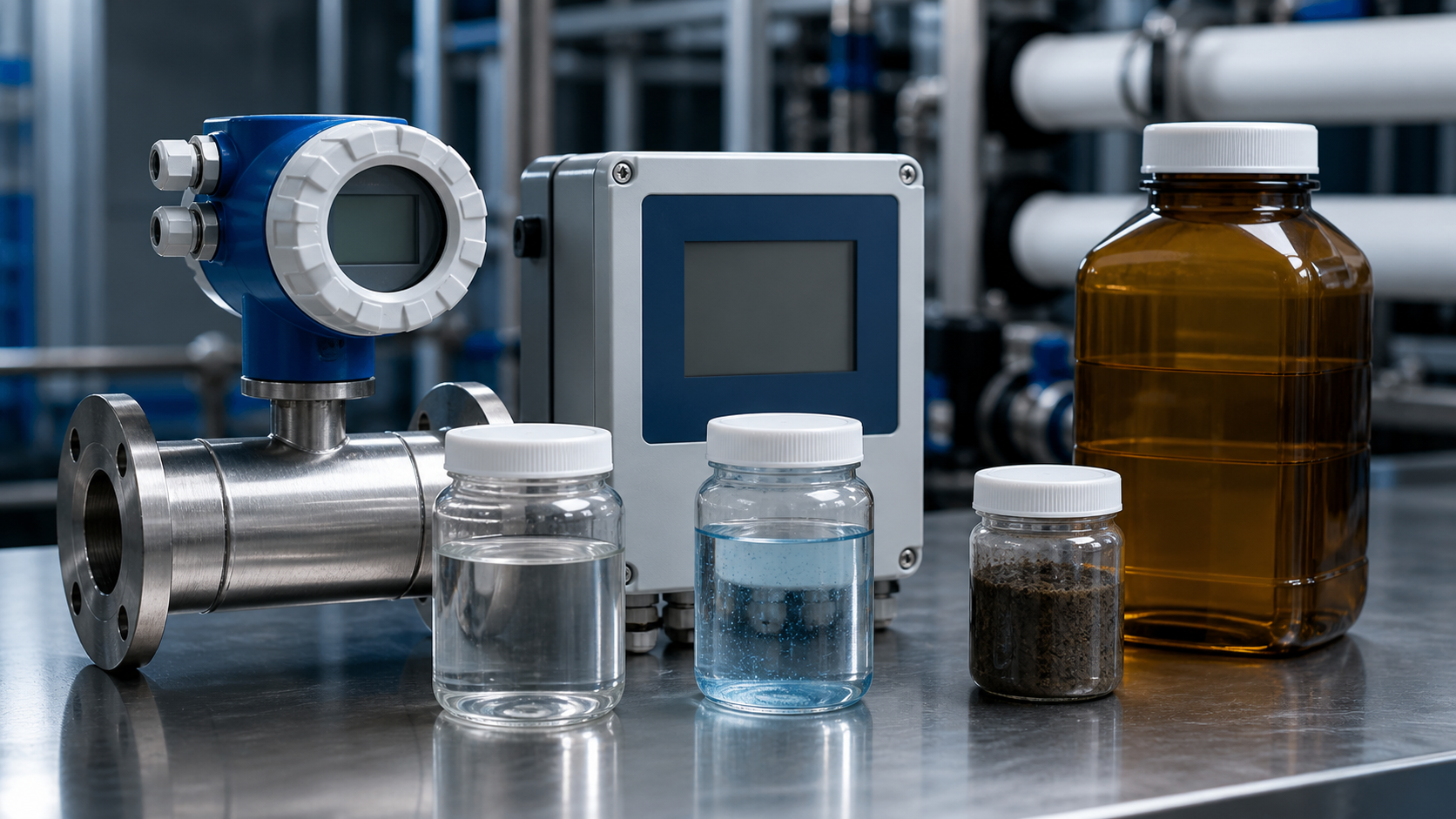
A customer buys an economic outcome delivered through treatment. The investment case should show the baseline cost, the changed cost and the capital or contract needed to create the change.
Build a full-cost comparison including:
- equipment and installation;
- civil works, utilities and integration;
- energy and heat;
- chemicals, membranes, media and consumables;
- operators, laboratory work and maintenance;
- sludge, concentrate and recovered-material handling;
- downtime, redundancy and contingency;
- freshwater, sewer and discharge charges; and
- the value of production capacity or risk avoided.
Use actual operating hours and representative feed conditions. Annualising a short, stable trial can overstate availability and understate cleaning. Compare promised savings with invoices, meter data, waste manifests and production records.
Reuse can create a particularly strong case when treated water is close to industrial demand. The World Bank’s 2025 report argues that urban and industrial reuse can expand materially when regulation, planning, financing and bankable delivery models align. It also emphasises that proximity between used water and demand improves the business case. [2]
Even a credible payback estimate needs a decision context. Some industrial customers ration capital using short thresholds. Others value resilience or capacity more highly than direct savings. A supplier should know whether its project competes with production equipment, energy efficiency, compliance work or general infrastructure.
Analyse sensitivity to the assumptions the company cannot control. Change energy price, water price, production rate, disposal cost, operating availability and recovery. If the customer case disappears under modest changes, the sales proposition may be fragile.
Finally, identify who carries performance risk. A customer-owned system can leave operating risk with the customer, subject to warranty. A service provider may guarantee output and absorb energy, consumables or downtime. Price and margin should reflect that transfer.
Compare industrial water revenue models
Industrial wastewater companies often evolve from selling equipment to delivering an outcome. That evolution can increase lifetime value while changing capital intensity and liability.
| Model | Potential strength | Principal investor concern |
|---|---|---|
| Equipment sale | Upfront order value and clear customer ownership | Lumpy revenue, project margin and working capital |
| Design and integration | Higher share of project value and customer control | Bespoke engineering, scope change and delivery liability |
| Maintenance and consumables | Recurring installed-base revenue | Service capacity, inventory and substitution |
| Water-as-a-service | Longer contracts and outcome alignment | Asset finance, customer credit and performance exposure |
| Performance or savings share | Lower customer adoption barrier | Baseline disputes, measurement and variable cash flow |
| Resource-recovery revenue | Additional value from recovered materials | Purity, volume, offtake and commodity exposure |
Equipment businesses should track order intake, backlog quality, gross margin by project, manufacturing lead time, warranty provision and cash collection. Review whether engineering hours are allocated honestly or hidden in overhead.
Service businesses need contract-level unit economics. Identify asset ownership, minimum volume, indexation, availability commitments, termination rights, consumable exposure and residual value. Long contracts are valuable only when obligations and counterparty quality are understood.
Resource recovery deserves particular caution. A concentrate may contain valuable material, but recovery economics depend on purity, consistency, scale, logistics and a real offtaker. Treat an unsigned future market as upside, not base-case revenue.
A blended model can be attractive: an initial equipment sale followed by monitoring, consumables and service. Confirm that recurring revenue is genuinely contracted or evidenced by reorder behaviour. An installed base is an opportunity, not automatically an annuity.
The model should suit customer procurement. A site with available capital may prefer ownership. Another may choose an operating fee to avoid capital expenditure. The supplier may need a financing partner rather than using its own balance sheet.
Build the industrial treatment investment thesis
An investment thesis should make the customer, technology and capital relationships explicit.
| Element | Required evidence | Failure signal |
|---|---|---|
| Demand driver | Measured disposal, compliance, capacity or supply cost | Interest exists but no budget owner or trigger |
| Paying customer | Defined industrial segment, site role and procurement path | Every sale targets a different buyer and use case |
| Technology | Long-duration field data across representative feed variation | Performance depends on ideal feed or hidden pre-treatment |
| Revenue | Contracted equipment, service, consumables or outcome fees | Pilots and pipeline presented as recurring revenue |
| Scale | Bounded design envelope, repeatable installation and support | Engineering and service hours rise with every unit |
| Risk | Residuals, reliability, working capital and customer concentration | Downside costs sit outside the company model |
| Exit | Strategic buyers and a specific capability or customer rationale | Exit depends only on general water-market growth |
| Impact | Verified reuse, discharge quality or resource recovery | Activity volume is reported without baseline or destination |
The strongest thesis may be narrow. A company could serve one difficult effluent in one industrial sector with a repeatable process and high customer value. That can be more defensible than a claim to treat every wastewater stream.
Growth equity should fund the constraint that unlocks repeatability: manufacturing, channel capacity, reference sites, service systems, approvals or working capital. Capital should not merely extend a pattern of bespoke pilots without conversion.
Model the next milestone and the capital required to reach it. If the company must fund several customer assets, build a separate financing strategy. Equity used as long-term project finance can dilute owners before the technology platform earns its value.
Examine permits, compliance and regional market entry
Industrial treatment demand often interacts with environmental permits, sewer consent, water abstraction, product standards and waste rules. These requirements are specific to the activity and jurisdiction.
In England, Environment Agency guidance explains that activities capable of polluting water or operating certain industrial installations may require an environmental permit. It also directs operators to specific guidance for surface-water, groundwater and trade discharges. [3]
Separate the customer’s legal obligation from the supplier’s market claim. A permit may set a discharge boundary but allow several ways to comply: process change, off-site disposal, connection to sewer or different treatment technologies. The company must show why its route is technically and economically preferred.
The Environment Agency’s collection on water-discharge and groundwater permits covers application, risk assessment, treatment, monitoring and compliance limits. [4]
For due diligence, obtain the relevant permits, trade-effluent consents, correspondence and monitoring data from representative customers where lawful. Confirm who is responsible for compliance after installation and what happens if output falls outside specification.
Regional expansion requires a fresh route-to-market assessment. EU member states, the UK and GCC jurisdictions differ in discharge rules, water pricing, public procurement, localisation and approval. Do not treat a successful installation in one country as automatic regulatory acceptance elsewhere.
Local partners can help with integration and service. Review their incentives, technical capability, territory rights, customer ownership and liability. A distributor agreement is not evidence of active market access unless the partner invests time and wins projects.
Regulation is most valuable when it is converted into customer-level timing. Map which sites are affected, when capital plans are approved, how compliance is tested and what evidence suppliers need before tender.
Verify field performance and operational scalability
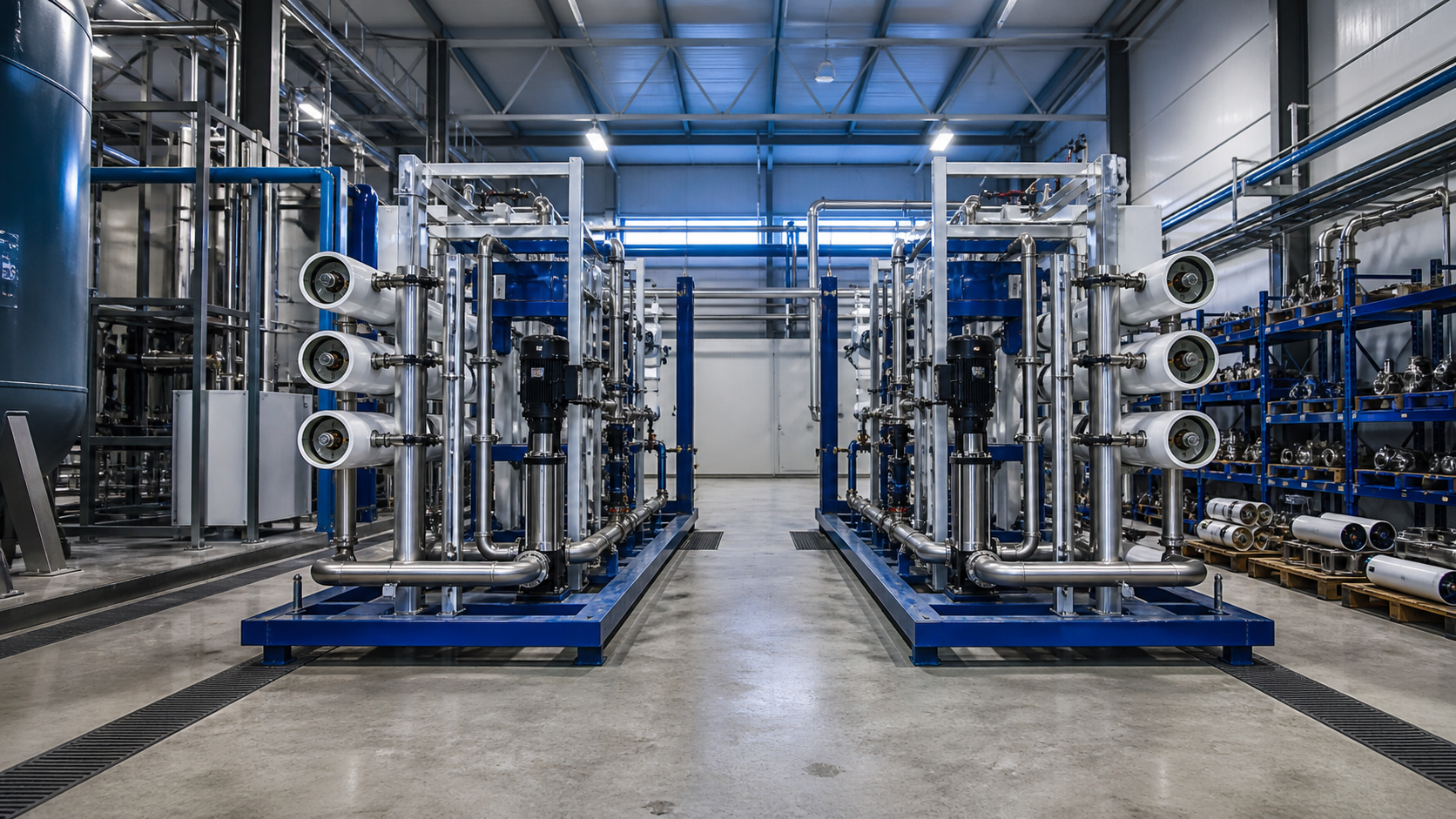
A successful pilot is the beginning of field diligence. Investors should examine whether the operating result persists through feed variation, cleaning, maintenance, operator changes and seasonal production.
Request a site-level evidence pack containing:
- design basis and contractual performance conditions;
- commissioning and acceptance records;
- time-series flow and quality data;
- energy, chemical and consumable use;
- availability, downtime and failure causes;
- maintenance and replacement history;
- residual volumes and disposal documentation; and
- customer payments, disputes and repeat orders.
Reconcile the evidence across teams. Technical reports may exclude downtime while finance includes service credits. Sales may call a demonstration commercial because the customer contributed cash. Operations may rely on founder intervention that is absent from the scale plan.
Inspect at least one difficult deployment. Learn how the company diagnosed the problem, communicated with the customer, paid for the remedy and changed its product. A company that documents failure and improves can be more investable than one that presents only perfect sites.
Scalability depends on standard interfaces and controlled variation. Review the percentage of engineering reused, time from order to commissioning, number of on-site days, partner contribution and remote support. Track these measures by deployment cohort.
Service readiness is an asset. Spare-parts availability, training, monitoring, response time and escalation protect customer outcomes and reference value. Include the cost in gross margin and the headcount plan.
Manufacturing diligence should cover critical suppliers, lead times, quality checks, alternative components, certification and working capital. Rapid order growth can expose a fragile supply chain before it creates cash.
Run a structured evidence-room review across a representative group of sites. Choose an early installation, a recent standard deployment, a difficult project and, where available, a repeat customer. For each one, create a timeline from water characterisation and proposal through commissioning, acceptance, invoice, payment and ongoing service. The comparison shows whether later cohorts are becoming faster and more predictable.
Reconcile design claims with source data. Confirm who sampled the wastewater, when samples were taken, how variability was represented and which laboratory methods were used. A composite sample may hide a short toxic load that determines plant reliability. A short pilot may miss seasonal ingredients, cleaning cycles, shutdowns or production changes. The design margin should be explicit and commercially affordable.
Review the performance guarantee line by line. Identify the influent range, outlet requirement, availability definition, sampling method, exclusions and remedy. Then compare those terms with actual operation. A system can meet an average outlet value while missing peaks, or achieve the guarantee by using more chemicals, energy or operator time than priced. Acceptance data and lifetime economics must tell the same story.
Build a site contribution account. Start with contracted price and subtract equipment, fabrication, engineering, freight, installation, commissioning, consumables, warranty, field service and any liquidated damages or credits. Allocate founder and senior technical time where it is still necessary. Report both project gross margin and cash timing. This avoids treating unpaid expertise or delayed supplier payments as scalable profit.
Examine change orders in both directions. Customer-driven scope additions can improve revenue but also reveal weak front-end definition. Unbilled extra work, repeated design changes and emergency site visits can destroy economics. Classify each change by cause and ask what standard product, contract or qualification improvement prevents recurrence.
Service records are an important commercial dataset. Group alarms, component failures, cleaning events and site visits by root cause. Measure time to detect, respond and resolve, then link the event to customer downtime and company cost. Check whether remote monitoring prevents visits or merely identifies them. The service model should become more productive as the installed base grows.
Supply-chain review should identify single-source components, supplier tooling, minimum order quantities, lead times, quality escapes and substitutes that require redesign or reapproval. Confirm ownership of drawings, software and test procedures. For outsourced fabrication, visit or independently review a supplier and trace one completed unit through incoming inspection, assembly, factory acceptance and release.
Test the next twelve months as an operating plan. Map signed orders and probability-weighted opportunities onto engineering hours, factory slots, commissioning teams, inventory purchases and customer payment dates. Add one delayed acceptance, one component shortage and one underperforming site. The resulting cash and capacity profile is more useful than applying a market growth rate to last year’s revenue.
Finally, document what the company refuses to treat. Clear application limits can be a sign of commercial maturity. A business that pursues every wastewater stream may accumulate pilots and references that do not transfer. A company that qualifies feed, customer capability, discharge route and achievable economics protects its reputation and preserves technical resources for repeatable markets.
Use customer concentration analysis at both corporate and sector level. Two sites owned by one group may appear diversified in a project list but remain one budget and credit exposure. Several food customers can still be correlated through commodity cycles, energy prices or a shared regulation. Model the loss or delay of the largest account and the cost of redeploying equipment and staff.
Contract review should match technical responsibility. Confirm who supplies utilities, pre-treatment, operators, laboratory testing and residual disposal; who bears feed changes; and how performance disputes are resolved. Service and build-own-operate structures add asset ownership, insurance and long-term performance obligations. Price those duties into cash, margin and governance rather than describing all contracted revenue as equally recurring.
Before approval, convert remaining uncertainties into a ninety-day diligence or post-completion plan. Name the site data still required, customer reference to complete, supplier to qualify, permit interpretation to confirm and unit-economics reconciliation to finish. Each action needs an owner and a decision consequence. The plan prevents unresolved evidence from disappearing into a general risk register once capital is committed.
Set reporting definitions before the first board pack. Orders, backlog, accepted revenue, treatment capacity and verified reused water must use consistent boundaries. Reconcile operational and financial data at site level, then aggregate. This makes it possible to see whether the company is growing through repeatable profitable deployments or adding operational exposure faster than it builds capability.
Preserve the underlying site records so that management, investors and independent reviewers can reconstruct every material claim throughout the holding period.
Measure water impact without ignoring trade-offs
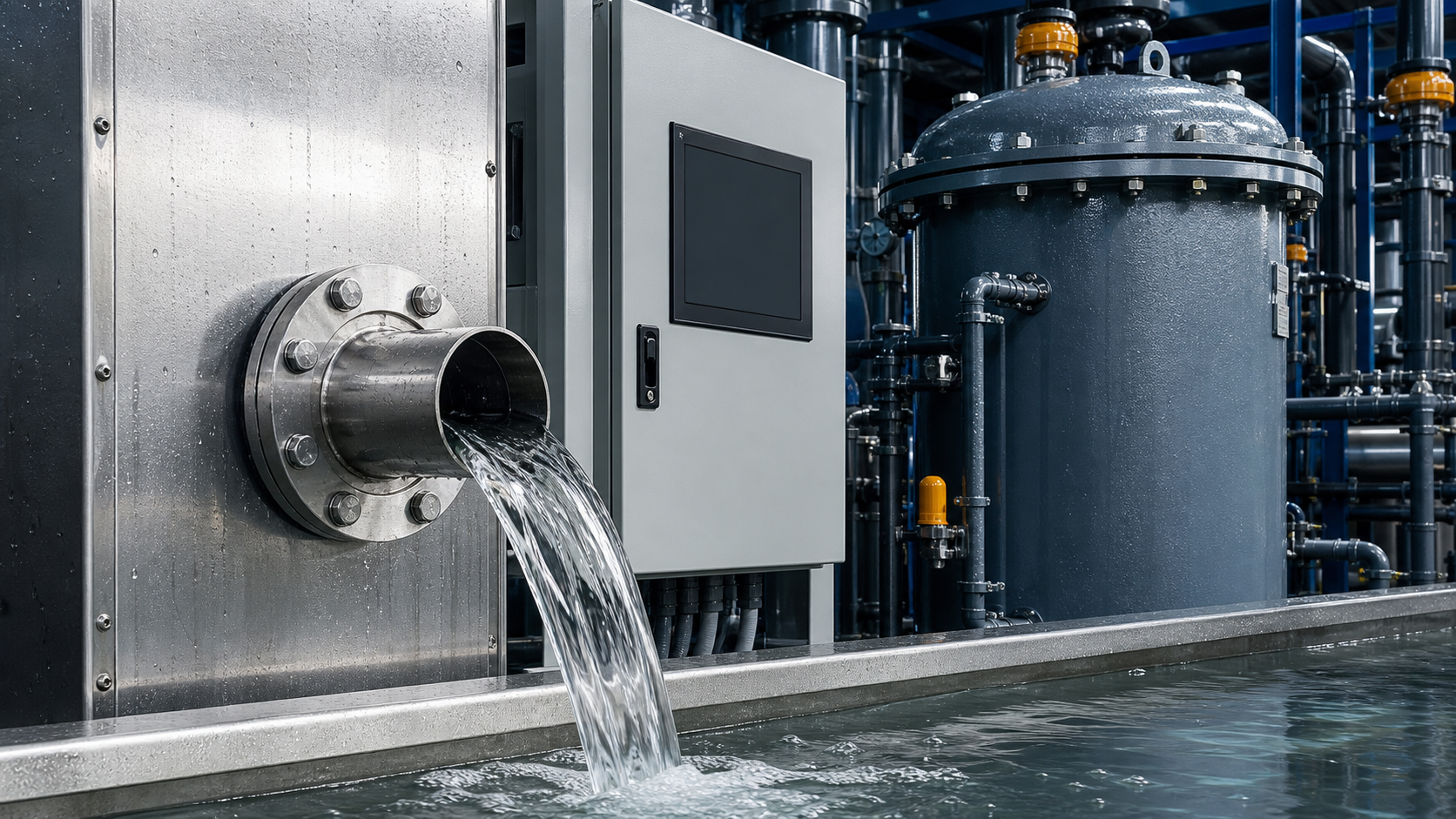
Industrial wastewater impact can include pollution reduction, water reuse, lower freshwater abstraction, recovered energy or materials and improved production resilience. Each needs a baseline and system boundary.
Useful measures include:
- influent and effluent volume and quality;
- water returned to a defined beneficial use;
- freshwater demand avoided after adjusting for production;
- pollutant load removed, not concentration alone;
- energy and chemicals per treated unit;
- availability and duration of verified performance; and
- residual waste created and its destination.
Do not count all treated water as reused. Record where it goes. Do not claim avoided abstraction if the customer’s production changed or another supply source replaced it. Normalise where needed against output or operating hours.
Resource recovery should be measured at saleable quality and actual offtake, not the theoretical content of an incoming stream. If a concentrate remains waste, state that clearly.
Energy can be a material trade-off. Advanced treatment and high recovery can reduce water stress while increasing electricity or heat. The investment committee should see both outcomes and the plan to improve resource intensity.
Customer confidentiality does not justify unverifiable claims. Data can be aggregated or anonymised while preserving definitions, periods, boundaries and assurance. Investors may review detailed records under confidentiality even when public reporting remains high level.
Pair impact with financial performance. A project that treats more water at worsening margin may not be sustainable. A profitable company that cannot verify its claimed outcome may not meet an impact mandate. The objective is durable alignment.
Compare industrial sectors without assuming one treatment market
Industrial wastewater demand varies with production chemistry, water use, site location and the cost of interruption. A company that performs well in one vertical may face a different sales and technical system in another.
Food and beverage sites can have variable organic load, fats, cleaning chemicals and seasonal production. The customer may value discharge reduction, biogas, reuse and capacity. Hygiene, production schedules and cleaning integration affect adoption.
Pharmaceutical and chemical operations can produce complex or hazardous streams and operate under strict quality and environmental controls. Treatment validation, trace contaminants, waste classification and change management can lengthen the route to a commercial reference.
Semiconductor and advanced manufacturing need high-purity process water and generate rinse streams with recoverable water or materials. Reliability and product-quality risk can justify value, while customer qualification and technical confidentiality raise barriers.
Mining, metals and energy can involve high salinity, dissolved metals, acidity, remote operations and large volumes. Project size can be attractive, but commodity cycles, site life, logistics and environmental liabilities affect the risk.
Data centres and large estates may create demand around cooling-water efficiency, monitoring and resilience. The water system is connected to energy, heat rejection and operating uptime. Avoid generic claims; review the site design and customer’s actual cooling approach.
For every target vertical, record:
- representative feed range and treatment objective;
- the economic buyer and technical champion;
- decision trigger, budget and procurement cycle;
- required validation, approvals and references;
- installation and service conditions;
- expected project and lifetime margin; and
- the number of reachable customers with similar conditions.
A vertical strategy can improve sales efficiency and product standardisation. It creates shared language, references and integration patterns. Expansion should be earned through evidence that the next segment uses the same core product rather than a new treatment train under the same brand.
Assess management, project controls and capital allocation
Industrial water companies combine technology development with project execution. Investors should test whether management controls scope, margin, customer risk and learning as the order book grows.
Review the process from qualified opportunity to final acceptance. Who approves feed assumptions, design, price, delivery date and warranty? How are changes documented? Which milestone triggers procurement and revenue recognition? Who can stop an unsuitable project?
Project reporting should separate original scope, approved change, cost-to-complete, billed amount, cash received and remaining exposure. A profitable forecast can deteriorate during installation if civil work, customer delays or feed conditions differ.
Build a cohort view. Compare the first five deployments with the next five:
- engineering hours per project;
- standard versus unique components;
- gross margin before and after warranty;
- commissioning duration and acceptance delay;
- service visits and downtime;
- cash conversion; and
- customer reference and reorder.
Improvement across cohorts is stronger evidence of scale than a large pipeline. If later projects remain equally bespoke, the business may be a valuable engineering consultancy but should be valued and financed accordingly.
Management depth matters. The founder may hold customer trust and technical knowledge. Growth requires documented design, experienced delivery leadership, commercial control, supply management and a service organisation.
Capital allocation should distinguish product platform, customer project and owned asset. Equity can fund development and company capacity. Long-lived customer assets may need project or third-party finance. Using one pool for all three can obscure return and create avoidable dilution.
Set board milestones that reflect the operating model: repeat orders, standard-design coverage, field availability, achieved margin, cash collection and verified outcomes. Device count, installed capacity or pipeline alone can reward growth that is not yet valuable.
Frequently asked questions about industrial wastewater investment
What makes industrial wastewater treatment an investment theme?
Industrial sites have persistent needs around discharge, water supply, production reliability and cost. Technology companies can create value when they solve those needs repeatedly at attractive lifetime economics.
Which treatment technology is best?
There is no universal best process. The correct treatment train depends on feed variation, target quality, destination, energy, residuals, site constraints and customer economics.
How should investors assess a treatment pilot?
Review representative feed conditions, duration, availability, full operating inputs, residuals, independent results, customer payment and the exact path from pilot to order.
Is water-as-a-service less risky than equipment sales?
Not automatically. It can create contracted revenue and align outcomes, but it introduces asset finance, counterparty, performance and long-duration operating risk.
Which impact metrics matter most?
Measure pollutant load removed, water beneficially reused, freshwater avoided, resource intensity, availability and residuals. Use a defined baseline, boundary and verification method.
Explore selected industrial water opportunities
Industrial wastewater treatment can combine essential customer demand, measurable impact and defensible technical know-how. The investment quality depends on repeatable field performance, full lifecycle economics and a model that can grow without turning every project into a new engineering company.
Eligible investors can request access to Water Investment Network to learn about selected direct private water-technology opportunities. Each opportunity requires independent legal, financial, commercial, technical, tax and impact diligence.
Read the companion guides to the water technology market and reverse osmosis and nanofiltration investment diligence. General enquiries can be made through the contact page.
Water Investment Network does not sell treatment systems, provide engineering services, give regulated financial advice or guarantee returns.
Sources
- https://www.epa.gov/waterreuse/water-reuse-industrial-applications-resources
- https://www.worldbank.org/en/topic/water/publication/scaling-water-reuse
- https://www.gov.uk/guidance/check-if-you-need-an-environmental-permit
- https://www.gov.uk/government/collections/water-discharge-and-groundwater-activity-environmental-permits