In brief: The smart water market is moving from a technology theme to an operating requirement. Utilities, factories, farms and other water users need better data about demand, leakage, quality and asset condition. The investable question is whether a supplier can turn that need into repeatable contracts, reliable delivery and acceptable customer economics.
For UK, European and GCC family offices, HNW investors and specialist private-market investors, smart water is not one product category. It includes meters, sensors, communications, software, data services, leak detection, asset management and decision tools. Each segment has a different buyer, sales cycle, capital requirement and route to scale.
What the smart water market actually includes
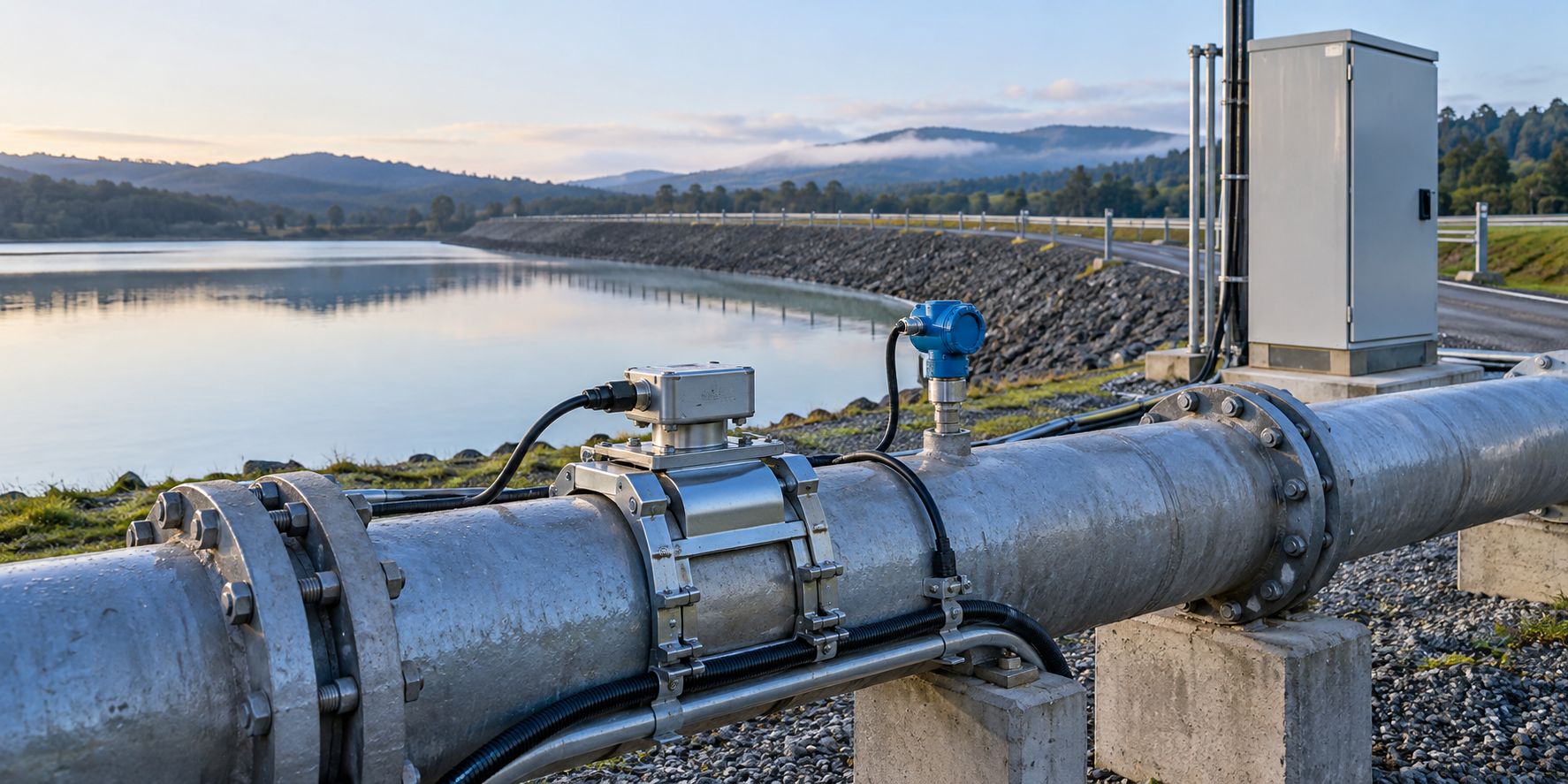
Smart water means using connected measurement and software to improve decisions across the water cycle. That can include advanced metering infrastructure, which combines meters, communications and data systems. It can also include sensors for pressure, flow or quality, remote sensing, geographic information systems, predictive maintenance and active leak detection.
The World Bank describes digital water as a journey towards a digitally integrated utility. Its current programme identifies smart metering, e-billing, remote sensing, data integration, geographic information systems, predictive maintenance, leak detection and cybersecurity as possible parts of that journey. The commercial consequence is clear: a device becomes more valuable when it fits the customer’s operating workflow.
This is why the water technology market investment thesis needs a narrower definition. Investors should ask what decision the product improves, who owns that decision and what cost follows when the data is late or wrong.
Why smart water demand is becoming a funded problem
Water demand is becoming a funded problem when regulators and operators must show that efficiency gains are real. The UK National Framework for Water Resources 2025 says demand management and leakage reduction could address more than 65% of the supply-demand balance deficit across England by 2049-50. It also says demand management and leakage make up as much as 79% of the measures in water company plans in 2035.
That does not guarantee revenue for every smart water company. It does show why water companies need evidence, monitoring and tools that help them meet published plans. A supplier still needs a defined budget owner, a procurement route and a measurable outcome.
The UK government and Ofwat’s delivery plan also records a target for water companies to install about 10.4 million smart meters between 2025 and 2030. The plan says smart metering could reach around half of households and businesses by 2030, while moving from an unmetered service to a smart meter can reduce consumption by up to 17%.
For investors, these figures describe a deployment environment rather than a forecast return. The relevant test is whether a business can earn a sensible share of the work around installation, connectivity, data management, customer engagement, leak response or performance verification.
Smart water has several paying customer groups
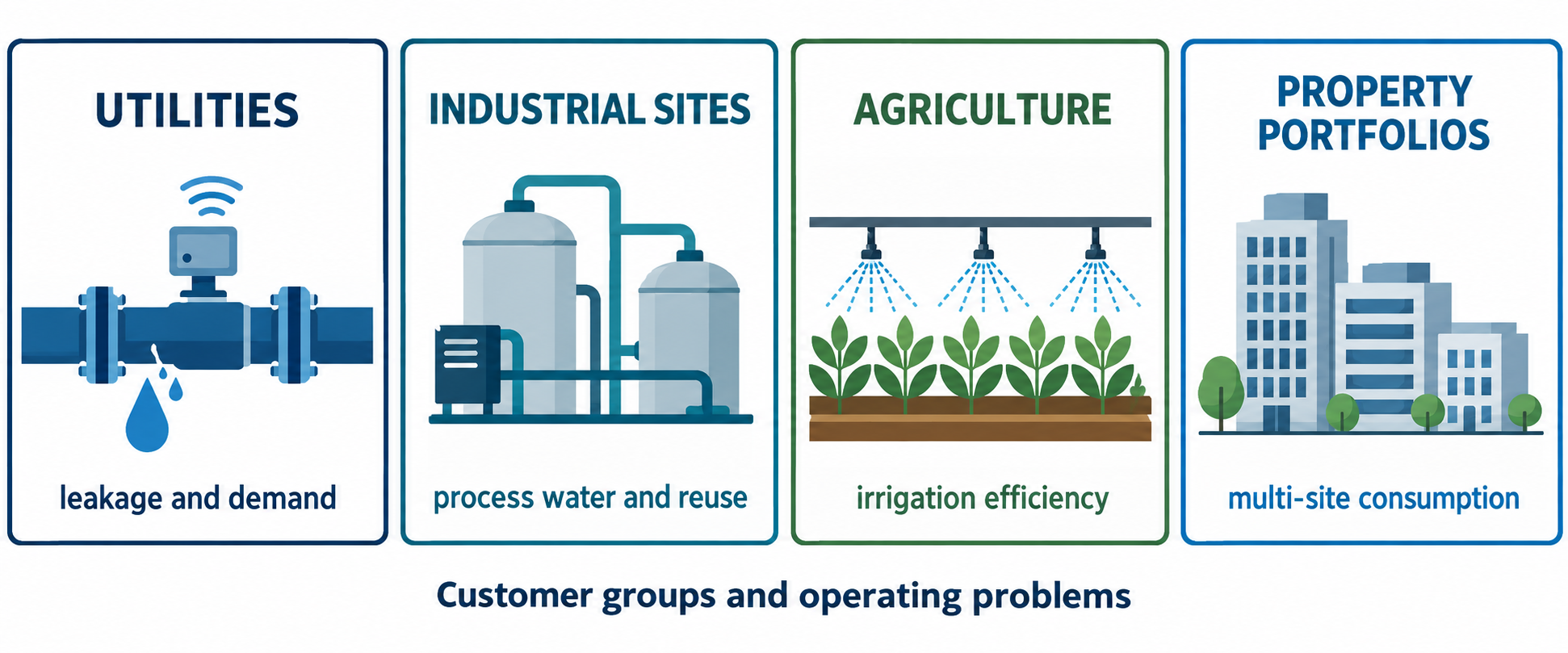
Customer segmentation matters because each buyer values a different outcome. A utility may pay for leak visibility, demand forecasting or asset prioritisation. A manufacturer may pay for process-water assurance, reuse monitoring or reduced downtime. An agricultural operator may pay for irrigation decisions linked to weather, soil and crop demand.
The European Environment Agency identifies public water supply, agriculture, industry and electricity production as major areas for water-saving potential. It reports that manufacturing accounted for 14% of EU economic-sector water abstraction between 2000 and 2022. That is a useful demand signal, but it is not a claim about the revenue of a specific smart water supplier.
Other customer groups include property portfolios, hotels, data-centre operators and public estates. These customers may have a strong reason to measure consumption, but they can have smaller budgets, fragmented sites or longer approval chains. The best commercial target is often the customer with both a measurable water problem and authority to release spend.
Measurement becomes valuable when it changes a workflow
A sensor is not a business model. The commercial value appears when a measurement changes an operating action. A continuous-flow alert may trigger a site inspection. A quality reading may change a treatment step. A pressure trend may alter maintenance priorities. A demand forecast may support a capital or tariff decision.
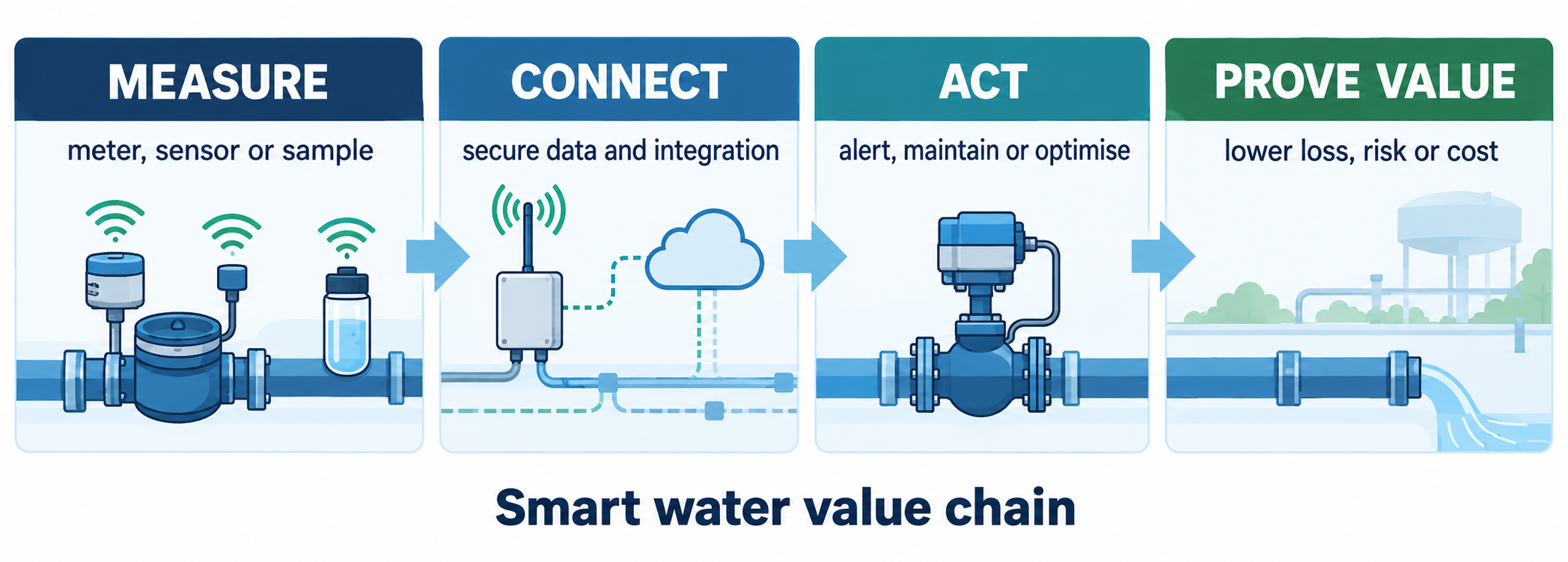
This creates a four-step commercial chain: capture a dependable signal, move it into the customer’s system, turn it into a decision and prove the result. Each step introduces risk. A device can be accurate but hard to install. A software layer can be useful but fail to integrate. A dashboard can look clear but produce no action.
The World Bank notes that utilities may start with different digital maturity levels and need assessments, roadmaps, training and practical tools. That supports a services opportunity around implementation and change management. It also warns investors that adoption may depend on skills, governance, cybersecurity and organisational culture, not only product quality.
Revenue models range from equipment to managed outcomes
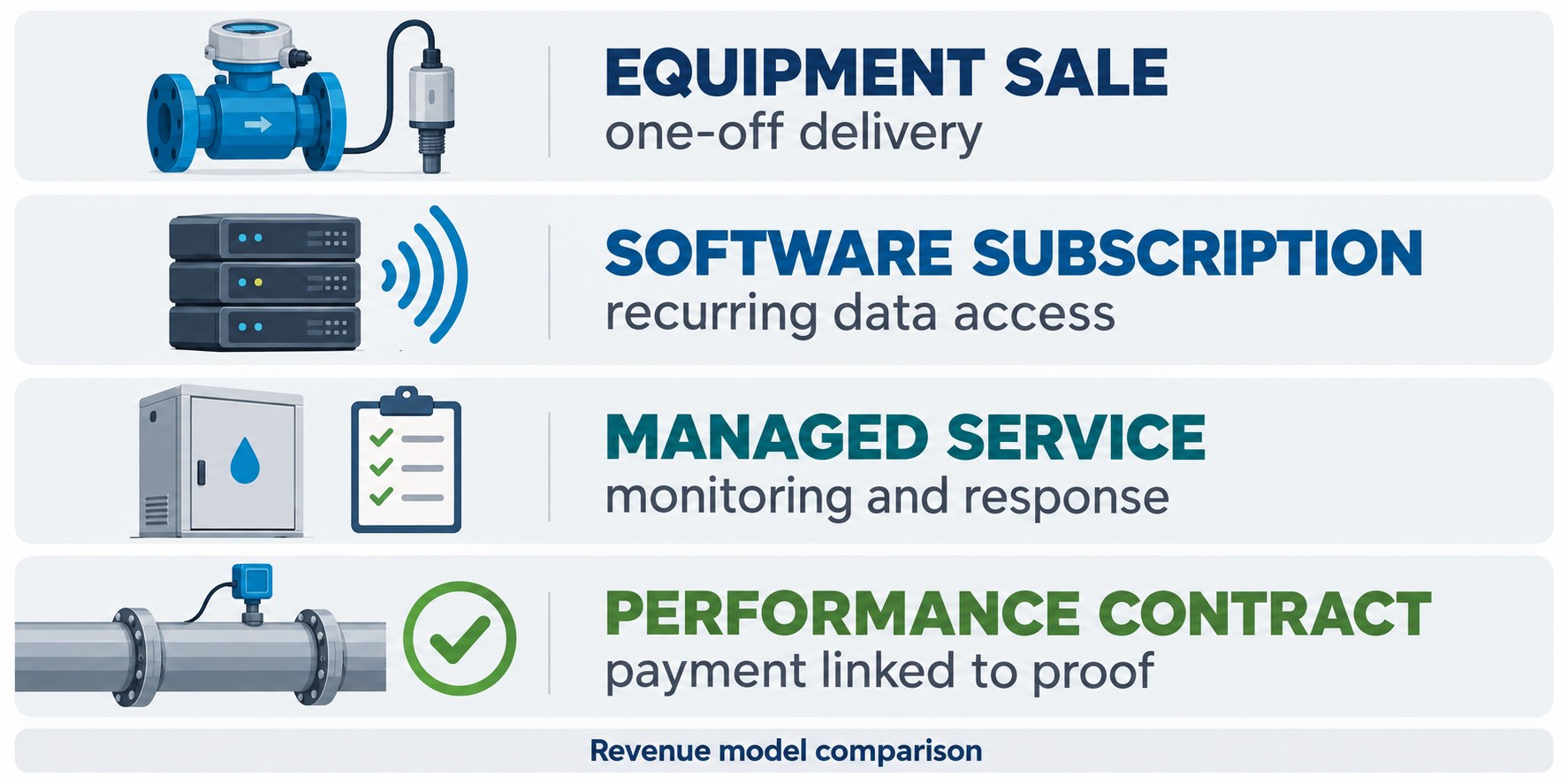
Smart water companies can earn revenue through several models. A hardware-led business may sell meters, sensors and installation. A software-led business may charge for data storage, analytics, alerts or workflow management. A managed service may combine equipment, monitoring and response under a recurring contract.
Performance-based pricing can align payment with a measured result, such as reduced leakage or lower consumption. It can also transfer more delivery risk to the supplier. Before treating recurring revenue as automatically superior, investors should check contract duration, renewal behaviour, service obligations, working capital, warranty exposure and the cost of proving the outcome.
The strongest model depends on the customer’s procurement habits and the supplier’s control over the result. A business that owns the data layer but not the field response may struggle to guarantee savings. A service provider with installation and monitoring capability may build stronger retention, but it may also carry more people, logistics and working-capital costs.
Unit economics reveal whether adoption can scale
Smart water unit economics start with the customer’s cost of adoption. Installation time, site access, communications coverage, calibration, integration and staff training can affect the first contract. If each deployment needs bespoke engineering, gross margin may remain dependent on a small number of specialists.
Investors should separate product margin from project margin and service margin. They should also track customer acquisition cost, sales-cycle length, payback period, data-processing cost, support tickets, hardware replacement, churn and cash collection. A growing installed base can still consume cash if every new site requires heavy configuration or if customers pay after the supplier carries the deployment cost.
Where a company claims savings, test the baseline and the counterfactual. A reduction in water use may reflect weather, production levels, tariff changes or a wider maintenance programme. Measurement and verification should be defined before the contract starts, with responsibility for data quality clearly allocated.
Integration and data quality are part of defensibility
Smart water products often need to work with old assets, mixed communications networks and different data standards. The European Commission’s water resilience actions tracker identifies analogue and ageing systems, fragmented data repositories and the need for interoperable, reusable data as barriers to digitalisation in Europe.
That creates a practical form of defensibility. A supplier may retain customers because it has built trusted data connections, site histories, alert rules and operating routines. Those assets are valuable only if the data remains accurate, secure and useful. They can become liabilities if the system creates false alarms, cannot explain its decisions or fails during a network outage.
Cybersecurity also belongs in the commercial case. Connected devices and operational systems expand the attack surface. An investor should review security controls, update procedures, access rights, incident response and customer requirements before treating a large pipeline as bankable revenue.
UK, Europe and GCC require separate market lenses
The UK has a visible smart-meter and demand-management agenda. Government reporting says about 12% of English households had smart water meters using advanced metering infrastructure in 2024-25, while around 9% of non-households had a smart water meter. The same report says smart meters can provide multiple automatic reads each day and help identify continuous flows linked to leaks.
Europe is developing a wider digital policy framework. The European Commission launched a call for evidence in 2026 for an action plan on water digitalisation, including an initiative on smart meters. The Commission says the plan is intended to support data-driven innovation, water efficiency, infrastructure management and competitiveness. It also identifies regulatory bottlenecks that can prevent solutions scaling across countries.
GCC underwriting needs its own evidence. Do not transfer UK rollout assumptions or European policy timelines into the UAE, Saudi Arabia, Qatar, Kuwait, Bahrain or Oman without checking the specific customer, procurement route, water source, tariff structure, data rules and operating environment. The relevant opportunity may sit in a utility, an industrial site, a district cooling system or an infrastructure programme, but each requires separate verification.
What makes a smart water company scalable
Scale is not the same as adding more devices. A scalable company can repeat deployment, onboarding, data integration and customer support without matching revenue growth with equal operational complexity. It should be able to show reference sites, standard installation procedures, clear service levels and a reliable way to train customers.
Investors should look for a product that solves a recurring problem across similar sites. They should also test channel dependence. A business that reaches customers through one utility framework or one strategic partner may grow quickly, but its bargaining power and renewal risk need careful review.
Exit potential should be treated as an outcome of quality, not a substitute for it. A buyer may value trusted data, recurring service revenue, field capability or a strong position in a regulated workflow. The company must first prove that customers renew because the product improves an important operating decision.
Smart water market diligence: six questions
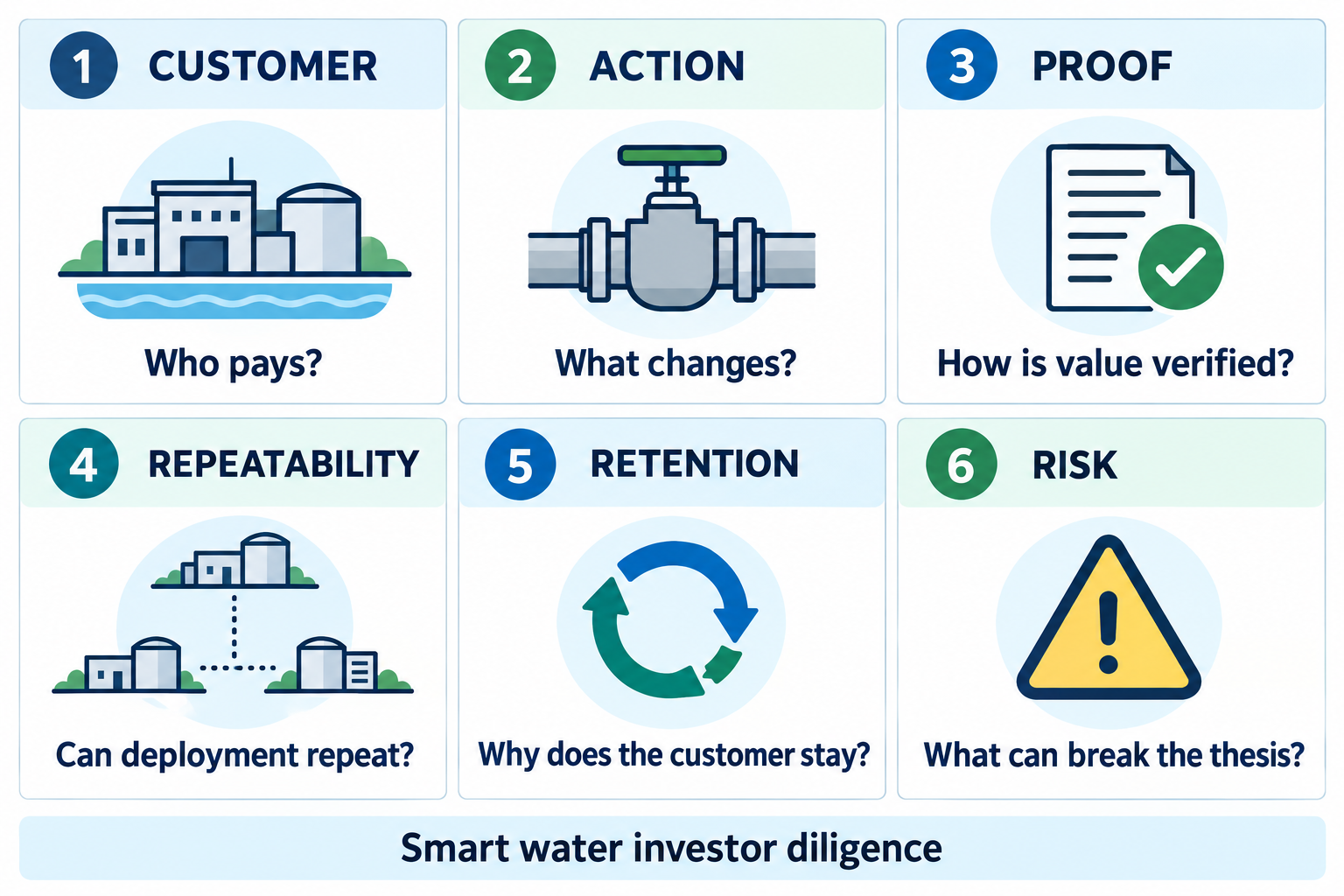
Private investors can use six questions to turn a broad theme into an investable screen:
- Who pays? Identify the budget owner, decision-maker, technical approver and procurement route.
- What action changes? Link the measurement to a maintenance, treatment, demand or compliance decision.
- What proves performance? Review baselines, data quality, verification methods and customer acceptance criteria.
- What is repeatable? Compare deployment time, integration work, site variation and support requirements across customers.
- What protects the relationship? Test switching costs, data portability, renewal behaviour, cybersecurity and channel concentration.
- What can break the thesis? Stress regulation, hardware failure, weak connectivity, procurement delays, working capital and customer budget cuts.
Smart water market: next step for eligible investors and sources
Are smart water businesses suitable for private investors? They can be relevant when a company has a defined customer, credible performance evidence, repeatable deployment and a capital plan that fits the growth stage. The theme alone does not make an opportunity suitable.
Is smart water the same as smart metering? No. Smart metering is one part of a wider market that can include sensors, data platforms, asset management, analytics, field services and customer engagement.
What is the main commercial risk? A product may generate useful data without changing a customer decision. Investors should test workflow adoption, integration, proof of value and renewal before relying on a large pipeline.
Does regulation guarantee growth? No. Regulation can create a funded requirement, but suppliers still need to win contracts, deliver performance and manage procurement, compliance and service risk.
What should an investor request first? Ask for the customer map, contract evidence, deployment economics, data-quality controls, security record, reference-site results and renewal history. WIN provides access to selected direct private-company opportunities, not regulated financial advice or guaranteed returns. Eligible investors can learn about joining the network, review the portfolio and contact the network with questions.
Sources
- European Commission: call for evidence on a digital action plan for the water sector
- European Commission: Water Resilience Strategy actions tracker
- World Bank: Digital Water programme overview
- World Bank Group: Water strategy and private investment context
- European Environment Agency: Water savings for a water-resilient Europe
- GOV.UK: National Framework for Water Resources 2025
- GOV.UK: Water demand Environment Act target delivery plan
- GOV.UK: Water resources 2024 to 2025 annual performance analysis