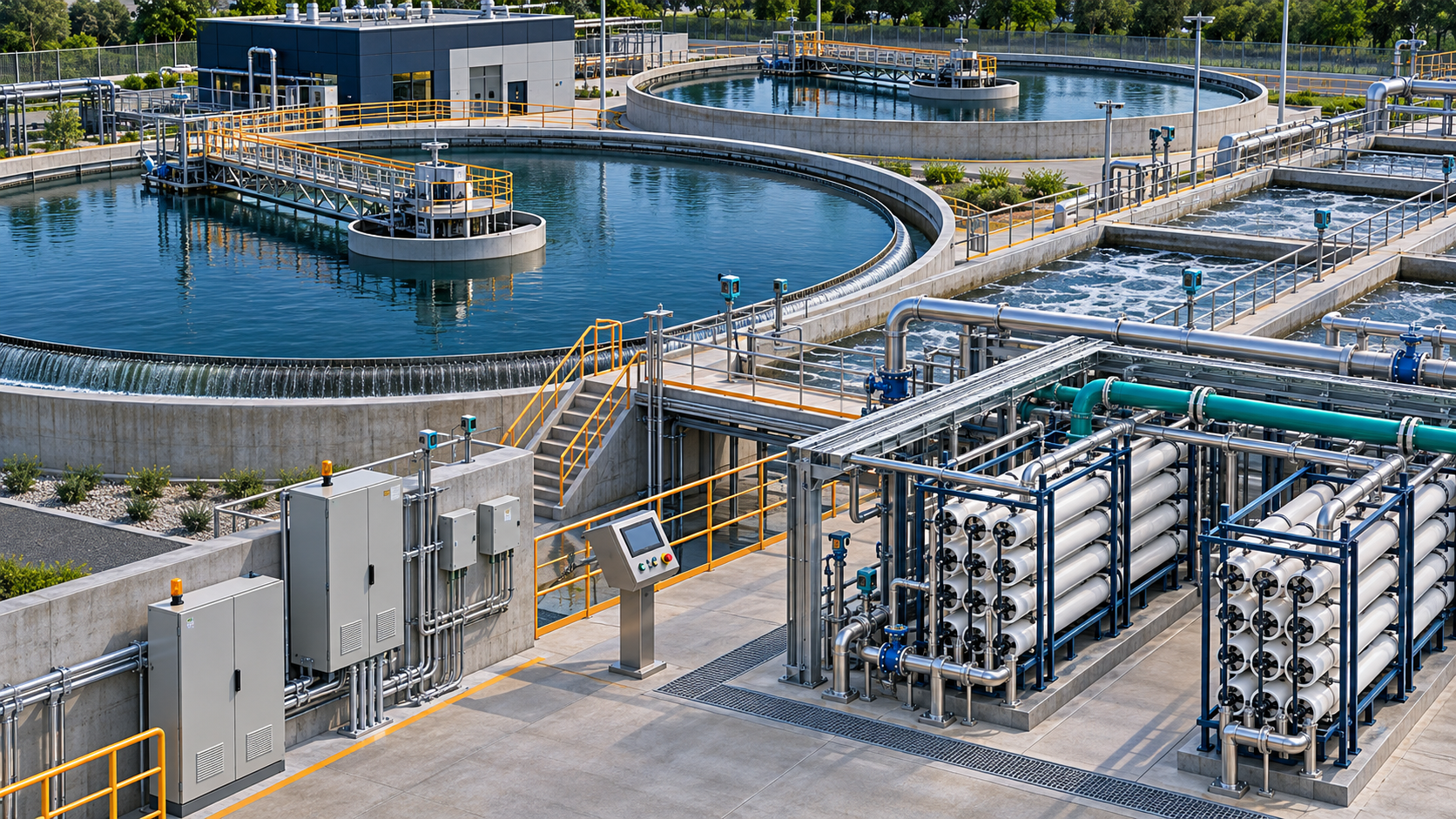
Smart water technologies are moving from isolated pilots to a broader operating layer for utilities, treatment works, industrial sites and infrastructure owners. The category includes sensors, smart metering, telemetry, data integration, analytics, predictive maintenance, leak detection, control systems and the workflows that connect them. For investors, that breadth is both the opportunity and the diligence challenge.
The commercial question is not whether a device can produce data. It is whether a provider can help a customer make a better operating decision, reduce avoidable field work, meet a reporting obligation, protect capacity or defer unnecessary capital expenditure. A product can be technically impressive and still struggle if installation is bespoke, data is poorly governed or the buyer cannot demonstrate a measurable operational use.
This article examines smart water technologies through an investor-first lens. It covers the technology stack, customer demand, revenue models, field economics, integration, cybersecurity, procurement, scalability and the evidence private investors should request before relying on a growth narrative.
Why smart water technologies are a commercial category
Water and wastewater systems are distributed, capital-intensive and exposed to changing demand, weather, regulation and asset condition. A utility may have thousands of meters, pumps, valves, treatment stages, tanks and network assets. An industrial site may have a smaller footprint but a high consequence of water interruption, poor quality or uncontrolled discharge. In both cases, the operating team needs information that is timely enough to support a decision.
The buyer pays for a decision pathway
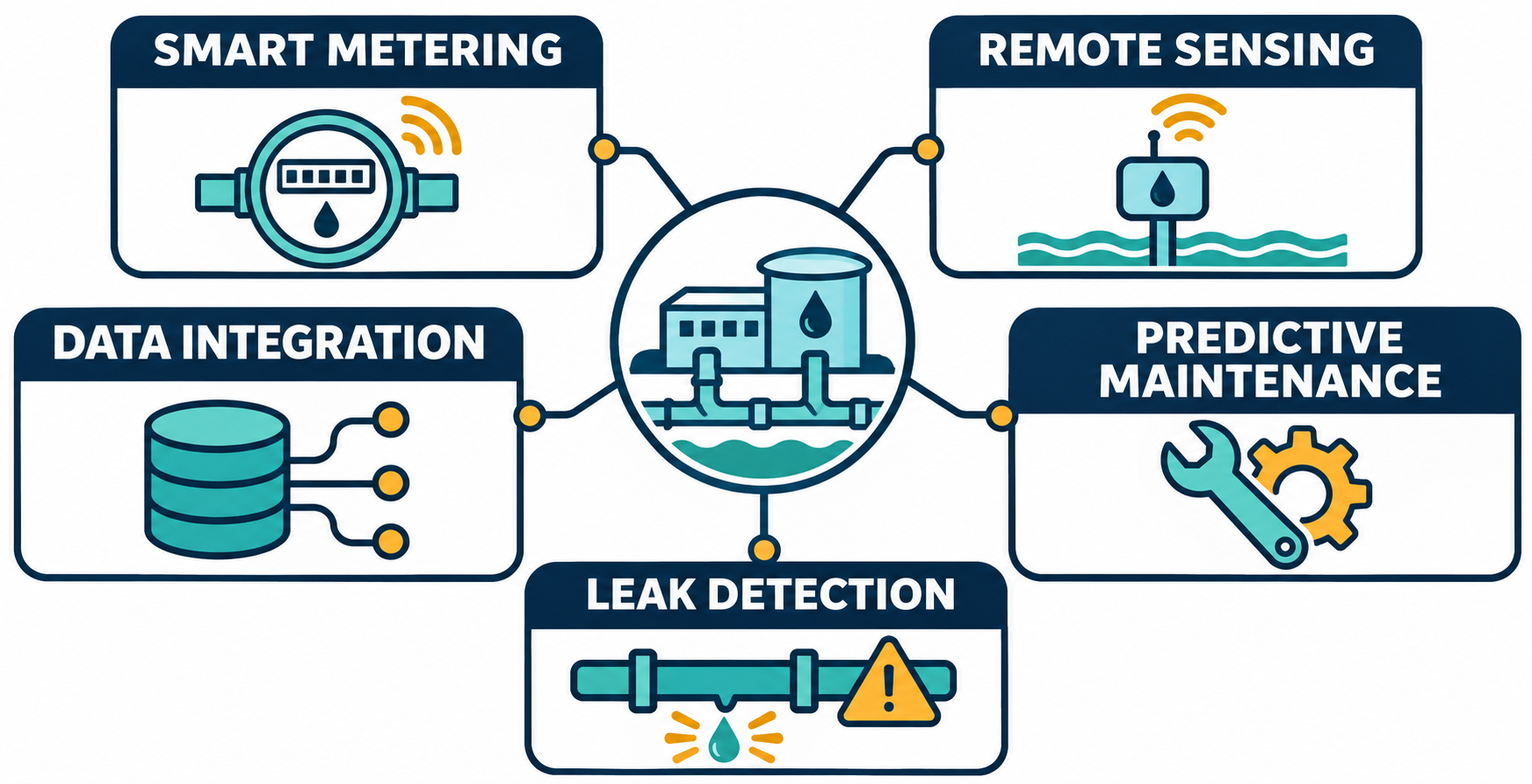
The World Bank’s Digital Water programme describes a range of digital tools that utilities can incorporate into their workflows, including smart metering, remote sensing, data integration, supervision, geographic information systems, predictive maintenance, active leak detection and cybersecurity. The commercial implication is clear: the product category is broader than a connected sensor and the buyer’s budget may sit across operations, asset management, billing, compliance or capital planning.
A provider creates more value when it can map a measurement to an action. That action could be investigating a leak, changing a treatment process, scheduling a maintenance visit, reallocating water, prioritising an asset or producing a defensible report. Investors should ask which action is improved, who owns it and how often the customer repeats the workflow.
The market is application-led
There is no single smart water technology product that fits every utility. The U.S. Environmental Protection Agency notes that smart sewer development varies with system type, utility size and performance goals, and that design, installation and implementation costs vary by application. This makes application knowledge commercially important, but it also means that a company must manage configuration without turning every deployment into a bespoke engineering project.
Technology adoption is not guaranteed revenue
Water-sector priorities can create a strong reason to investigate digital tools, but budgets, procurement, skills, legacy systems and customer risk tolerance determine whether a project proceeds. A credible investment case separates market need from supplier capture. It also distinguishes a funded rollout from a pilot, a letter of intent, a framework position and a contracted recurring service.
What smart water technologies include
Smart water technologies can be grouped by the role they play in the operating system. The categories overlap, and a company may earn from more than one layer. Investors should understand the technical boundary of each product and the integration work required to make it useful.
Measurement and smart metering
Measurement devices capture flow, pressure, level, quality, temperature, conductivity, turbidity or other variables. Smart meters add communications and data handling to conventional measurement. The value may come from more frequent readings, remote access, alerts, better allocation or a more complete view of demand and asset condition.
Remote sensing and telemetry
Remote sensing collects observations from difficult-to-access locations. Telemetry transmits data from a field device to a central point for review and analysis. The EPA describes telemetry as a way to reduce the lag between a field observation and an operating response. That can reduce manual readings, but it introduces requirements for power, communications coverage, device security and exception handling.
Data integration and supervision
Data integration combines information from sensors, meters, geographic systems, maintenance records, laboratory results and control systems. Supervision refers to the operational layer through which staff can review status and respond. A product that integrates with existing systems may be more valuable than one that creates another isolated dashboard, but integration projects can extend sales cycles and increase implementation cost.
Analytics, modelling and controls
Analytics can identify patterns, exceptions or maintenance priorities. Models can test how a network or treatment asset may respond to different conditions. Real-time controls can use current data to adjust pumps, gates, valves or storage. These capabilities can improve adoption and retention when they are tied to a clear operating decision, but they also increase validation, cybersecurity and liability requirements.
How the technology stack creates value
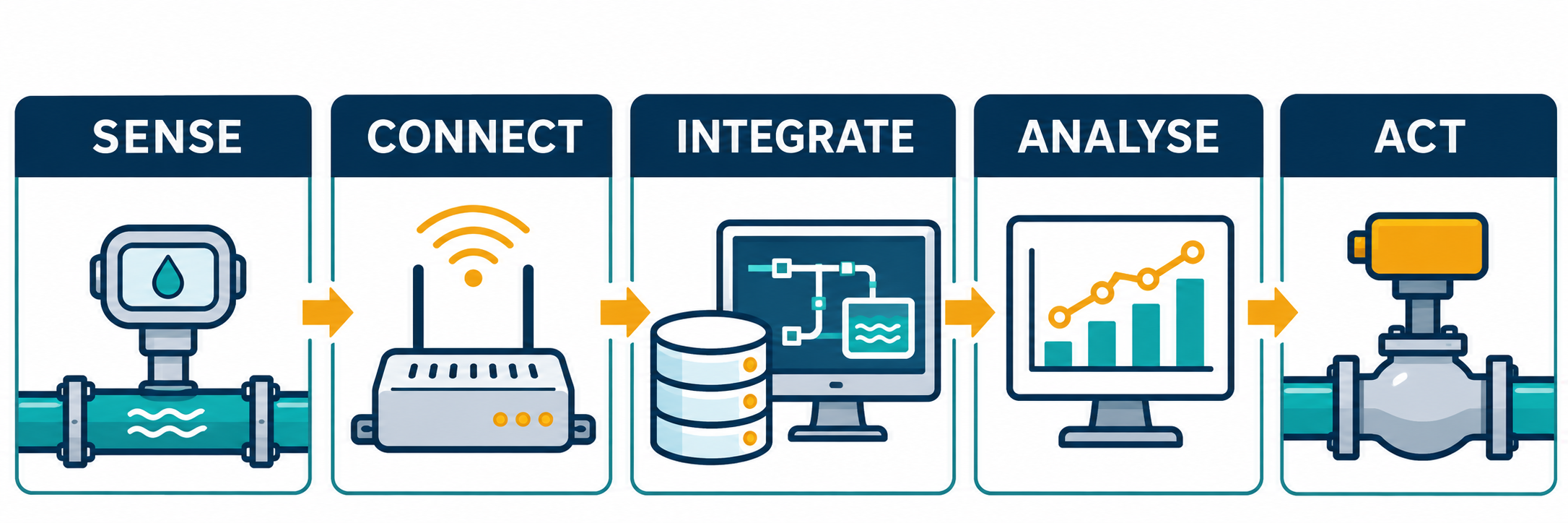
A smart water technology company should be able to explain the path from a physical observation to a customer outcome. The stack is often described as a sequence, but value can be lost at every hand-off. A sensor that is not installed correctly produces weak data. Data that is not transmitted reliably cannot support a real-time response. A dashboard without a decision owner may not change behaviour.
Sense and connect
The first layer is the observation. The company needs to specify the measurement, expected range, environmental conditions, calibration approach and installation constraints. The connection layer then handles power, communications, buffering, time synchronisation and device identity. A lower device cost can be offset by poor battery life, intermittent coverage or costly field visits.
Integrate and validate
Useful data usually needs context. A flow value may need pipe geometry, a water-quality result may need sampling conditions, and a pressure change may need asset location and operating status. Validation checks for missing, implausible or inconsistent observations. The EPA’s water-sensor material emphasises the importance of sensitivity, precision and reliability evaluation, alongside site-specific concerns such as power, connectivity, sedimentation and corrosive water.
Analyse and act
Analysis can be as simple as a threshold alert or as complex as a model that combines rainfall, level and network capacity. The customer outcome should still be described in plain language. The question is not whether the software uses advanced analytics. It is whether staff can act earlier, schedule work more effectively, run a process closer to its target or create evidence with less manual effort.
Who buys smart water technologies and why
Customer segmentation should follow the problem being solved. A water utility buying a network monitoring platform may have a different sales cycle and service burden from a manufacturer buying a closed-loop water treatment system. Investors should analyse the buyer, budget owner, procurement route and renewal trigger for each segment.
Water and wastewater utilities
Utilities may buy technology to improve leakage management, network visibility, treatment performance, customer metering, maintenance planning, storm response or regulatory reporting. The EPA’s smart sewer guidance gives examples of real-time monitoring, modelling, analytics and controls being combined with existing infrastructure. A utility may start with a targeted operational issue and expand if the data becomes trusted.
Industrial and commercial operators
Industrial customers may use smart water treatment technology to manage process water, reduce interruptions, monitor discharge, improve water efficiency or protect production. Their buying decision often depends on the cost of downtime, the value of a compliance record and the ability to integrate the solution without disrupting an operating line.
Infrastructure owners and environmental programmes
Developers, transport owners, environmental consultants and public authorities may need temporary or permanent monitoring around construction, drainage, abstraction, reservoirs or receiving waters. Project work can create a route into a recurring service, but the conversion from installation to renewal should be proven rather than assumed.
Water technology partners and channels
Engineering firms, system integrators, meter distributors and treatment providers can act as channels. Partnerships can reduce customer-acquisition cost and extend geographic reach, but they can also create margin leakage and weaken direct ownership of the customer relationship. Diligence should review channel concentration, data rights, referral terms and renewal responsibility.
How smart water technology companies make money
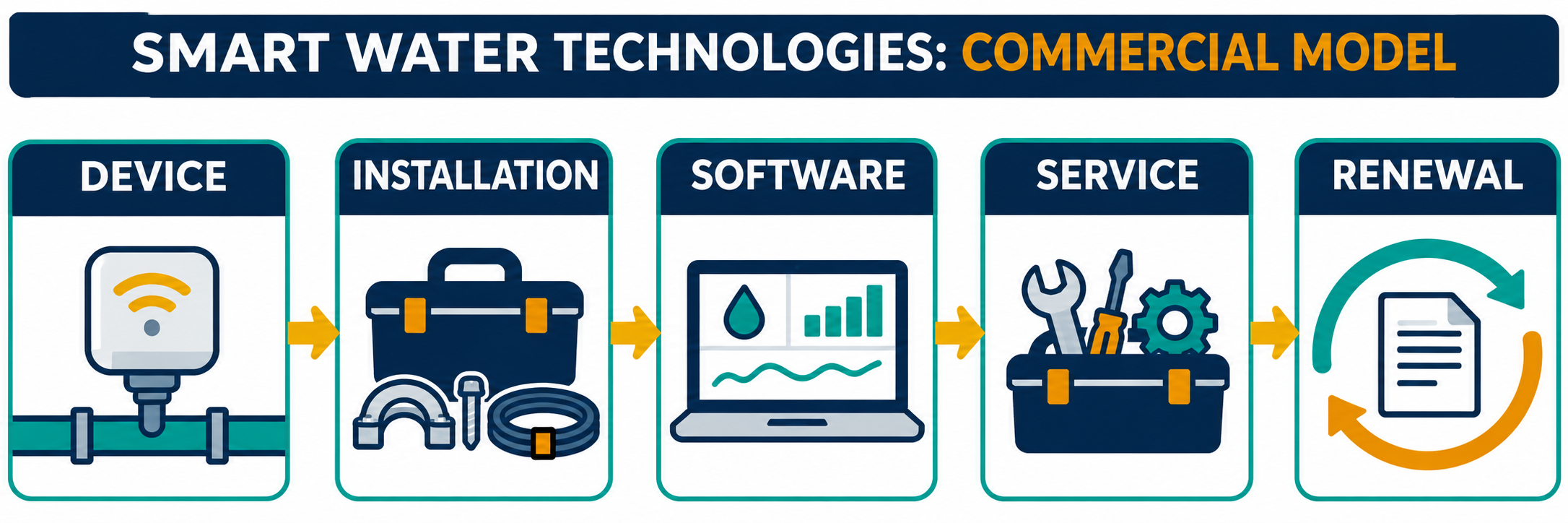
Revenue quality depends on the mix between hardware, engineering, software, data and ongoing service. A company can describe itself as a software business while carrying substantial installation and field-support costs. Conversely, a hardware-led company may build a valuable installed base if service revenue and replacement demand are well controlled.
Device and component revenue
Device revenue can provide a clear entry point and may scale through distribution. Investors should review bill of materials, manufacturing partners, warranty claims, inventory, component obsolescence and the proportion of sales that require custom configuration. Product gross margin should be tested after support, returns, calibration and logistics.
Installation and commissioning
Installation becomes more defensible when the provider controls site design, commissioning tests, integration and handover documentation. It becomes less attractive when the company simply resells third-party labour. Review installation time, first-time success, subcontractor dependence, travel, access requirements and the share of deployments that require remedial work.
Software, data and analytics
Recurring revenue may include software access, data storage, dashboards, alerts, analytics, reporting, integrations or workflow management. The customer should have a reason to renew beyond habit. Review active usage, alert response, report delivery, expansion to additional sites, support tickets, churn reasons and the cost of keeping the service accurate.
Maintenance and performance services
Maintenance can include calibration, battery replacement, cleaning, sensor replacement, communications checks, model updates and site visits. Managed services can increase retention but may lower contribution margin if the contract price does not reflect the actual installed-base burden. A credible model shows recurring revenue and recurring service cost together.
Outcome-linked or shared-savings structures
Some providers may propose payment tied to reduced leakage, lower energy use or improved process performance. These arrangements can align incentives, but attribution, measurement periods and customer control need to be explicit. Investors should be cautious about treating estimated savings as contracted revenue or guaranteed performance.
Deployment, integration and operating burden
Smart water technologies are deployed into physical systems, not just into software accounts. Site access, weather, safety, power, communications, pipe geometry and existing control architecture affect implementation. The operating burden should be visible in the unit economics.
Installation is an engineering process
Deployment may require surveys, design drawings, isolation, civil works, electrical work, commissioning, calibration and operator training. A repeatable configuration can reduce cost, but the company still needs a controlled exception process for unusual sites. Investors should ask how often sales teams accept sites that delivery teams later find uneconomic.
Integration creates value and cost
Integration with supervisory control and data acquisition systems, enterprise asset management, billing, geographic information systems or customer portals can improve adoption. It can also create project scope, testing requirements and support obligations. Review implementation backlog, integration templates, third-party dependencies and the number of bespoke connectors in production.
Field service and route density
Remote monitoring does not eliminate field service. It may change the mix from routine readings to planned maintenance, fault response and periodic verification. Review route density, mean time to repair, device failure rates, spare-parts availability and the proportion of customer issues resolved remotely.
Human capability
Smart water technologies need people who understand water operations, instrumentation, data and customer workflows. A business may be constrained by a small number of specialists who approve every installation or interpret every exception. Investors should map training, documentation, certification and succession risk.
Data quality, cybersecurity and governance
Data is a commercial asset only when it is credible, secure and usable. Water operators may depend on technology for operational decisions, public health, environmental reporting or service continuity. A provider must therefore address quality and security as operating capabilities rather than as marketing language.
Quality objectives and validation
EPA guidance on online water-quality monitoring describes the need to verify that data meets quality objectives, remove or correct obvious errors and establish normal variability before using analytics. Similar principles apply to other smart water technologies. A company should explain how it identifies drift, missing records, outliers, clock differences and changes in site conditions.
Cybersecurity and access control
Connected meters, sensors and control systems expand the attack surface. World Bank Digital Water materials identify cybersecurity as part of the digitalisation journey for utilities. Diligence should cover device identity, authentication, access roles, patching, network segmentation, incident response, vendor access and the separation of monitoring from control where appropriate.
Data ownership and portability
Contracts should clarify who owns raw measurements, derived analytics, models and customer reports. Customers may require export rights, retention periods and access after termination. A company can build defensibility through a long history of structured data, but it should not rely on confusing ownership terms or technical lock-in that creates procurement resistance.
Governance supports renewal
Clear data governance reduces disputes about whether a report is complete, whether an alert was issued and whether a correction was made. It also makes audits and handovers easier. Investors should request examples of data-quality reports, access logs, incident records and customer-facing explanations of uncertainty.
Regulation, procurement and policy
Policy can create demand for monitoring and efficiency, but it does not eliminate procurement risk. The relevant requirements vary by geography, asset type and use case. A company should map the specific obligation and the role its product plays in meeting it.
UK smart metering and water efficiency
The GOV.UK National Framework for Water Resources 2025 says widespread smart metering is expected, prioritised in areas of greatest water stress. Its public framework sets out the policy direction around more detailed usage data, near-real-time understanding of demand, leak identification, supply-chain engagement, data strategy and standards. It also notes the need for safeguards for vulnerable customers. This creates a policy direction, not a promise that every supplier wins a rollout.
The European Commission has also opened work on an EU-wide digitalisation action plan for water, including an initiative on smart meters and wider use of connected sensors. Its call for evidence identifies regulatory bottlenecks and fragmented data as implementation challenges. For investors, the signal is supportive of sector attention, but the execution risk remains with procurement, interoperability and local operating capability.
Environmental and operational evidence
Water and wastewater operators may need records that support permits, treatment performance, leakage programmes, asset plans or environmental reporting. A supplier should state which evidence it produces, how it is validated and what remains the customer’s responsibility. England-specific guidance should not be presented as a universal rule for Europe or the GCC.
Procurement and approved-vendor friction
Utility procurement may require references, insurance, cybersecurity documentation, service-level commitments, compatibility testing and financial resilience. These requirements increase the cost of winning a contract but can also create switching friction after approval. Review tender conversion, framework utilisation, average sales cycle, implementation lead time and the amount of pre-sales engineering required.
Standards are part of the sales asset
Certifications, test reports and documented methods can support trust, but the scope must be clear. Ask whether an approval applies to the device, complete installation, data process or service team. A sales deck that uses a broad term such as compliant without defining the boundary should be treated as a diligence issue.
From pilot to repeatable installed base
A pilot can demonstrate technical feasibility, but scale requires repeatability across sites, operators and customer workflows. The company should show how it moves from an initial deployment to a broader rollout and a renewable service.
Standard kits and controlled exceptions
Standard hardware bundles, installation checklists, data schemas, dashboards and reporting templates reduce avoidable variation. The company still needs an approval path for different pipe sizes, treatment processes, communications environments and customer systems. Measure the rate and cost of exceptions instead of assuming that standardisation is complete.
Customer adoption and expansion
Connected devices do not equal adoption. Review the number of active users, alerts acted upon, reports delivered, sites added and workflows integrated. A customer may buy a pilot because of a grant or innovation budget and then stop using it. Renewal and expansion evidence is more informative than the number of devices shipped.
Supply chain and replacement capacity
Growth can be constrained by sensor components, communications modules, calibration equipment, installers or specialist analysts. Review lead times, alternative suppliers, warranty reserves and replacement stock. If a single component or person controls the delivery process, the risk should be reflected in the investment case.
Geographic expansion
Water systems and procurement rules differ across the UK, Europe and the GCC. Expansion may require local partners, regulatory mapping, language support, different communications standards and new service routes. Investors should separate a transferable product from a transferable operating model.
Investment thesis at a glance
| Investment lens | Evidence to request | Principal risk |
|---|---|---|
| Customer demand | Use cases, budget owners, tender history and repeat orders | Policy interest is mistaken for contracted revenue |
| Technology fit | Measurement limits, installation rules, integration map and failure modes | A generic platform is sold into unsuitable applications |
| Revenue quality | Device, installation, software, data, service and renewal mix | Recurring language hides field labour or pass-through cost |
| Operational scale | Deployment time, route density, exception rate and support burden | Growth raises cost to serve faster than revenue |
| Defensibility | Data history, integrations, certification, workflow adoption and retention | Features are easy to replicate or customers can switch |
This is a diligence framework, not a forecast or a return claim. The investment case depends on verified company evidence, customer contracts, product performance, implementation quality and the ability to maintain service economics across the installed base.
Investor diligence questions
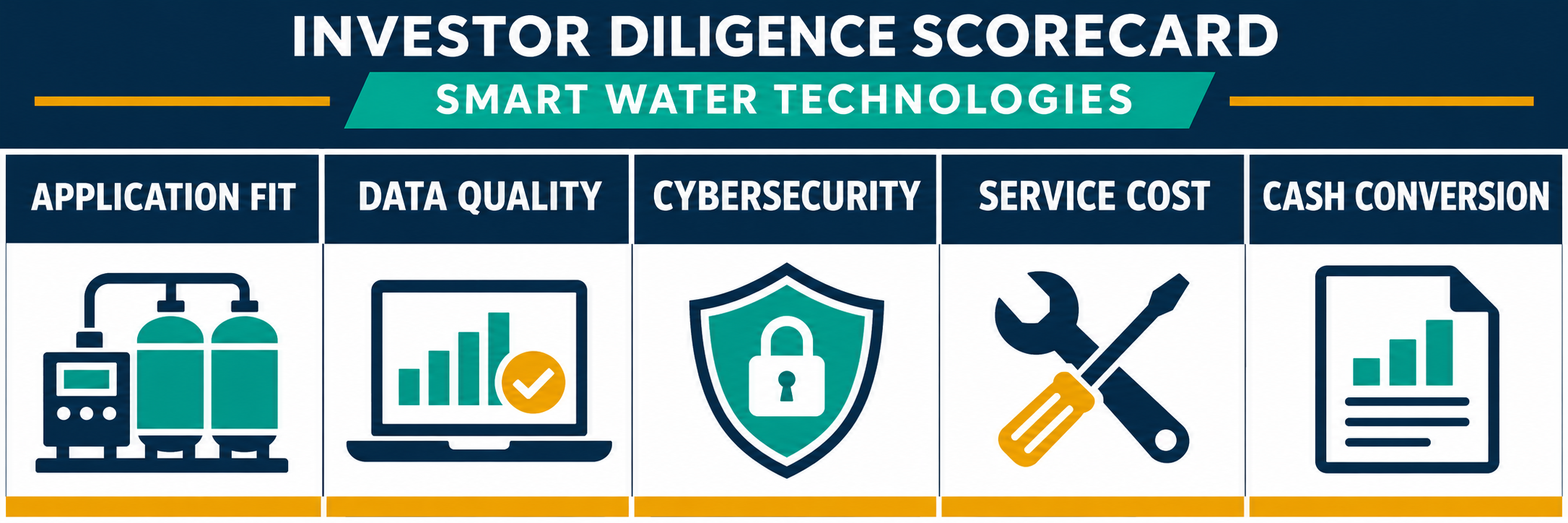
Which operational decision does the product improve?
Ask the company to identify the buyer, decision owner, time interval and consequence of a missed signal. Does the system support leakage investigation, treatment optimisation, asset maintenance, water efficiency, compliance reporting or customer service? A precise workflow is more useful than a general claim about intelligence.
What is genuinely repeatable?
Request the standard deployment configuration, exception process, installation checklist, data model and reporting templates. Compare the last several deployments for variations in hardware, integration, labour and customer support. The goal is to understand whether scale comes from a repeatable system or from a growing number of bespoke projects.
How credible is the data?
Review calibration, validation, missing-data handling, time synchronisation, quality flags, audit logs and correction procedures. Ask how the company communicates uncertainty and how a customer can reproduce a report. Data quality should be connected to renewal and liability, not treated as an engineering footnote.
What is the cybersecurity boundary?
Clarify whether the system only monitors, or whether it can issue control commands. Review authentication, patching, network design, vendor access, incident response and customer responsibilities. A technology provider does not need to promise zero risk, but it should be able to show how risk is identified and managed.
Can deployment convert into cash?
Review hardware inventory, implementation milestones, acceptance criteria, subcontractor payments, warranty provisions and payment timing. Then compare booked revenue with cash collection and renewal. A growing technology rollout can consume working capital even when the long-term service proposition is attractive.
Frequently asked questions
What are smart water technologies?
Smart water technologies are connected tools and workflows used to measure, transmit, integrate, analyse or control water and wastewater systems. They can include smart meters, remote sensors, telemetry, data platforms, analytics, predictive maintenance and leak detection.
What is smart water technology used for?
Smart water technology can support water efficiency, leak investigation, treatment monitoring, asset maintenance, operational control, customer metering, environmental reporting and planning. The relevant use depends on the customer’s system, data quality and decision process.
What is smart water treatment technology?
Smart water treatment technology combines treatment equipment with sensors, telemetry, control systems or analytics so operators can monitor and manage process conditions. The commercial value depends on integration, reliability, maintenance and the ability to improve a defined treatment workflow.
Do smart water technologies create recurring revenue?
They can create recurring revenue through software, data, monitoring, maintenance, calibration, reporting and managed services. Investors should test retention, usage, price, cost to serve and whether the recurring contract remains valuable after installation.
What should an investor request first?
Start with the customer use cases, product and installation scope, data-quality process, cybersecurity boundary, revenue mix, full cost to serve, renewal history, procurement evidence and proof that deployments work across more than one site type.
For investors assessing the category in context, the approved smart water monitoring investment pillar provides the broader technology thesis. The Water Investment Network home page explains the investor audience, while the portfolio and join the network pages provide relevant next steps for suitable opportunities and advisers.
Sources
- World Bank, Digital Water
- U.S. Environmental Protection Agency, Water Sensors Toolbox
- U.S. Environmental Protection Agency, Smart Sewers
- GOV.UK, National Framework for Water Resources 2025
- U.S. Environmental Protection Agency, Investing in Intelligent Technology
- European Commission, call for evidence on a digital action plan for the water sector