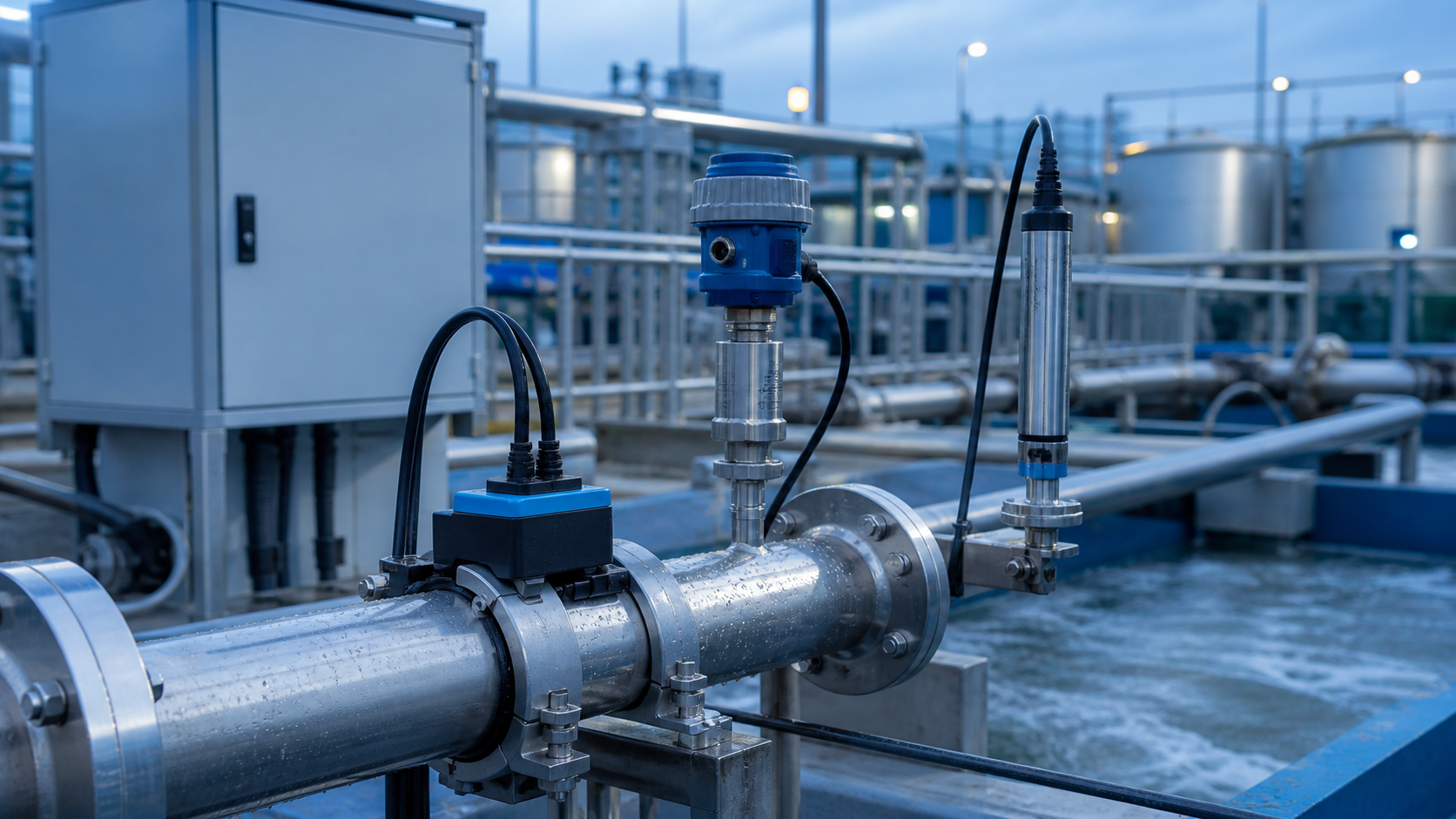
Smart water monitoring turns physical water use, flow, pressure and quality into data. The investment case begins one step later: does that data cause an action worth paying for?
A sensor can detect a leak, abnormal cycle, filter condition or quality event. Commercial value appears when the customer avoids loss, protects equipment, demonstrates compliance, reduces labour or manages many sites more effectively. Without a reliable workflow from signal to response, connected hardware can become an expensive dashboard.
Water Investment Network’s portfolio describes an Internet of Things monitoring company that measures flow, cycle, temperature, pressure and conductivity across customer sites. The example shows the combination investors need to examine: field hardware, connectivity, analytics, alarms, application programming interfaces and recurring customer use.
This guide explains the customer problems, technical architecture, revenue quality, unit economics, data governance, cyber risk, scale and impact evidence behind private smart-water companies.
It is intended for eligible family offices, high-net-worth individuals and sophisticated investors assessing direct private companies. Such investments are concentrated and illiquid, may need additional capital and can lose value. Water Investment Network does not provide regulated financial advice or guarantee investment outcomes. Independent legal, tax, financial, commercial, technical and cyber-security diligence remains necessary.
Define smart water by the decision it improves
Smart water is a broad label for sensors, communications, software, analytics and controls applied to water systems. It can cover municipal networks, industrial equipment, buildings, treatment plants, groundwater and environmental monitoring.
The label is too broad for investment. Define the decision:
- find and prioritise leakage;
- detect abnormal consumption or process cycles;
- verify water quality and treatment performance;
- predict maintenance or filter replacement;
- optimise pressure, pumping, treatment or cleaning;
- support permit and operational reporting; or
- coordinate water use across many assets or sites.
Then identify the actor responsible for the response. An alarm has little value if nobody owns it, if the customer cannot locate the fault or if repair costs exceed the loss. The product should fit an operating process rather than ask the customer to invent one.
The Interoperable Europe digitalisation plan describes smart sensors, Internet of Things monitoring, data visualisation, leakage reduction, machine learning and integrated water management as important digital-water areas. It also emphasises interoperability and standardisation. [1]
For investors, interoperability is commercial. Water assets last for decades and use varied control systems. A product that integrates with existing infrastructure can reach more customers. A closed system may protect value while raising adoption friction and customer concern.
Define the measurable before-and-after decision. For example: “The platform identifies continuous flow at a site, sends an actionable alert to the facilities team, records resolution and verifies that consumption returned to baseline.” That is stronger than “AI-powered visibility”.
Map the smart water technology stack
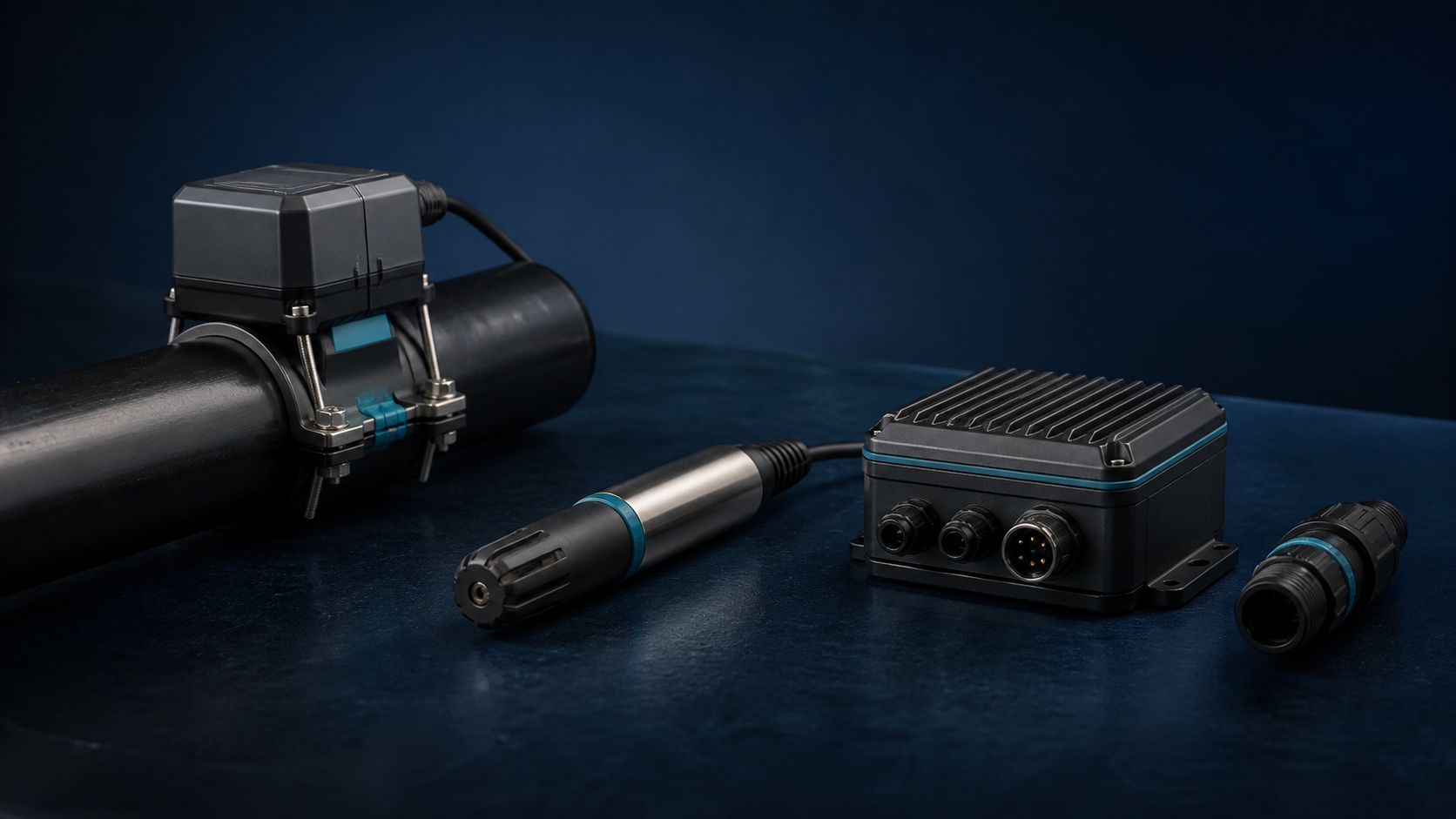
A connected monitoring service is an operating chain. Failure at any link can reduce customer value.
- Sensing: a device measures flow, pressure, temperature, conductivity, turbidity or another parameter.
- Edge and power: local hardware records, filters or transmits data using available power.
- Connectivity: a network carries data through cellular, low-power wide area, radio, wired or site systems.
- Platform: software stores, validates and presents data.
- Analytics: rules or models identify events, trends or recommended action.
- Workflow: alerts enter maintenance, compliance or management processes.
- Verification: the system records whether the action changed the outcome.
Investors should see performance at each layer. Sensor accuracy in a laboratory is insufficient if installation, drift, battery life or connectivity undermines the field service. A strong analytics model is insufficient if data quality varies or customers ignore alerts.
Hardware creates deployment work. Review site survey, installation time, calibration, replacement, environmental protection, certification and maintenance. Ask whether a trained partner can perform the work and whether the product supports remote diagnosis.
Connectivity cost and coverage should be modelled by customer type and geography. Industrial facilities can have challenging radio environments. Remote assets may lack power or reliable networks. A system should degrade safely and recover data where appropriate.
Data architecture affects enterprise value. Confirm ownership, permitted use, retention, export, interfaces and aggregation rights. Customers may value benchmarking while restricting confidential production or quality information.
Algorithms need a feedback loop. Record false positives, missed events, alert priority, response time and resolved outcomes. A model that generates many unverified notifications can increase customer labour instead of reducing it.
Quantify customer value from action, not data volume

Digital products often report devices, readings or data points. Those measures describe activity, not customer return.
Construct value from the operational event. For leakage, the chain may be detection, localisation, work order, repair and verified reduction. Ofwat defines leakage as water entering the network that is not delivered or used in operations. It notes that smart metering can help detect continuous flow and that innovation projects are exploring new detection and repair methods. [2]
A private monitoring company may serve different markets from a regulated utility, but the logic transfers: a signal creates value only when it improves prioritisation or action.
Customer value can include:
- water and energy not lost;
- downtime or asset damage avoided;
- labour shifted from routine checks to targeted work;
- earlier filter or equipment intervention;
- better compliance evidence and audit readiness;
- faster investigation of quality events; and
- consistent management across a large estate.
Build the business case using customer records. Compare baseline consumption, event frequency, response time, repair cost and confirmed outcome. Adjust for weather, occupancy, production and other changes.
Different buyers value different benefits. A factory may protect production. A retailer may manage hundreds of buildings. A hospital may prioritise resilience and safety. A water utility may focus on network leakage, service and regulatory commitments.
The supplier should know which value wins the sale and which evidence renews the contract. If the customer buys a device once but does not maintain connectivity or use the platform, the recurring-revenue thesis fails.
Examine recurring revenue and true digital-water margins
Smart-water businesses are sometimes valued as software while carrying meaningful hardware and service obligations. Investors should calculate margin by component and customer cohort.
Revenue can include hardware sales, installation, connectivity, platform subscription, analytics modules, support and integration. Some contracts bundle them into a recurring fee. Others use equipment upfront and software annually.
| Component | Commercial evidence | Hidden cost |
|---|---|---|
| Sensor hardware | Unit margin, reliability and replacement | Warranty, inventory and component obsolescence |
| Installation | Standard time and partner delivery | Site survey, travel and rework |
| Connectivity | Contracted data cost and coverage | Roaming, failed transmission and support |
| Platform subscription | Active devices, renewal and gross retention | Cloud, support, security and data-quality work |
| Analytics | Actionable events and customer outcomes | Model maintenance, false alerts and custom rules |
| Integration | Reusable connectors and API adoption | Bespoke development and version support |
Calculate annual recurring revenue only from contracted recurring charges. Do not include expected hardware replacement unless customer behaviour supports it. Separate expansion from price increase and one-off project work.
Retention should be analysed by deployment cohort and customer reason. Track devices active, sites connected, users engaged, alerts resolved and data integrated into customer workflows. A contract can remain nominally live while the service is not operationally embedded.
Gross margin should include support, connectivity, warranty, replacements and cloud cost. Professional services may accelerate adoption but can also conceal a product that needs bespoke work.
Cash matters. Hardware and installation can be paid before annual subscriptions arrive. Review deposits, supplier terms, stock, site acceptance and debtor days. Rapid device growth can consume working capital.
Build the smart water investment thesis at a glance
| Element | Evidence to seek | Principal risk |
|---|---|---|
| Demand driver | Costly leakage, quality, maintenance or reporting problem | Visibility is interesting but not budget-critical |
| Paying customer | Facilities, operations, utility or compliance budget owner | User likes data but cannot approve purchase |
| Revenue model | Contracted hardware, subscription and service economics | Recurring label excludes deployment and support cost |
| Scalability | Standard installation, connectivity, integration and remote support | Every site requires bespoke engineering |
| Defensibility | Installed data, workflow integration, models and customer trust | Commodity sensors and easily copied dashboard |
| Risk | Reliability, cyber, churn, component supply and working capital | Growth hides inactive devices and support debt |
| Exit | Strategic value to water, industrial, property or software platforms | Buyer logic depends only on revenue multiple |
| Impact | Verified action and water outcome against baseline | Readings and alerts reported as savings |
The thesis should specify one initial customer problem. A company can expand later, but a narrow wedge creates clearer product design, evidence and sales. “Monitor any water anywhere” may describe technical capability without defining a market.
Defensibility often grows after deployment. Historical data, calibrated models, site integration and workflow adoption can improve value. Investors should confirm that the company has contractual rights to use the data required for product improvement and that customer privacy is protected.
Growth capital can fund device inventory, product certification, channel partners, integration, security and customer success. The use of funds should link to activation, retention and unit-economics milestones rather than device count alone.
Diligence sensor reliability and field operations

Connected-water value depends on long field life. Investors should examine devices after months or years, not only a new demonstration.
Request data on:
- installation success and time;
- sensor accuracy, drift and calibration interval;
- battery or power performance;
- connectivity uptime and buffered data;
- device failure and replacement by cohort;
- false-positive and missed-event rates;
- support tickets, response and resolution; and
- customer action after alerts.
Segment by environment. Performance in an office can differ from a factory, plant room or outdoor chamber. Temperature, moisture, access, radio conditions and process chemistry matter.
Review the installation process. Incorrect location or configuration can make good sensors produce poor information. A scalable business uses clear site criteria, quality checks and training that partners can follow.
Examine component and manufacturing supply. Sensors, chips, radios and batteries can become unavailable. The company should manage alternatives, firmware, certification and backward compatibility.
Field-service economics must match the contract. A low annual subscription cannot support frequent truck rolls. Remote diagnostics, replaceable modules and partner coverage can improve the model.
Visit a customer with a resolved problem and one with a difficult deployment. Ask operations staff whether alerts are trusted, how work enters the maintenance system, what changed after installation and whether the service would be renewed from the site’s own budget.
Treat integration, security and governance as product features
Water monitoring can touch operational technology, building systems, maintenance platforms and compliance records. Integration and security therefore affect customer adoption and enterprise value.
Review the application programming interface, data export, identity management, access controls, audit logs, encryption, backup, vulnerability management and incident response. Requirements should match the customer environment and the consequence of failure.
Not every monitoring system controls equipment. Read-only products still create confidentiality and availability risks. Industrial data can reveal production patterns. Quality data can relate to compliance. Building usage can expose occupancy.
Data governance should answer:
- who owns raw, processed and aggregated data;
- where it is stored and for how long;
- who can access or export it;
- how customer data trains models;
- what happens when a contract ends; and
- how corrections and calibration changes are recorded.
Interoperability can reduce churn while making data portable. The company should compete through outcomes and workflow value, not by making customer exit technically impossible.
Security diligence should include independent testing, remediation evidence and responsibility across device, connectivity, cloud and customer network. Review how the company delivers firmware updates and supports older devices.
Large customers may require certifications, insurance and detailed questionnaires. Track the time, cost and deal impact. Security can be a barrier for an early company, but a mature response can become a sales advantage.
Map the complete data path for a representative deployment. Begin at the sensor and follow measurement, local storage, gateway, network, ingestion, processing, alert, application programming interface, customer system and archive. At each step, record the owner, credential, encryption boundary, retention period, failure mode and recovery method. This makes shared responsibility visible before an incident.
Device identity and provisioning deserve field evidence. Review how a unit is commissioned, authenticated, assigned to a customer, replaced and retired. Default credentials, copied certificates or informal installer accounts can turn a manageable fleet into an exposure. Confirm that access can be revoked without visiting every site and that an asset inventory reflects what is actually deployed.
Examine software and firmware release practice. Select several releases and trace requirements, code review, testing, approval, deployment, monitoring and rollback. Check how security fixes are prioritised against product work and how customers are notified. An over-the-air update capability is valuable only when the company can prove which devices received the update and recover those that failed.
Reliability planning should include loss of power, connectivity, cloud services and third-party integrations. Determine what the device stores locally, how gaps are marked, whether alerts are replayed and how a customer distinguishes “no event” from “no data”. Service-level commitments should match the architecture and field support, with exclusions that customers understand.
Review access by role and customer. Support engineers may need to diagnose devices without seeing unrelated customer data. Data scientists may need anonymised datasets without production credentials. Partners may install hardware without gaining permanent platform access. Test joiner, mover and leaver records and inspect a sample of privileged actions against the audit log.
Data rights require contract-level clarity. The company may need permission to aggregate operational information for benchmarking or model improvement, but the customer may face confidentiality, security or regulatory limits. Separate ownership, licence, permitted purpose, retention and deletion. Verify that actual pipelines implement those terms rather than relying on a broad policy.
If algorithms rank anomalies or recommend actions, review model performance under the conditions that matter to customers. Track false positives, missed events, drift and changes in sensor population. Document when a human verifies an alert and how customer feedback enters the next version. Avoid claims of artificial intelligence where fixed thresholds or manual analysis do most of the work.
Run an incident exercise that includes management, engineering, customer success and communications. Use a plausible case such as an exposed credential, manipulated reading or widespread connectivity loss. Record detection, containment, evidence preservation, customer notification, restoration and lessons. The exercise tests whether written responsibilities function under time pressure.
Cyber-security cost belongs in unit economics and the funding plan. Penetration tests, monitoring, secure hardware, cloud resilience, certifications, insurance and experienced staff are not temporary enterprise-sales expenses. Model how these costs change with device count, customers and jurisdictions, and distinguish platform gross margin from margin before required security operations.
Finally, translate governance maturity into investment conditions and milestones. Critical vulnerabilities, unclear intellectual-property ownership or uncontrolled production access may require resolution before completion. Other improvements can form a funded plan with board oversight. The aim is not to claim zero risk; it is to show that risks are discovered, owned, measured and reduced as the installed base grows.
Connect security and reliability to retention evidence. Review renewals, expansions, support tickets and churn by hardware generation, connectivity type, integration depth and customer segment. A customer may renew because the platform is embedded despite poor service, or churn after a successful pilot because operational teams never adopted the workflow. Reference calls should test both the technical result and the organisational behaviour behind it.
Track the cost of maintaining old deployments. Multiple sensor versions, networks and customer-specific integrations can create hidden engineering and support obligations. Map the supported estate, end-of-life policy, migration plan and revenue attached to each cohort. Gross margin should include cloud, connectivity, replacement hardware, installation visits, technical support and security maintenance.
The board should receive one view of fleet health and commercial health. Useful measures include reporting devices, data completeness, alert-to-action rate, deployment time, support burden, renewal, gross margin and verified water outcome. Thresholds should trigger an owner and response. A rising device count is not sufficient if data quality, customer action or margin deteriorates.
Make the first year’s improvement plan specific. It may include retiring an unsupported device, standardising an integration, completing an independent security review, reducing installation time or proving that alerts lead to closed work orders. Tie each milestone to customer value, cost and evidence. This keeps technical investment aligned with adoption and avoids a roadmap driven only by feature requests.
Retain the underlying fleet, customer and support records so that claimed improvements remain reproducible during board review, follow-on diligence and a potential transaction.
Connect regulation and innovation funding to customer adoption
Monitoring demand can be strengthened by leakage targets, discharge permits, water-quality requirements and investment programmes. Investors should trace each driver to a customer workflow and budget.
Ofwat’s Water Innovation Fund supports projects intended to transform water and wastewater services, including monitoring and data-led approaches. [3]
Grant or challenge funding can create validation, partnerships and reference deployments. It does not guarantee procurement after the project. Ask who owns the resulting product, whether customers paid, what evidence emerged and how the company converts learning into standard sales.
The revised EU Urban Wastewater Treatment Directive includes expanded monitoring related to pollutants, health parameters and treatment performance. [4]
That policy can support demand for monitoring technology, but implementation varies. Identify the data required, responsible authority, plant coverage, timetable, approved methods and procurement route. A general “regulatory tailwind” should never replace this detail.
Industrial monitoring may also support environmental permits and operator records. The Environment Agency publishes guidance across water-discharge applications, risk assessment, monitoring and compliance. [5]
A product may be a decision aid rather than the official compliance method. Clarify whether its data is accepted for reporting, used to trigger verified sampling or limited to internal operations.
Regional expansion requires local validation. UK, EU and GCC markets differ in water ownership, telemetry standards, data hosting, procurement and operating conditions. A partner can accelerate access, but investors should verify active projects and support capability.
Measure digital water impact from event to outcome
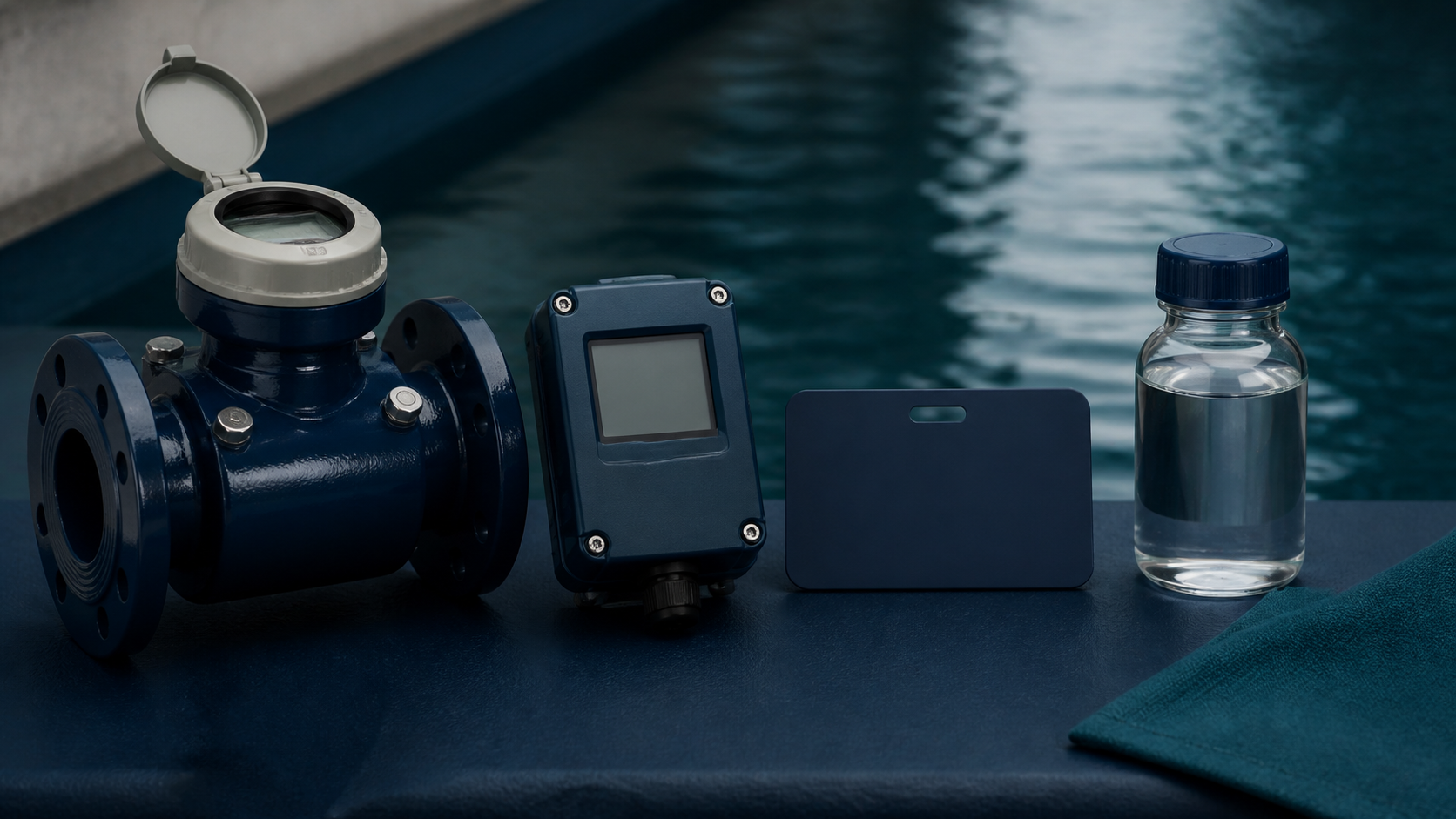
Digital-water impact should not be counted from sensor sales or alerts. Follow the event through action to verified outcome.
- Baseline: normalised water use, loss, quality events or maintenance activity before deployment.
- Detection: the measured event and confidence threshold.
- Action: the work order, adjustment, repair or investigation caused by the signal.
- Resolution: confirmation that the physical condition changed.
- Outcome: water, energy, cost, downtime or risk changed against baseline.
Account for false alerts and events that would have been detected anyway. Avoid multiplying a short event across a year without confirming persistence. Separate identified potential from verified savings.
For quality monitoring, record what parameter was measured, calibration, sampling frequency, threshold, response and confirmatory test. For filter or asset maintenance, compare replacement, failure and downtime before and after.
Portfolio reporting should state definitions and coverage. If only some sites verify outcomes, do not apply their average to all connected devices. Report data completeness and uncertainty.
Commercial performance belongs beside impact: active devices, renewal, gross margin, support cost and customer expansion. A system that creates real savings but cannot support itself commercially may not sustain the outcome. A profitable dashboard that does not change water use may not satisfy an impact mandate.
The strongest evidence is customer-controlled: invoices, meter records, work orders, maintenance logs and production data. Supplier analytics can organise the case, but they should reconcile with the customer’s operating records.
Test the go-to-market model and competitive moat
Smart-water companies can sell directly to enterprise customers, through utilities, via facilities or engineering partners, or as part of a broader equipment platform. The channel changes customer access, margin, data rights and service responsibility.
Direct enterprise sales provide close product feedback and contract control. They can involve long security review, site surveys, integrations and procurement. Channel partners can accelerate deployment, but they need training, economic incentive and a clear ownership model for the customer relationship.
Map each route using achieved evidence:
- qualified opportunities and conversion by source;
- sales cycle from first meeting to active site;
- installation, support and customer-success ownership;
- gross margin after channel share and field cost;
- renewal and expansion by cohort;
- access to operating data and end-user feedback; and
- working capital for hardware and deployment.
Competition includes sensor manufacturers, utility platforms, building-management systems, industrial controls, specialist analytics and the customer’s own spreadsheets or manual checks. The relevant competitor is whichever route solves enough of the problem at an acceptable cost and risk.
A moat can form through reliable hardware, proprietary calibration, installed data, workflow integration, models trained on verified events, domain expertise and trusted service. None should be assumed. Measure how the advantage improves retention, outcomes, sales efficiency or margin.
Data scale is not automatically defensible. Millions of readings may contain little value if they lack labels, context or customer permission. A smaller set of well-classified events and confirmed outcomes can be more useful for improving a model.
Integration can increase switching cost, but customer trust depends on portability and clear ownership. A company should earn retention through workflow value rather than trapped data.
Strategic acquirers may include water-equipment groups, utilities technology providers, industrial platforms, facilities software and insurers or service companies with relevant customers. Define the specific capability they would gain and the milestones needed before acquisition becomes plausible.
Assess leadership, customer success and capital discipline
Digital-water scale requires a team that understands both software economics and physical operations. A pure software approach can underestimate installation and device reliability. A hardware culture can underinvest in product usability, security and recurring customer value.
Map leadership across hardware, firmware, connectivity, cloud, analytics, water-domain expertise, enterprise sales, field operations, security, customer success and finance. Identify where the founders still provide the only bridge between functions.
Customer success should own adoption after installation. Useful measures include:
- time from contract to active data;
- percentage of devices reporting reliably;
- users and integrations active;
- alerts acknowledged and resolved;
- outcomes verified with the customer;
- support burden by deployment cohort; and
- renewal and site expansion.
These measures reveal whether growth creates a functioning network or a backlog of partially active devices. Board reporting should connect them to annual recurring revenue, gross margin, churn and cash.
Review how the company handles a false alert, device failure or security issue. Does it communicate clearly, preserve evidence, remediate the cause and update the product? Incident discipline is part of customer trust.
Capital allocation should follow the constraint. Inventory may be needed for deployment. Product investment may reduce installation or support. Security work may unlock enterprise customers. Channel training may improve reach. Each use should have an adoption, margin or retention milestone.
A downside plan should include slower deployment, component cost, customer concentration, higher support, delayed renewal and a cyber or reliability remediation programme. Confirm runway and the financing required before the next value milestone.
Strong leadership will resist reporting installed sensors as success when customers are inactive. It will focus the organisation on trusted data, completed action and retained commercial value.
Frequently asked questions about smart water investment
What is smart water monitoring?
It combines sensors, connectivity, software and workflows to measure water conditions and support actions such as leak repair, quality response, maintenance or process optimisation.
Is a smart water company a software business?
Sometimes partly. Many businesses also carry hardware, installation, connectivity and support costs. Investors should calculate revenue and gross margin by component.
Which smart water metrics matter most?
Track active devices, data availability, actionable events, response, verified outcomes, renewal, gross retention, support cost and field failure by cohort.
What are the principal technology risks?
Risks include sensor drift, power, connectivity, false alerts, integration, cyber security, component supply, data rights and field-service burden.
How should water savings be verified?
Use a normalised baseline, record the detected event, confirm customer action and verify the physical outcome with customer-controlled meter or operating data.
Explore selected digital water opportunities
Smart water creates private-company value when reliable field data is embedded in a customer decision and the outcome is worth more than the complete cost of hardware, connectivity, software and support.
Eligible investors can request access to Water Investment Network to learn about selected direct water-technology opportunities. Each investor remains responsible for independent legal, financial, commercial, technical, cyber and impact diligence.
Read the companion guides to the water technology market and industrial wastewater treatment. General enquiries can be sent through the contact page.
Water Investment Network does not sell sensors, provide engineering services, give regulated financial advice or guarantee returns.
Sources
- https://interoperable-europe.ec.europa.eu/collection/rolling-plan-ict-standardisation/water-management-digitalisation-rp-2026
- https://www.ofwat.gov.uk/households/supply-and-standards/leakage/
- https://www.ofwat.gov.uk/regulated-companies/innovation-in-the-water-sector/
- https://environment.ec.europa.eu/topics/water/urban-wastewater_en
- https://www.gov.uk/government/collections/water-discharge-and-groundwater-activity-environmental-permits