Water technology companies sit between a clear public need and a difficult commercial question. Utilities, industrial sites, developers and public authorities need better ways to treat, monitor, reuse and manage water. Private investors need to know which companies can turn that need into repeatable revenue, defendable margins and measurable performance.
The sector is wider than one treatment technology. It includes process equipment, membranes, sensors, software, monitoring, water-efficiency systems, reuse infrastructure and specialist services. Each category has a different buyer, sales cycle, capital need and risk profile.
This article explains how to assess water technology companies as private-market opportunities across the UK, Europe and the Gulf Cooperation Council (GCC). It is educational content, not regulated financial advice. It does not promise returns or recommend a particular investment.
Water technology companies: investment thesis at a glance
| Question | Evidence to test |
|---|---|
| Customer problem | Which water, compliance, efficiency, resilience or production problem is urgent enough to fund? |
| Commercial route | Does the company sell equipment, projects, recurring services, software, data or an operating asset? |
| Proof of performance | Is there independent, repeatable evidence that the solution works under real operating conditions? |
| Unit economics | What happens to gross margin, cash conversion, service cost and working capital as deployments grow? |
| Scalability | Can the solution be standardised, integrated and supported without the same rise in bespoke engineering? |
| Principal risks | What could delay approval, procurement, installation, commissioning, payment or renewal? |
The strongest thesis is not simply that water matters. It is that a specific company solves a funded problem for a customer that can buy, adopt and renew the solution. Public policy can create demand, but policy alone does not prove a sales pipeline or a profitable delivery model.
Water technology companies can also have mixed revenue quality. A business may report attractive project growth while carrying installation risk, warranty exposure and large working-capital needs. Another may have recurring service income but depend on a small number of utility customers. The investor must connect the headline opportunity to the actual contract and cost base.
What water technology companies actually sell
Treatment and process technologies
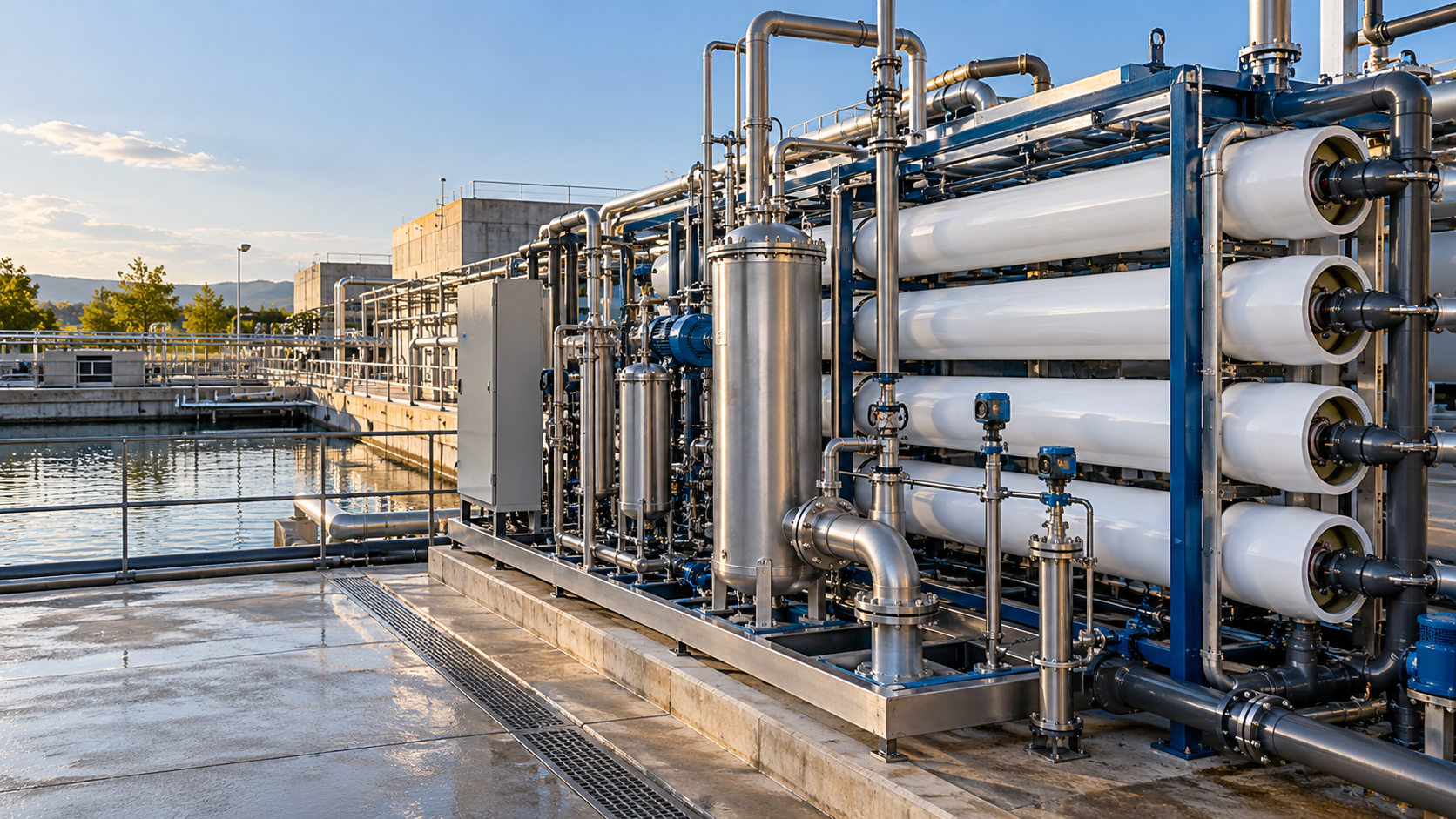
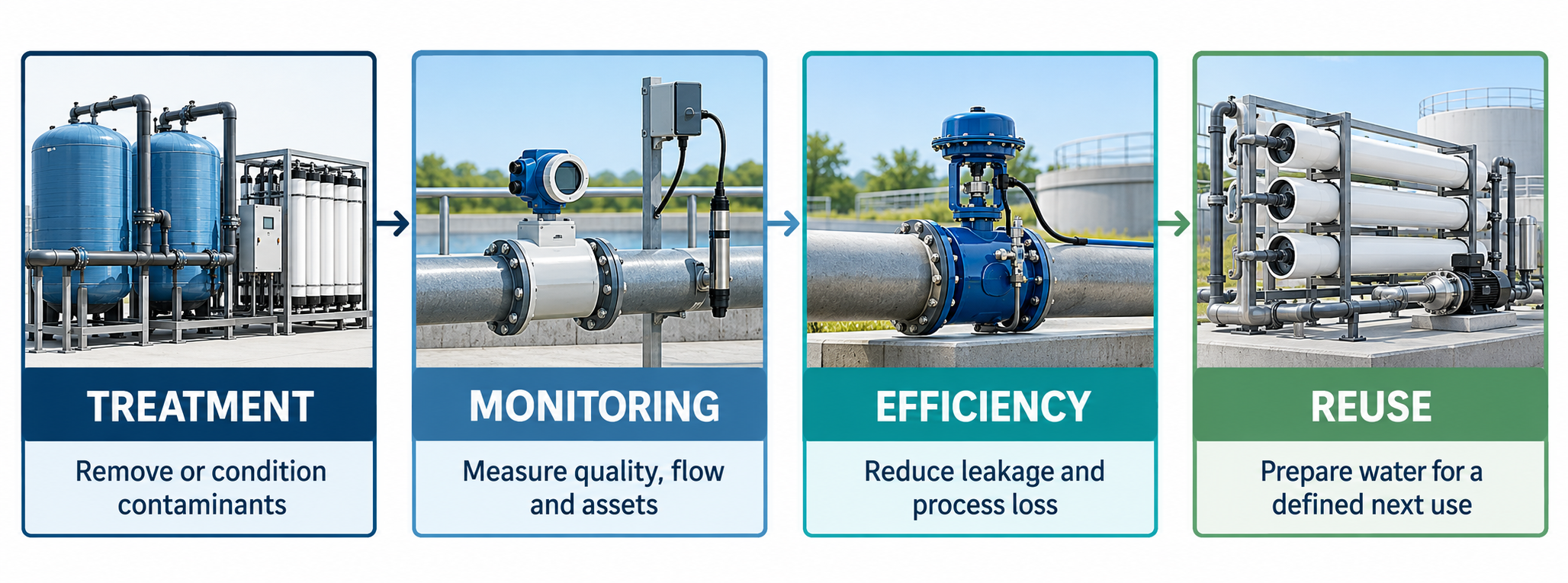
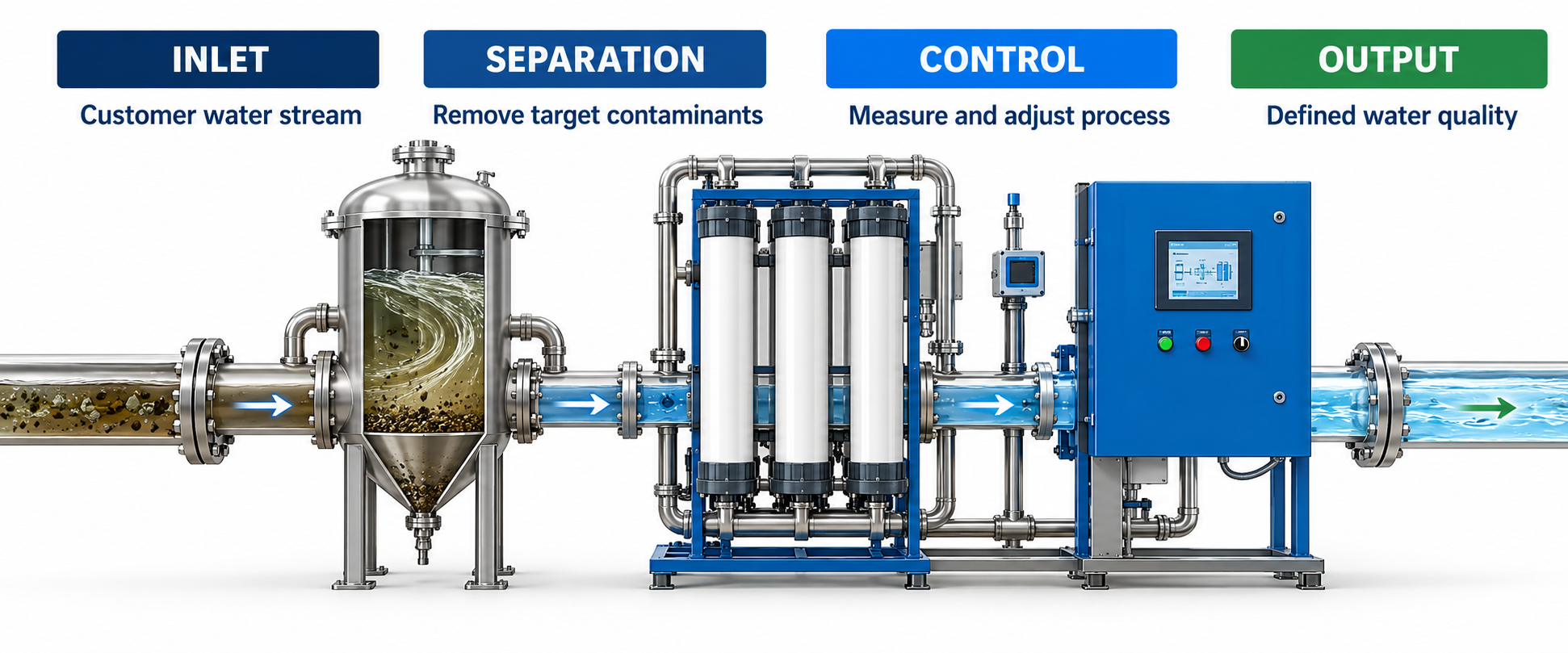
Treatment companies improve the quality of water or wastewater for a defined use. Their solutions may include filtration, membranes, disinfection, nutrient removal, sludge handling, advanced oxidation or process controls. The customer may be a utility, industrial plant, property developer, agricultural operator or water infrastructure owner.
Technology choice changes the economic case. A membrane system may improve separation but require energy, cleaning and replacement parts. A monitoring system may reduce leakage or improve compliance but depend on installation, connectivity and customer action. A treatment process may work in a pilot while producing different costs at full scale.
Monitoring, sensors and control systems
Monitoring companies collect information about flow, pressure, water quality, asset condition or customer use. A sensor is only commercially useful when the data changes a decision. That decision might prevent a failure, reduce non-revenue water, improve treatment control, support compliance or identify a maintenance need.
The World Bank says that fewer than 10% of water utilities in low- and middle-income countries use tools such as artificial intelligence, big-data analytics or digital twins. It also points to sensors, computing and data management as ways to monitor quality, optimise supply and improve decisions.[4] For investors, the opportunity is real, but adoption depends on procurement, data quality, integration and operational trust.
Efficiency, reuse and resilience systems
Water-efficiency companies help a customer reduce consumption, leakage or process losses. Reuse companies treat water for a specified next use. Resilience companies may provide storage, decentralised treatment, alternative supply or systems that reduce the effect of disruption.
These products can create value without selling more water. The customer may be paying to protect production, meet a permit, avoid an interruption, reduce a bill or secure capacity for expansion. The World Bank’s water-reuse work links successful reuse to policy, regulation, funding and private-sector participation, which reinforces the need for a complete commercial route.[6] The company must show how that value becomes a budget, a contract and a repeatable deployment.
Why demand is becoming more investable
Water resilience is moving up the policy agenda
The European Commission’s Water Resilience Strategy places public and private investment, infrastructure, digitalisation, artificial intelligence, research and innovation among its main action areas. The Commission also describes Europe as a global leader in water technology, with 40% of global water-technology patents, a water industry generating €107 billion and 1.7 million jobs.[1]
These figures describe an industry context, not the valuation or profitability of any one business. The useful investor signal is that water technology is being connected to infrastructure modernisation, competitiveness, resource efficiency and resilience. A company still needs evidence that its solution can reach a paying customer.
Regulation creates work, but not automatic profit
The UK government’s 2026 water white paper links water security to asset health, leakage reduction, water efficiency, reuse, smart metering and innovative regulation. It also says innovation has a role in tackling water scarcity, drainage and wastewater treatment, and describes regulatory sandboxes and partnerships as routes for testing new approaches.[2]
Regulatory pressure can support demand for a technology. It can also add approval costs, reporting obligations, procurement friction and liability. An investor should identify the specific rule or operating requirement, the responsible buyer, the timetable and the funding mechanism before treating regulation as a commercial tailwind.
Industrial customers buy continuity and control
Industrial customers may invest in water technology to protect a production line, reduce freshwater use, manage discharge, comply with a permit or support a new site. Their buying decision often depends on uptime, integration and a clear payback or risk-reduction case.
Industrial water technology can therefore be attractive without looking like a traditional utility asset. The customer may pay for a compact treatment system, a monitoring subscription, a service contract or a performance-based outcome. The diligence question is whether the technology is important enough to the process that the customer will maintain it after installation.
How water technology companies make money
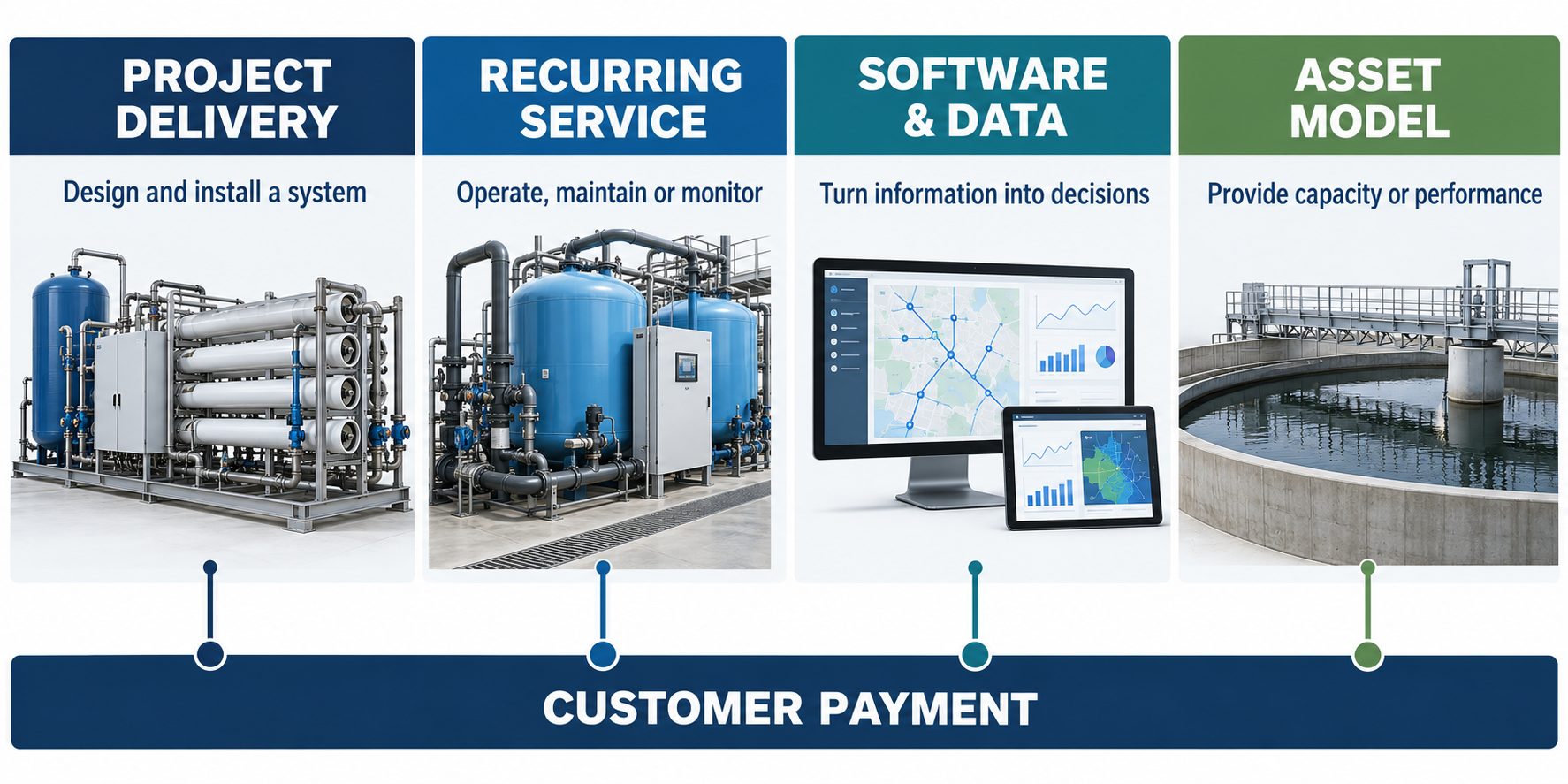
Equipment and project delivery
Equipment companies sell units, components or complete process packages. Project businesses may design, procure and install a system for a customer. Revenue can arrive quickly when orders are strong, but gross margin and cash conversion can be exposed to procurement, subcontractors, commissioning and change orders.
Review whether the company owns the design, resells third-party equipment or manages a broader integration. A product with a clear specification and repeatable production may scale differently from an engineered project that changes for every site.
Recurring services and software
Services can include operations and maintenance, remote monitoring, compliance reporting, laboratory support, asset management and optimisation. Software may be sold as a subscription, a licence, a managed service or part of a wider equipment contract.
Recurring revenue deserves a physical explanation. Check the number of connected sites, renewal history, support workload, data rights, integration cost and service-level obligations. A subscription can still have weak economics if every new customer needs heavy implementation or if the provider must supply expensive field support.
Asset, availability and performance structures
Some companies own or operate treatment, reuse or water-efficiency assets. Others are paid for availability, capacity, treated volume or measured savings. Public-private partnerships can help bring technology and efficiency into water projects, including desalination and reuse, but the World Bank notes that stable revenue streams are important for planning and investment.[5]
Performance structures can align payment with customer value, but they also move risk to the provider. The investor should test measurement rules, baseline assumptions, caps, penalties, payment timing and what happens when customer behaviour or external conditions change.
| Model | Commercial strength | Risk to test |
|---|---|---|
| Equipment sale | Clear order value and repeatable product | Warranty, installation, inventory and customer concentration |
| Project delivery | Larger contract value and system integration | Scope changes, delays, retention and working capital |
| Recurring service | Renewal potential and customer knowledge | Staffing, energy, chemicals, support and service penalties |
| Software and data | Low-cost replication after integration | Data quality, cyber risk, interoperability and adoption |
| Availability or performance | Closer link to customer outcome | Measurement disputes, performance liability and payment delay |
What makes a water technology company scalable
Standardisation reduces delivery friction
Scale can come from a standard product, modular treatment units, repeatable software, a service network or a portfolio of contracted assets. It does not come only from a large addressable market. The company must show which part of delivery becomes easier with each additional customer.
Standardisation can improve procurement, training, quality control, commissioning and spare-parts planning. It can also narrow the range of sites the company can serve. That is not necessarily a weakness, provided the target customer group is large enough and the product is valuable within it.
Integration is both a moat and a cost
Water systems interact with pipes, pumps, electrical controls, laboratories, billing systems and regulatory reporting. A company that integrates well can become hard to replace. The same integration work can reduce margin if every deployment needs bespoke engineering.
Ask whether the company owns a repeatable interface, a tested configuration or a library of site data. Then ask how much of the reported margin depends on founders, specialist contractors or one major equipment supplier.
Sales cycles must fit the capital plan
Water customers often have long planning, procurement and approval cycles. A strong technical demonstration may not lead to a purchase for several budget periods. The company needs enough cash to support testing, tendering, delivery and post-installation service.
Map the funnel from first problem identified to paid deployment. Separate a pilot, a preferred-supplier position, a framework, a purchase order and a contracted operating site. These stages have different probabilities and should not be combined into one pipeline number.
Technology readiness and proof of performance
From pilot to commercial asset
A pilot answers a technical question. A commercial deployment must also answer questions about uptime, maintenance, energy use, consumables, safety, integration, regulation and customer payment. The gap between those stages is where many technology businesses consume capital.
The EIB’s water-sector guidance says support for innovation should consider real-life conditions, demonstration plants and commercialisation. It also says the EIB can support research, innovation and deployment of novel water technologies through loans, guarantees, equity investment via intermediaries and advisory services.[3] That is a useful reminder that technical novelty and bankable deployment are different stages.
Data claims need a clear baseline
Claims about water savings, treatment performance, energy use or avoided failures need a baseline, a measurement method and a defined operating period. Compare the result with the customer’s existing process and the alternative solution, not only with an ideal laboratory condition.
For digital systems, check sensor calibration, missing data, cyber controls, user permissions and the decision the customer makes from the output. A dashboard that is not trusted or acted upon has weak commercial value even when the interface looks polished.
Evidence should travel with the product
Evidence becomes more valuable when it can be reused in a sales process. Look for standard test protocols, reference installations, verified case data, maintenance records, customer references and documentation that can support procurement. This can reduce the cost and time of winning the next customer.
Do not treat a certification, pilot or award as a substitute for operating evidence. It may support a claim, but it does not remove the need to understand failure modes, warranty exposure and customer acceptance.
UK, Europe and GCC: different routes to opportunity
UK market routes
UK demand is shaped by asset renewal, leakage reduction, wastewater treatment, water efficiency, smart metering and regulatory reform. The 2026 water white paper says water companies, regulators, investors and environmental organisations will need to work together through the transition. It also links the future water system to stronger monitoring, supply-chain capacity and infrastructure delivery.[2]
For a technology company, the route to revenue may be a utility innovation programme, a framework supplier, an industrial customer, a design-and-build contractor or a specialist operator. Review how the company reaches the actual budget holder and whether it can support the solution across the UK, not only at one reference site.
European market routes
The European Commission strategy places water technology within a broader water-smart economy and links investment to digitalisation, research, infrastructure and competitiveness. The EU action tracker also highlights work on digital water management, data sharing, water efficiency, innovation and investment facilitation.[1]
Europe is not one procurement market. Investors should assess the country rules, utility structure, permit pathway, language, sales partner, technical standard and funding source for each target market. A company may have a strong product but a weak route to local delivery.
GCC market routes
GCC markets can create demand around water security, desalination, reuse, industrial growth, urban development and efficiency. The commercial case depends on the precise jurisdiction, offtaker, energy cost, local partner, import route, contractor structure and payment protection.
A technology may travel more easily than an operating model. Before treating regional expansion as scalable, test whether the company has local service capacity, approved suppliers, suitable reference projects and a credible plan for commissioning and support after the sale.
Financing and risk allocation
Public support can reduce early risk
Water technology companies may use grants, innovation funds, strategic investors, customer-funded pilots, project finance, leasing or blended capital at different stages. Public support can help prove a technology, but the company must still show how it moves from supported testing to customer-paid deployment.
The World Bank says water investment needs better policies, institutions and regulation, and that private participation can contribute finance, innovation and expertise. It also points to technical assistance and de-risking instruments as ways to reduce investment risk.[4] For an investor, the key question is which risk is being reduced and which risk remains with the company.
Counterparty and contract risk
Water technology companies may depend on utilities, municipalities, industrial groups, developers, contractors or distributors. Check payment history, contract authority, termination rights, indexation, security, dispute resolution and exposure to one customer or procurement framework.
A large public customer may be credible but slow to pay or difficult to change. An industrial customer may decide quickly but have higher concentration risk. A distributor may accelerate sales but reduce customer visibility and margin. The contract and channel structure should be part of the valuation case.
Operating and regulatory risk
Common risks include performance shortfalls, contamination, permit changes, cyber incidents, energy-price exposure, supply-chain delays, skilled-labour shortages and customer integration failures. These risks can affect revenue, margin and reputation at the same time.
Review insurance, incident response, maintenance obligations, spare-parts strategy, data protection and safety systems. A company may have a strong technical idea but still be a weak investment if it cannot operate reliably at the point where the customer depends on it.
Diligence checklist for water technology companies
Customer and market
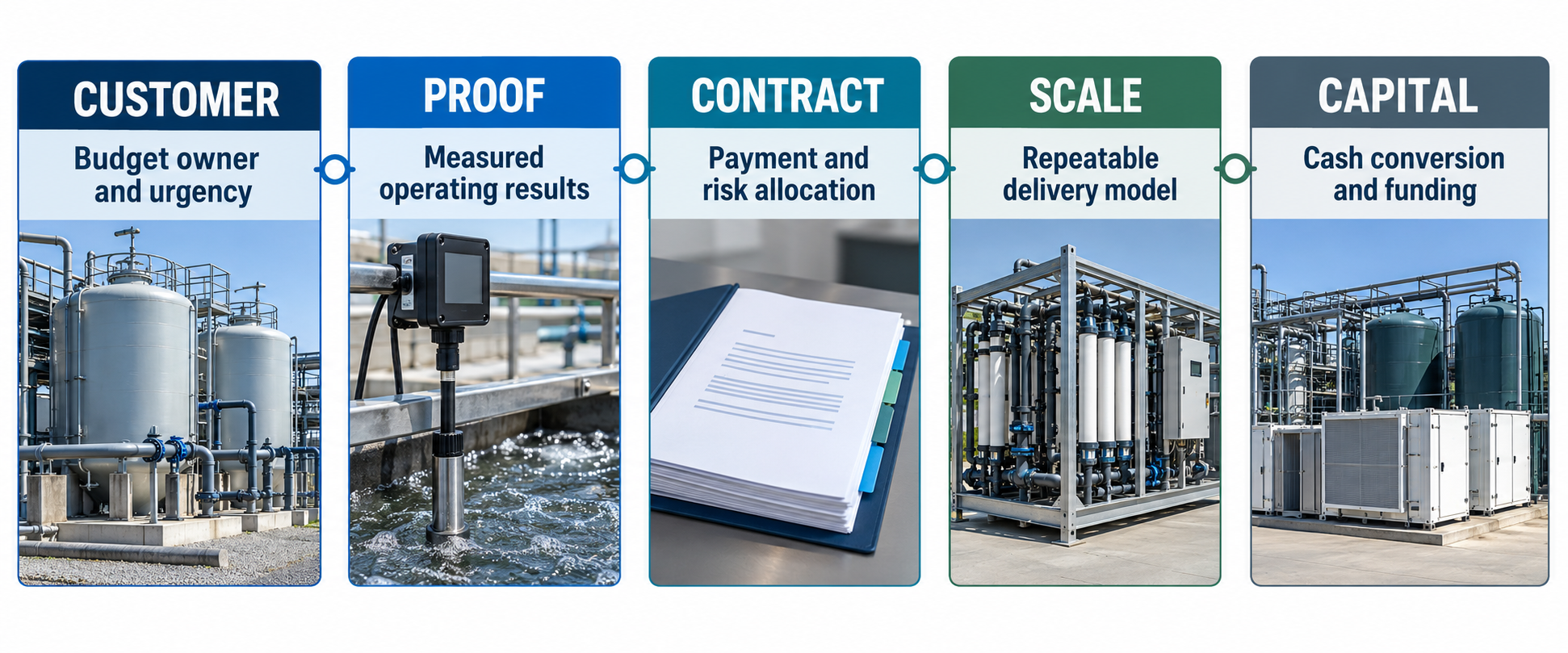
Start with the customer’s problem. Who owns the budget? What happens if the customer does nothing? Is the solution required by a permit, a production process, a resilience plan or a cost target? What alternative will the customer compare it with?
Then review the sales funnel. Identify live sites, paid pilots, contracted projects, recurring customers, renewal rates and lost opportunities. Do not combine every conversation or expression of interest into contracted backlog.
Technology and performance
Review the process design, operating envelope, testing method, failure modes, maintenance plan, energy use and consumables. Confirm which claims are independently verified and which are management estimates. Ask whether performance has been demonstrated at the scale, water quality and operating pattern that the customer will use.
Economics and cash conversion
Bridge price to gross margin. Include installation labour, subcontractors, software hosting, field service, warranty, chemicals, energy, logistics and customer support. Model deposits, milestone billing, retention, inventory and payment delay.
Test the company’s cash needs during growth. A business can be profitable on an accounting basis while needing new capital to fund stock, project work or long customer approval cycles. That is an investor risk even when demand is strong.
Defensibility and scale
Look for advantages that survive procurement. They may include proven performance, reference installations, approvals, proprietary data, a repeatable integration layer, service coverage, customer switching costs or a trusted position in a complex buying process.
Separate a real moat from a technical feature. A patent may protect a design, but the customer may still choose a cheaper alternative. A service network may be less visible than intellectual property but more important to adoption and renewal.
Impact and governance
Measure the relevant outcome. Depending on the product, that may be water saved, leakage reduced, quality improved, energy used, discharge avoided, reuse delivered or downtime prevented. Set a clear boundary around what the company can prove.
Governance should cover environmental claims, data handling, safety, regulatory engagement, related-party transactions and customer reporting. Good governance protects the commercial asset because a failure can lead to remediation, contract loss, delayed approvals or a higher cost of capital.
Frequently asked questions
What are water technology companies?
Water technology companies develop or deliver products and services that treat, monitor, reuse, conserve or manage water. They may sell equipment, software, data, services, projects or operating assets.
Why can water technology companies attract private investment?
They can address funded needs linked to resilience, regulation, industrial continuity, efficiency and water reuse. The investable case still depends on a paying customer, performance evidence, workable margins and a credible route to scale.
Are water technology companies defensive investments?
Some businesses may benefit from essential demand or long customer relationships, but technology, procurement, energy, counterparty, regulatory and working-capital risks remain. Each company needs opportunity-specific diligence.
What is the difference between a water technology pilot and a commercial product?
A pilot tests whether a solution can work in a defined setting. A commercial product must also meet reliability, maintenance, integration, compliance, payment and support requirements at the customer’s operating scale.
What should investors review first?
Start with the customer problem, budget owner, contract route, performance evidence and unit economics. Then test cash conversion, scalability, defensibility, governance and measurable impact.
Explore direct water-technology opportunities
Water technology companies can sit at an attractive point between essential infrastructure and commercial innovation. The opportunity is specific, not automatic. It depends on a real customer problem, a technology that performs in service, a contract that allocates risk and a business model that can grow without losing control of cash and quality.
Water Investment Network helps eligible investors review direct water-technology opportunities with attention to commercial fit, evidence and execution risk. Explore the water-technology portfolio, read the water market investment thesis, or contact the network with a specific question.
If you are assessing opportunities aligned with this market, join the network to discuss the next step. This is an introduction to private opportunities, not a recommendation or regulated advice.
- European Commission, Water resilience strategy.
- GOV.UK, A new vision for water.
- European Investment Bank, EIB water sector lending orientation: strengthening water security.
- World Bank Group, Water.
- World Bank Group, Water Forward FAQ.
- World Bank, Scaling Water Reuse: A Tipping Point for Municipal and Industrial Use.